 EN
EN

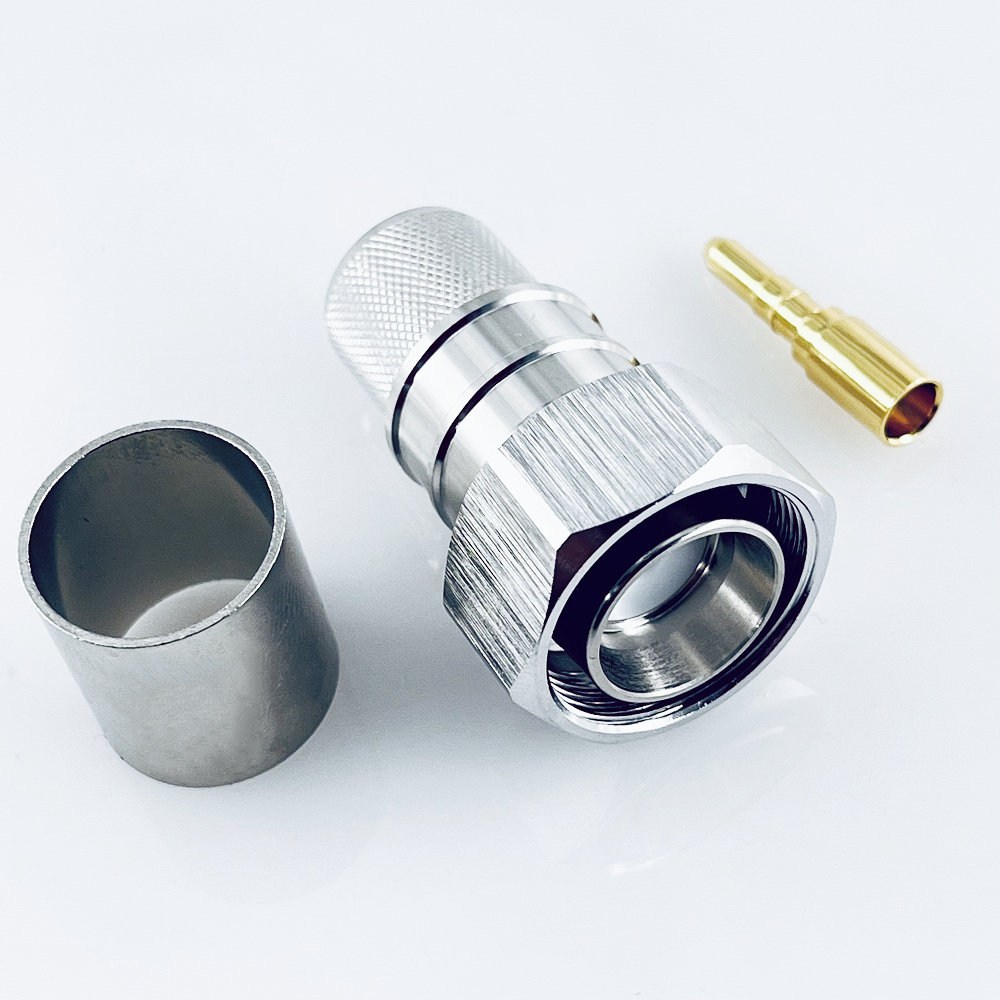
Understanding RF Connector Basics and Signal Integrity
The Role of RF Coax Cable Assemblies in Low-Loss Signal Transmission
RF coax cables act as highways for high frequency signals, relying on multiple layers to keep those signals strong throughout transmission. At the core we find copper conductors that cut down on resistance issues, surrounded by insulating materials such as polyethylene or PTFE which help control electromagnetic field stability. Then there's the braided shield doing its job blocking outside noise, all wrapped up in tough outer jackets designed to withstand whatever Mother Nature throws at them. When looking at important installations like cell tower infrastructure, investing in quality low loss cables makes a real difference. These premium options can slash signal loss by around 40 percent when compared with regular cables according to recent research from Wireless Engineering Journal last year.
Common RF Connectors (N Type, BNC, SMA, TNC, QMA) and Their Use Cases
| Connector | Frequency Range | Key Applications | Durability |
|---|---|---|---|
| N Type | â 11 GHz | Cell towers, radar systems | Weatherproof |
| SMA | â 18 GHz | GPS modules, RF test equipment | Precision-machined |
| BNC | â 4 GHz | Oscilloscopes, video broadcasting | Quick-connect |
BNC connectors are widely used in lab environments due to their tool-free mating, while SMA variants are preferred in aerospace for their compact size and resistance to vibration.
Structural Differences Between Coaxial RF Connector Types
The dielectric materials used and how connectors couple signals vary quite a bit between different connector types. For instance, N-type connectors often incorporate air gaps to reduce signal loss when dealing with high power levels. On the other hand, SMA connectors typically use PTFE insulation because it helps maintain stable impedance characteristics. When looking at mechanical connections, threaded options such as TNC or standard N types tend to hold up better in environments where there's lots of vibration. Snap-on connectors like BNC just don't stand up to this kind of punishment and get disconnected accidentally all too frequently. The way these components are constructed really makes a difference in how well they perform over time in actual field conditions.
Achieving Impedance Matching to Minimize Signal Reflection
How Impedance Mismatch Causes Signal Reflection in RF Connectors
Impedance mismatches occur when transitions between materials or geometries alter electrical characteristics, causing reflected waves that interfere with the original signal. A 2023 signal integrity study found that even a 10% impedance variation at 2.4 GHz results in 14% signal reflection, distorting waveforms and tripling bit error rates. Common causes include:
- Irregular mating surfaces in coaxial connectors
- Inconsistent dielectric properties between cable and connector
- Poorly terminated PCB interfaces
Such discontinuities can reflect 20â30% of transmitted energy in typical RF systems, degrading performance and increasing system noise.
Why Consistent 50-Ohm Impedance Is Critical for RF Connector Performance
The 50-ohm standard optimizes the balance between power handling and attenuation across RF and microwave frequencies. Maintaining this impedance prevents:
- Standing waves â Voltage peaks from mismatched lines can damage sensitive receivers
- Phase distortion â Reflected signals disrupt timing in modulated carriers
- Insertion loss spikes â Elevated VSWR amplifies conductor losses
Military specification MIL-PRF-39012 requires a ±1.5% impedance tolerance for mission-critical systems, as an additional 0.5 dB loss at 6 GHz can cost $740k annually in tower-site maintenance (Ponemon 2023). Controlled impedance practices ensure seamless transitions between cable, connector, and PCB trace characteristics across operating frequencies.
Identifying and Reducing Key Sources of RF Signal Loss
Material and design factors affecting attenuation in RF connections
High-performance materials like beryllium copper reduce resistive loss by up to 30% compared to brass in RF connectors, while PTFE dielectrics minimize signal dispersion. Connector geometry is equally importantâtapered interfaces maintain consistent 50-ohm impedance, reducing reflections responsible for 12â18% of total system loss (IEEE Transactions 2022).
Environmental and mechanical influences on signal degradation
About 40 percent of problems seen in the field with commercial RF connectors come down to environmental factors according to Ponemon's research from last year. Corrosion and temperature changes are mostly responsible for these issues. The military version handles these challenges better thanks to nickel coatings and tight seals that keep things working even when temps drop to minus 55 degrees Celsius or climb all the way up to 175. For devices used on the move, constant vibrations cause wear on contacts which tends to boost signal loss over time something like half a decibel each year in most cases.
Frequency-dependent loss across different RF connector types
| Connector Type | Optimal Frequency Range | Typical Attenuation at 10 GHz |
|---|---|---|
| SMA | DCâ18 GHz | 0.6 dB/m |
| N-Type | DCâ11 GHz | 0.3 dB/m |
| 7/16 DIN | DCâ7.5 GHz | 0.2 dB/m |
Above 6 GHz, SMA connectors exhibit three times higher attenuation than N-type due to smaller center conductors. For mmWave applications, engineers often choose air-dielectric designs despite lower mechanical robustness.
Best Practices for Installing RF Connectors Securely and Reliably
Step-by-Step Guide to Proper RF Connector Installation and Crimping
Start off by cutting away the outer layer of the cable so about 6 to 8 millimeters of the inner conductor and shielding are visible. Be careful not to nick or scratch the dielectric material underneath. When working with crimp type connectors, it's important to match the gauge sizes and use those special hex shaped dies. This helps avoid problems caused by poor compression. Some research back in 2019 showed that almost half (around 52%) of all connection issues come down to improper crimp depth. Always check what torque specs the manufacturer recommends. Most SMA connectors need between 8 and 12 inch pounds of force, whereas N type connections generally require more pressure, somewhere around 15 to 20 inch pounds. If installing cables outside where they'll be exposed to weather, don't forget to wrap them with dual wall heat shrink tubing heated to approximately 120 degrees Celsius for proper waterproofing.
Avoiding Common Installation Errors That Lead to Signal Loss
Three major errors cause 78% of RF connector failures:
- Misalignment: A 3° angular offset degrades VSWR by 0.25:1 above 6 GHz
- Contamination: A single fingerprint increases insertion loss by 0.3 dB at 18 GHz (IEC 61169-1 standard)
- Over-tightening: Exceeding torque by 30% permanently deforms PTFE insulators
Technicians should use magnification to verify pin engagement depth against the manufacturerâs specifications before final assembly.
Correct Torque, Alignment, and Tooling Techniques for Field Deployments
For consistent, reliable installations in demanding environments:
| Technique | Industrial Tool | Performance Impact |
|---|---|---|
| Torque Limiting | Adjustable torque wrench | ±2% torque accuracy vs. 15% for pliers |
| Radial Alignment | Laser alignment fixture | Reduces sidelobe interference by 8dB |
| Vibration Mitigation | Anti-rotation boot | Extends mean time between failures 3x |
After installation, verify performance using a 2-port VNA to ensure insertion loss remains below 0.1 dB and VSWR stays under 1.5:1 across the operational bandwidth.
Selecting and Maintaining RF Connectors for Long-Term Performance
How to Choose the Right RF Connector for Reliability and Low Loss
Choosing the right RF connector means finding a good balance between several factors including frequency range, how much power it can handle, resistance to harsh environments, and keeping impedance stable. Some precision SMA types have shown insertion losses under 0.3 dB all the way up to 12 GHz according to recent lab work from 2023. Standard N-type connectors typically manage around 0.15 dB loss at 3 GHz frequencies. When dealing with equipment that experiences lots of vibration, going for threaded connectors such as TNC makes sense because they cut down on those annoying intermittent connection problems by about two thirds when compared to simple push-on designs, per research published by IEEE last year. Don't forget to look at the VSWR rating either. Anything below 1.5 to 1 ratio generally means better than 98 percent signal efficiency for most 50 ohm systems out there.
Commercial vs. Military-Grade RF Connectors: Performance Trade-offs
Connectors that meet MIL-STD-348 standards work well across extreme temperatures ranging from minus 65 degrees Celsius all the way up to plus 175 degrees Celsius. These military grade connectors also stand up to salt fog conditions about three times longer than their commercial counterparts, although they typically come with a price tag that's 30 to 50 percent higher. The gold plating on military connector contacts keeps resistance below 5 milliohms even after being connected and disconnected 500 times. Commercial connectors with nickel plating tend to show significant degradation reaching between 12 and 15 milliohms resistance after only around 200 mating cycles according to Department of Defense specs from 2020. Looking at the other end of the spectrum, commercial QMA connectors install much quicker thanks to their push and twist design, cutting installation time by roughly 70%. For this reason, many companies opt for these when setting up equipment indoors where environmental stresses aren't as severe.
Routine Inspection and Maintenance to Sustain Signal Integrity
Quarterly inspections detect 82% of potential RF connector failures before signal degradation occurs. Key checks include:
- Contact resistance (should remain <10 mϩ above initial baseline)
- Dielectric contamination (cleaning with 99% isopropyl alcohol reduces arcing risk by 41%)
- Torque retention (25â30% loss indicates thread wear)
According to a 2021 ARINC 801 study, connectors cleaned and re-torqued every six months maintained less than 0.1 dB additional loss over five years, compared to 0.8â1.2 dB degradation in unmaintained systems.
FAQ
What are RF coax cables used for?
RF coax cables are used to transmit high-frequency signals with minimal loss, often utilized in installations like cell towers where maintaining signal integrity is essential.
What causes signal reflection in RF connectors?
Signal reflection is caused by impedance mismatches, which occur due to irregular surfaces, inconsistent dielectric materials, or poor PCB termination.
Why is 50-ohm impedance important in RF connectors?
Maintaining a 50-ohm impedance ensures an optimal balance between power handling and attenuation, preventing standing waves, phase distortion, and insertion loss.
How do environmental factors affect RF signal loss?
Environmental factors like corrosion and temperature fluctuations contribute to signal loss, with military-grade connectors offering better resilience against such conditions.
What are the common errors during RF connector installation?
Common installation errors include misalignment, contamination, and over-tightening, all leading to significant signal loss and connector failures.
Table of Contents
- Understanding RF Connector Basics and Signal Integrity
- Achieving Impedance Matching to Minimize Signal Reflection
- Identifying and Reducing Key Sources of RF Signal Loss
- Best Practices for Installing RF Connectors Securely and Reliably
- Selecting and Maintaining RF Connectors for Long-Term Performance
- FAQ
