 EN
EN

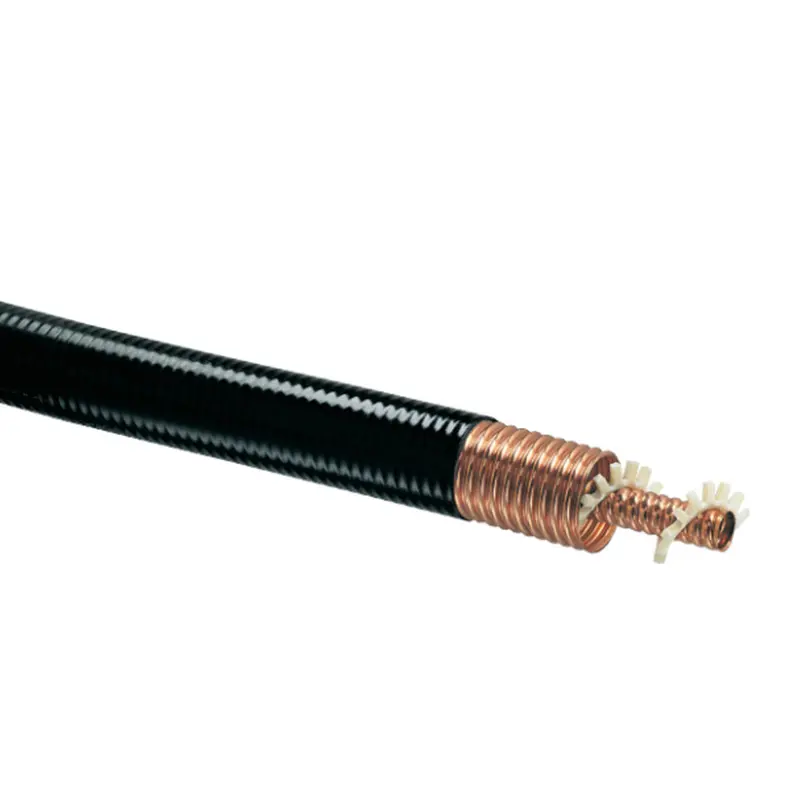
How Do Air Dielectric Coaxial Cables Improve Signal Integrity?
Fundamentals of Coaxial Cable Signal Transmission
Key Components: Conductor, Dielectric, and Shielding
Coaxial cables are engineered with specific structural designs that optimize their ability to transmit electrical signals efficiently. At the core of the cable lies the central conductor, typically made of copper or aluminum, which plays a vital role in signal transmission. Its conductivity ensures minimal energy loss during signal movement. Surrounding this core is the dielectric material, which acts as an insulator, maintaining distance between the conductor and the outer layers. The choice of dielectric material can significantly influence the cable's capacitance and overall signal quality—low-quality materials often lead to increased signal attenuation. Outside the dielectric lies the shielding, generally woven from copper or aluminum, providing essential protection against electromagnetic interference and physical damage. Studies have shown that using high-grade materials in the construction of these components can reduce signal loss by up to 40%, underscoring their crucial role in cable performance.
Why Dielectric Materials Matter for Signal Integrity
Dielectric materials, such as foamed polyethylene, are integral to maintaining signal integrity within a coaxial cable. These materials influence the cable’s capacitance and affect how signals travel through them, particularly the cable's effective resistance to signal degradation. Low dielectric constants are especially desirable as they aid in reducing capacitance and consequently minimizing signal degradation. For instance, research indicates that using high-quality dielectrics can enhance signal integrity by up to 30% over standard materials, which is significant in applications where preventing signal loss is paramount. With these improvements, dielectric materials become a linchpin in the design of coaxial cables, ensuring signals remain clear and robust over long distances.
Comparing Solid vs. Foamed vs. Air Dielectric Designs
The choice between solid, foamed, and air dielectric designs in coaxial cables reflects their different performance characteristics. Solid dielectrics offer high durability and are most suitable for lower-frequency applications; however, they may present drawbacks in terms of flexibility and signal loss. On the other hand, foamed dielectrics provide a medium-ground, balancing between durability and improved signal transmission. Air dielectrics, notable for minimizing signal loss, boast exceptional efficiency particularly in high-frequency applications such as telecommunications. Empirical data highlights that air dielectrics can achieve better performance, reducing signal loss compared to solid and foamed alternatives. Each design type finds practical applications across various environments, from residential internet and television setups to complex RF communications in professional settings, showcasing their tailored strengths in specific scenarios.
The Role of Air Dielectric in Minimizing Signal Loss
How Air Reduces Dielectric Constant and Capacitance
Air dielectric profoundly impacts the dielectric constant and capacitance in coaxial cables, crucial factors in signal transmission. The dielectric constant refers to a material's ability to store electrical energy; air, with a dielectric constant of 1, presents minimal storage capacity, greatly reducing signal loss. This advantage is particularly relevant for high-frequency applications, where capacitance can degrade signal fidelity. By employing air as a dielectric, coaxial cables minimize capacitance, leading to enhanced signal quality. In studies comparing different dielectric materials, air consistently shows lower capacitance values, underscoring its effectiveness in maintaining signal integrity.
Velocity of Propagation: Approaching the Speed of Light
Air dielectric plays a pivotal role in enabling signal transmission speeds approaching that of light, making it highly efficient for data transfer. The velocity of propagation is the speed at which signals travel through a medium, and air dielectric coaxial cables excel in allowing signals to travel at near-light speeds. This high velocity is indispensable in the telecommunications and broadcast industries, where the rapid exchange of information is paramount. Data visualizations frequently depict air dielectric’s superiority over other materials, illustrating how it facilitates faster transmission without compromising data integrity.
Impact on Attenuation and High-Frequency Performance
Air dielectrics significantly influence attenuation rates, especially vital in high-frequency applications. Attenuation refers to signal loss as it travels through a medium; air dielectric coaxial cables excel in minimizing this loss. Studies in broadband communication reveal that systems utilizing air dielectric cables experience reduced attenuation, ensuring reliable data transmission. Applications such as telecommunications benefit substantially from air dielectric cables, offering consistent high-performance signals critical in maintaining service quality. Real-world examples include radio frequency applications where air dielectrics provide notable improvements in signal strength and clarity.
Advantages of Air Dielectric Coaxial Cables
Enhanced Signal Clarity in RF and Telecom Applications
Air dielectric coaxial cables significantly enhance signal clarity, which is crucial for RF communications and high-speed data transfers. By minimizing signal loss, these cables ensure more accurate and reliable transmissions. This is especially important in professional telecom networks where every bit of data integrity counts. For instance, the reduced dielectric constant of products like NEWcel® results in improved signal clarity, demonstrating quantifiable performance improvements in real-world applications. Expert commentary often highlights that the use of air dielectric in cables can lead to significant advancements in service quality and customer satisfaction in telecom industries.
Reduced Cross-Talk and Electromagnetic Interference
Air dielectric designs effectively reduce cross-talk and electromagnetic interference (EMI), providing a reliable barrier that enhances performance in dense cable environments. This reduction is critical in broadcasting and telecommunications industries, where maintaining signal integrity is paramount. Specific studies indicate a substantial decrease in cross-talk percentages when air dielectric coaxial cables are utilized. These cables are preferred by industries that require low EMI levels to ensure clean and interference-free signal transmission, resulting in improved system reliability and efficiency.
Flexibility in Jumper Cables and Lightning Arrester Systems
The flexibility of air dielectric coaxial cables offers a distinct advantage in manufacturing jumper cables and related connectivity solutions. This flexibility not only facilitates easier installation and maintenance but also effectively addresses space constraints. For example, air dielectric cables enhance operational efficiencies in systems by allowing for more adaptable cable routing and configuration. This is crucial in environments where space is limited or cabling architecture needs frequent modifications, such as in the case of lightning arrester systems, where quick adjustments can prevent potential hazards and improve safety.
Challenges and Engineering Solutions
Balancing Structural Integrity with Air-Based Insulation
One of the major challenges in coaxial cable designs using air-based insulation is maintaining structural integrity. Air dielectric materials provide impressively low dielectric constants, which enhance signal transmission. However, these materials often lack the necessary structural stability, leading to potential weaknesses. To counter this, manufacturers have developed advanced engineering solutions that exploit foamed dielectrics like NEWcel®. These innovations integrate a high air concentration, which achieves a reduced dielectric constant akin to air, while still ensuring robustness. A case study on NEWcel® showcases how the use of controlled extrusion processes results in a strong, dependable material without sacrificing the inherent performance benefits of air dielectric. Such examples illustrate that air dielectric designs can indeed maintain structural integrity when paired with the right engineering approaches.
Coupler Compatibility and Environmental Considerations
Ensuring coupler compatibility with air dielectric coaxial cables is crucial for seamless system integration. Incompatible couplers can lead to performance discrepancies and hinder overall system efficiency. Therefore, it is essential to select couplers that seamlessly interface with these advanced cables. Environmental factors, such as temperature and humidity, also play a significant role in the performance and reliability of air dielectric designs. Fluctuating environmental conditions can affect signal propagation and overall cable functionality. Research indicates that the dielectric materials used must be adaptable to withstand various environmental stresses to maintain efficient operation. Relevant studies have demonstrated that appropriate materials can mitigate environmental impacts, ensuring stable and consistent coupler performance even in challenging conditions.
