 EN
EN

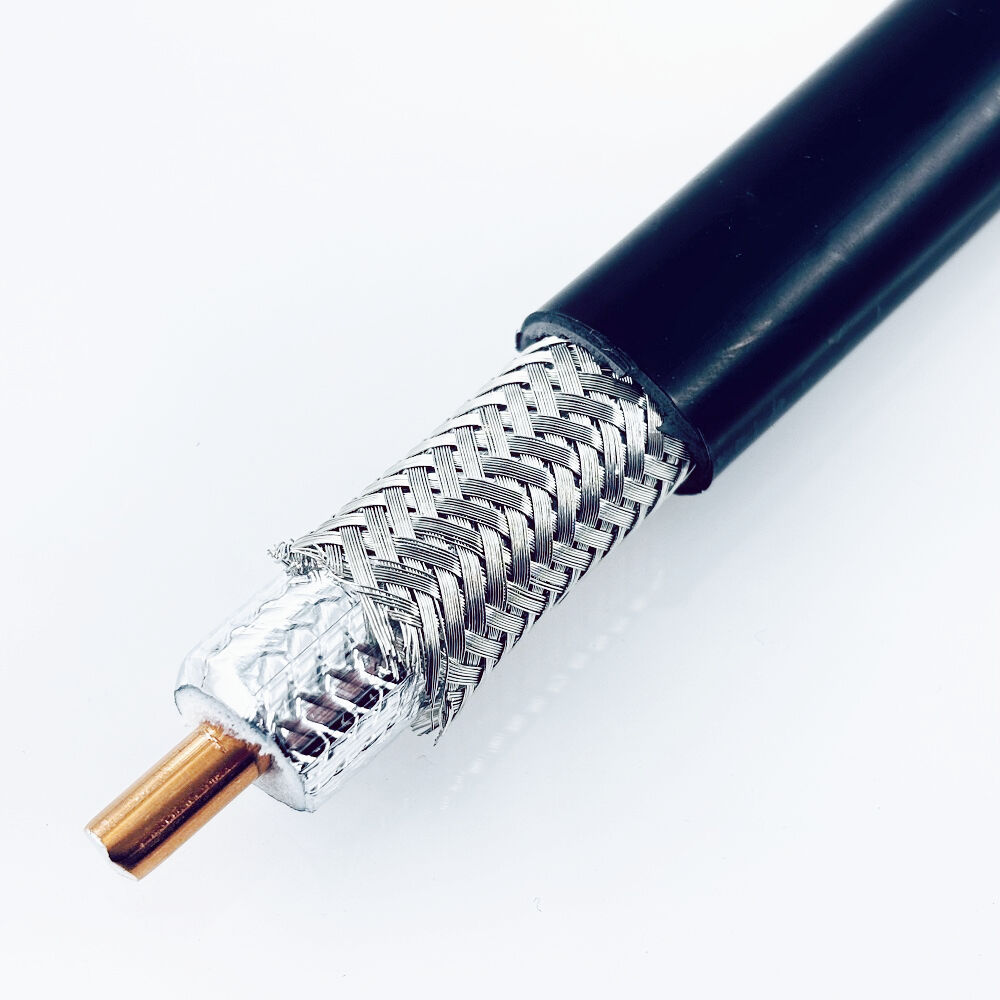
Why LMR600 Excels in Low-Loss RF Transmission for Base Stations
Attenuation Performance Across VHF, UHF, and Cellular Bands (700–2600 MHz)
The LMR600 cable offers exceptional low-loss characteristics that make it ideal for those long distance connections between cell towers and equipment, particularly when runs go beyond 300 feet. When looking at common cellular frequency ranges like 900, 1800 and 2100 MHz, these cables lose only half as much signal compared to standard 400 series coaxial cables and actually perform with 75% less signal degradation than regular RG6 cables. Take a 100 foot stretch of LMR600 for example it delivers roughly the same radio frequency performance as what would be expected from just 25 feet of RG6 cable. What makes this possible? The secret lies in the special foam polyethylene insulation inside. This material significantly reduces how much RF energy gets lost along the way, all while keeping the electrical resistance stable throughout various frequency ranges from VHF right up to the higher end of UHF spectrum. And that stability directly impacts network reliability since too much signal loss can really mess with data transmission quality and cause gaps in service coverage areas.
Shielding Integrity and Foam PE Dielectric: How They Preserve Signal Fidelity Over 300+ ft Runs
The combination of aluminum foil and tinned copper braid in dual-layer shielding delivers around 90 dB of protection against interference, which is actually about 50 dB better than what standard coax cables can manage. This setup really helps block electromagnetic interference coming from nearby electronic devices or running alongside other cables. When paired with the consistent air cell pattern found in foam PE dielectrics, we get cables that maintain their 50-ohm impedance throughout their length while keeping signal reflections to a minimum even when signals travel long distances. Tests in actual field conditions show less than 1.5 dB variation in signal strength over stretches of 300 feet at frequencies around 2600 MHz. That means cleaner transmission of 4G and 5G signals, and importantly, significantly fewer errors in data transmission where lots of devices are packed together in city environments.
Critical LMR600 Applications in Cellular Infrastructure
Tower-Mounted Antenna Feeds and Remote Radio Head (RRH) Connections
LMR600 has become the go to choice for those tricky tower mounted antenna feeds and RRH connections where keeping signal quality intact over long vertical runs above 300 feet really matters. What makes it stand out? Well, it cuts down on signal loss by about half compared to standard 400 series cables when working within the 700 to 2600 MHz range. This means signals stay strong between remote radios and baseband units even when there's a height difference of more than 150 feet between them. The cable features a foam PE dielectric material along with a double layer shield that knocks electromagnetic interference down by at least 50 dB compared to cables with just one layer of shielding. This helps prevent dropped calls in areas where network traffic gets heavy. Field tests have shown this cable works reliably from temperatures as cold as minus 40 degrees Celsius all the way up to plus 85 degrees Celsius. So whether deploying 4G LTE or getting ready for 5G NR networks, LMR600 delivers solid performance on actual towers without needing any special adjustments for heat or signal strength compensation.
Integration with DAS, Repeaters, and Small Cell Backhaul Links
The LMR600 cable plays a key role in distributed antenna systems (DAS) when distributing multiple carriers throughout complicated spaces such as large sports arenas and international airports. It handles signal loss better than other cables which often struggle in these environments. What makes this cable stand out is how flexible it actually is. Technicians can route it around tight corners inside conduit systems without damaging the protective shielding layer. This characteristic makes it particularly useful for installing repeaters that fill in coverage holes left by larger cellular towers. When used for connecting small cells together, LMR600 maintains data speeds above 1 gigabit per second over distances ranging from about 300 feet up to 500 feet between street level equipment and central aggregation points. The outer jacket resists damage from sunlight so it works well mounted outdoors on telephone poles or attached to building walls. With a voltage standing wave ratio below 1.15:1, there's minimal signal reflection issues even in complex network setups with multiple nodes. Field tests conducted in tall buildings equipped with small cell technology consistently measure less than 0.3 decibels of signal loss per meter at frequencies around 2.6 GHz, which satisfies the strict quality standards required by major mobile network operators today.
LMR600 vs. Common Alternatives: Real-World Loss Comparison and Selection Criteria
Quantitative Attenuation Benchmarks: LMR600 vs. RG6, CM400, and LMR400 at 900/1800/2100 MHz
Signal attenuation directly governs system reach, amplifier staging, and spectral efficiency in cellular infrastructure. At 100-ft runs across critical bands, LMR600 consistently delivers superior RF performance:
| Frequency | RG6 | CM400 | LMR400 | LMR600 |
|---|---|---|---|---|
| 900 MHz | 4.8 dB | 3.2 dB | 2.4 dB | 1.6 dB |
| 1800 MHz | 7.1 dB | 4.7 dB | 3.5 dB | 2.3 dB |
| 2100 MHz | 8.3 dB | 5.5 dB | 4.1 dB | 2.7 dB |
Key insights:
- LMR600 achieves 40–50% lower attenuation than LMR400 across all bands
- RG6 suffers up to 3× higher loss than LMR600 at 2100 MHz
- CM400 lags by 2.4–3.2 dB—equivalent to adding 60–100 ft of extra cable length
These differences translate directly into deployment outcomes: extended passive link distances, reduced need for tower-mounted amplifiers, and fewer interference-related packet errors. For 5G deployments operating above 1.8 GHz—where every 0.1 dB of margin affects coverage and capacity—LMR600’s performance justifies its use where signal fidelity cannot be compromised.
FAQ
What is the LMR600 cable used for?
The LMR600 cable is primarily used for low-loss RF transmission in cellular infrastructure, tower-mounted antenna feeds, Remote Radio Head (RRH) connections, distributed antenna systems, repeater installations, and small cell backhaul links.
How does LMR600 minimize signal loss?
LMR600 minimizes signal loss through its special foam polyethylene insulation which reduces RF energy loss, and the dual-layer shielding of aluminum foil and tinned copper braid which offers around 90 dB of protection against interference.
How does LMR600 compare to other cables like RG6 or LMR400?
Compared to RG6 and LMR400, LMR600 delivers significantly lower attenuation, achieving 40-50% lower attenuation than LMR400. It also suffers less signal loss than RG6, showing up to 3× better performance at commonly used frequencies like 2100 MHz.
Is LMR600 suitable for outdoor installations?
Yes, LMR600 is suitable for outdoor installations. Its outer jacket resists damage from sunlight, making it ideal for mounting on telephone poles or building walls.