 EN
EN

Coaxial Cable: What Makes It a Popular Choice in Communication Systems?
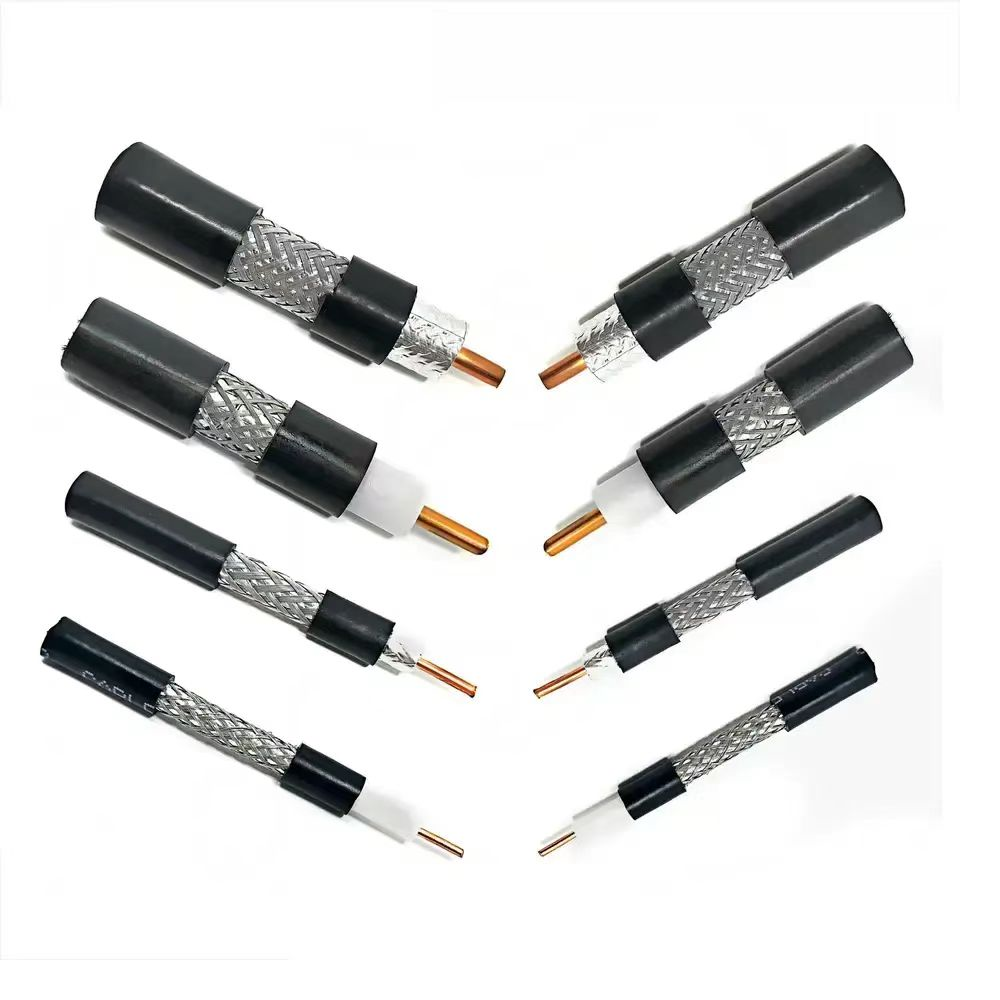
Anatomy of Coaxial Cable: Core Components and Shielding
Copper Conductor and Dielectric Insulation
The copper core is used in coaxial cables for its very good electrical conductivity typically 97-98%. This high level of conductivity facilitates the efficient transmission of signals over great distances. The conductor of the cable is insulated with a dielectric material to avoid signal loss. It is this insulation, usually of polyethylene or Teflon, that acts as a shield to preserve the purity of signals being carried. The coaction of conductor and dielectric insulation largely determines coaxial cable impedance, usually 75 ohms for video and 50 ohms for RF. Taken together, these factors are at the basis of the functional efficiency of coaxial cables.
Braided Mesh for EMI Protection
The double weave mesh is an essential element in coaxial cables, made of copper or aluminium, that helps protect from EMI. This 'cage' provided by the outer shield around the centre conductor provides shielding from external, unwanted electromagnetic signals. This protection is critical in order to preserve signal integrity, particularly when EMI levels are high. The construction of the braided mesh delivers heavy-duty shielding while remaining light weight, which can be especially important when cable runs are long and weight becomes an issue. It has been reported that good EMI shielding can lower interference by 30 dB or more, greatly enhancing quality and dependability of the signals.
Protective Jacket and Cable Clamp Integration
Coaxial cable further benefits from a strong protective jacket of, for example, PVC or polyethylene, which is able to withstand environmental influences, such as water, temperature changes and mechanical damage. This outside coating is a significant component in the extended life of the cable, with research indicating that a high-strength outer coat can elongate the life of a cable by 20-30%. They also play a critical role during installation by eliminating strain on the cable that could otherwise lead to early breakage. Clamps add strength and resilience to your cable by securing it in place, minimizing the risk of damage to the cable that could cause a loss of signal over time.
Why Coaxial Dominates Signal Transmission Systems
Superior EMI Resistance in RF Cable Applications
Due to their construction that contains the signals within the inner conductor coaxial cables also provide better EMI (electromagnetic interference) resistance. This configuration is especially important when working with RF applications, because noise can debilitate data being sent. Coaxial cords offer clean, clear signals through less interference and noise. A study indicates that coax cables are less susceptible to EMI when compared to twisted pair cables where on average signals on the wire can be cut by 25%.
Low Signal Loss Over Long Distances
Coaxial Cables are skillfully manufactured to very low loss, which offers an efficient method of transmitting high frequency signals over long distances. This is especially beneficial in applications where signal integrity is critical. The usual amount of signal reduction when using coax is low (approximately 0.5 dB for each 100 feet, depending upon the frequency and condition), this is much lower than with other forms of cables. Research has also shown that coaxial cables remain stable over distances greater than 500 ft with minimal degradation, providing uniform performance over large distances.
Compatibility with Couplers and Splitters
One of the advantages of coaxial cables are they are play nice' with splitters and couplers, making coaxial cables very useful in complex signal distribution schemes. This flexibility optimizes the ease and speed of system installation and modification without the requirement for special hardware and can be used in a variety of applications as a flexible solution. Industry by industry, studies show that coaxial systems can reduce the overall installation costs by as much as 15% because of the flexibility of the system, and not just because they're more efficient.
Coaxial vs. Fiber Optic: Balancing Performance and Practicality
Cost-Effectiveness in Existing Infrastructure
Coax is also frequently cheaper to install in many existing homes or businesses building versus fiber optic cables. This cost advantage is gained as a result of their simplified installation, along with the ready availability of coaxial parts and devices. For businesses and homeowners seeking to enhance their networks, economic evaluations have shown that replacing the existing coaxial network can be completed for 30-40% less cost than installation of a new fiber optic system.
Dummy Load Compatibility in Testing Scenarios
For testing purposes, coaxial systems can take advantage of compatibility with dummy loads that provide safe and precise signal integrity testing without any service interruptions. This feature eased down time and troubleshoog, permitting efficient and reliable operation of the machine. +850, and use of dummy loads in coaxial systems can increase test speed by as much as 20%, resulting in a more productive system and less system down-time."
Modern Applications Fueling Coaxial Relevance
5G Network Backhaul Connections
5G and the role of coaxial cables As 5G is gearing up, the importance of coaxial cables in 5G network backhaul connections is evident, which indicates these are still significant components in the current telecom infrastructures. These cables provide the required connectivity between base stations and the core network, so that the high data rates necessary for 5G are achieved. According to market research, demand for coaxial cables in 5G applications is expected to grow by 25% over the next five years and coaxial cables are indispensable in the build-out of 5G networks around the world. This development illustrates the unparalleled stability of coaxial cabling in telephony.
Hybrid Fiber-Coaxial (HFC) Deployments
Hybrid Fiber-Coaxial (HFC) networks demonstrate the integration of fiber-optic and coaxial cables and the fusion of the advantages of the two cabling technologies for broadband services. Combined with both fiber and coaxial, HFC networks boost capacity and decrease cost-per-megabyte, thereby enabling consumers to achieve superior internet speeds. Field trials have proved that such networks can support download speeds of over 1 Gbps, which is enough to satisfy the needs of the current internet users. This hybrid method capitalizes on coaxial cableâs installed infrastructure for optimal performance and low cost.
Military Communication Systems
In military communications is utilized the coax cables as they offer reliable data transmission, even in harsh conditions. A combination of ruggedized construction and broadband data capabilities allows these antennas to transmit tactical communications and secure data, and to provide real-time situational awareness. It is reported by defense industry that more than 75% of military communication systems are co-ax cabled based as they are more reliable and efficient. Such large scale deployment indicates the vital role that coaxial cable performs in the reliable and robust communications of military missions.
Future-Proofing with Coaxial Technology
Adaptations for High-Frequency RF Signals
Advances in technology are leading to the evolution of the design of coaxial cable, especially for transmitting high frequency RF, which is very important in supporting new technology. Through the use of upgraded materials and advanced construction methods, coaxial can be made to improve bandwidth a great deal. Later works also show the ability of these new cables to work at frequencies up to 60 GHz, demonstrating their flexibility and the potential for future use in broadband telecommunication systems. The evolution of the coaxial technology continues to be a key focus, while demand in higher frequencies grows.
Sustainability in Legacy System Upgrades
Coaxial upgrading legacy systems are increasingly used and is popular for the cost-effective and easy integration. Reusability of existing infrastructures can enable sustainability to be implemented in organizations, because it reduce waste and resource consumption. According to leading industry research, sustainable system improvements can extend the life of existing systems and potentially reduce operating costs by as much as 20 percent. With coaxial technology, companies can optimise their systems efficiently and in the region of the two targets of reducing cost and being eco-friendly.
