 EN
EN

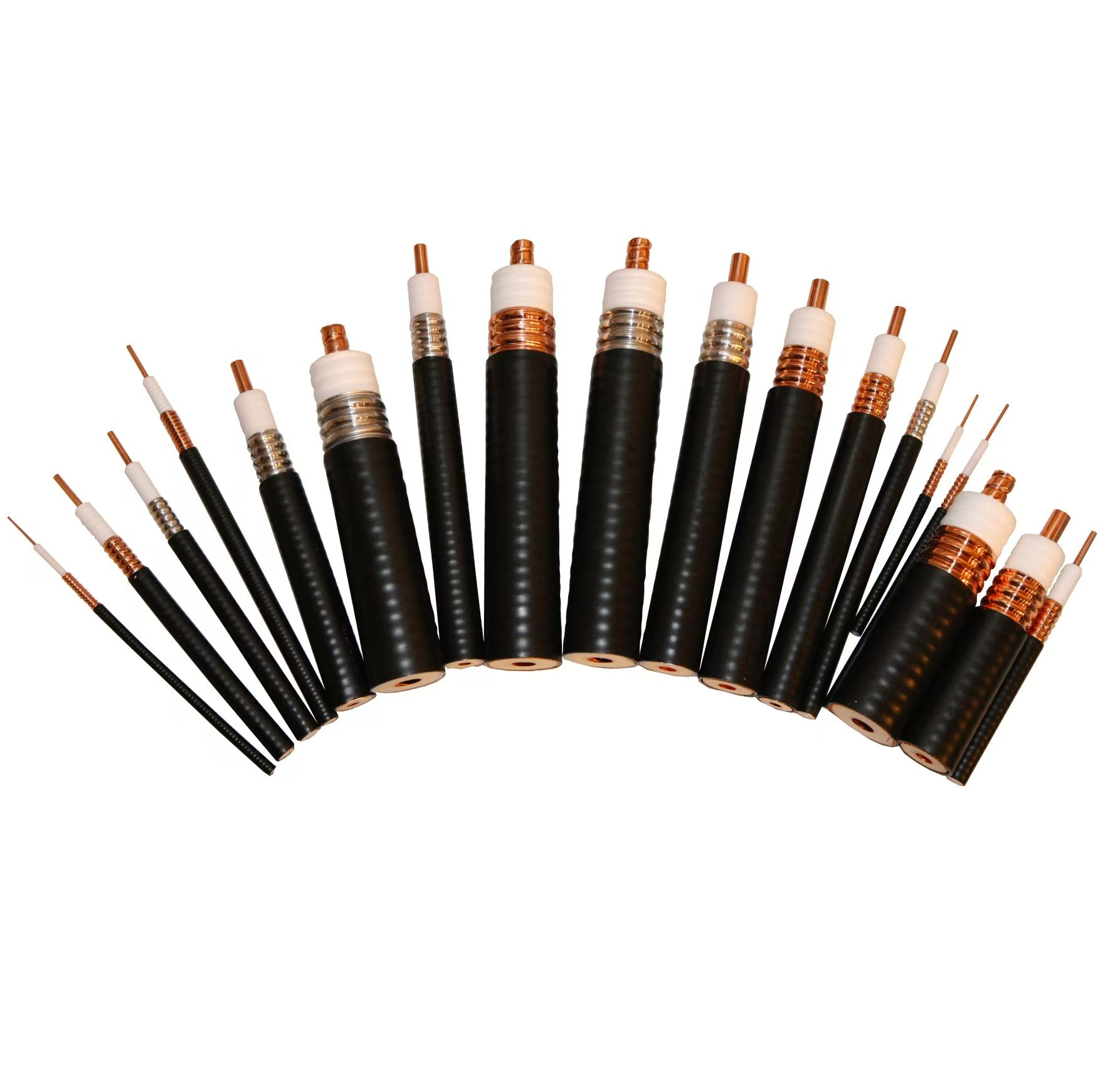
Feeder Cable: Key Considerations for Optimal Signal Transmission
Understanding Feeder Cable Fundamentals for Signal Integrity
Coaxial Cable vs. Feeder Cable: Core Differences
Feeders and coaxials perform different signal transmittals each are suitable for different applications. Feeder cables, which are strong and offer high frequency, are used mainly in telecommunications and cable networks. They are perhaps best known for their ability to carry radio frequency signals over large distances while preserving signal quality with minimal loss. Correspondingly, low frequency signals are generally those that can be sent through such cable-units while high frequency, multi-band data signals are those that are generally incapable of so being transmitted. On the other hand, co-axial cables are widely used as simple and effective cable units used in consumer equipment such as cable T.V. and internet connections and may be of the variety capable of supporting a moderate frequency.
- Feeder Cable Attributes:
- High frequency capacity
- Low attenuation
- Resistance to external interference
- Coaxial Cable Attributes:
- Moderate frequency capacity
- Utilized in consumer applications
The superior performance of feeder cables makes them indispensable in industries requiring efficient and reliable signal transmission, whereas coaxial cables cater to everyday consumer needs.
Impedance Matching Requirements (50Ω vs. 75Ω)
Feeder cables must minimize loss and optimize signal transfer, so impedance matching headphones wire is very important. Feeder cables are available with 50Ω impedance and 75Ω impedance to meet different system applications. RF communication commonly uses 50Ω cable which has good power handling and minimal reflections, and 75Ω cables that are able to transmit video signals more effectively are the preference for broadcast applications.
- 50Ω Cable Applications:
- RF communications
- Mobile network infrastructure
- 75Ω Cable Applications:
- Broadcast channels
Mismatched impedance can result in reflected signals and energy loss, hindering the performance of communication systems. By ensuring proper impedance matching, these cables help maintain excellent signal quality and prevent degradation.
Shielding Effectiveness Against EMI/RFI
Shielding is a primary consideration when it comes to the design of feeder cables, which is essential for EMI/RFI protection. Methods such as employing aluminum and copper as non-conductive or non propagating materials are commonly used for shielding as these materials are conductive and reflective of undesired signals. These substrates make a big difference in overall signal quality which helps your chances of interference and signal integrity.
- Shielding Techniques:
- Use of conductive materials (e.g., aluminum, copper)
- Layered insulation to enhance protection
Unshielded installations often suffer signal degradation due to external noise, impacting communication reliability. Statistics show that installations with inadequate shielding can lose up to 30% of their signal strength through EMI/RFI interference. Thus, employing effective shielding techniques in feeder cables is imperative for ensuring high-performance communication.
Critical Factors Affecting Signal Transmission Quality
Attenuation Rates Across Frequency Spectrums
Attenuation is the term for loss of signal strength as the signal passes through the medium, and comprehension of the same is important to evaluate feeder cable performance in different frequency bands. Various cables have different attenuation characteristics at range of frequencies so it is important to select proper cable based on application and frequency band. For example, a cable with low attenuation at higher frequencies will maintain better signal integrity over longer runs. Measures like decibel (dB) are employed in the industry to measure the amount of decrease and dictate what is acceptable loss to guarantee dependable performance in the business environment.
Impact of Cable Length on Signal Degradation
[0089] The length of a cable is an important factor in the reduction in signal strength, the longer the cable the greater the reduction in strength. The signal attenuation as a function of the cable length may have a very complex, and usually the cable material and structure dependent, mathematical form. In the field, a certain threshold is reached when people can no longer ignore the decay and degradation and it has a noticeable impact on general performance. This is especially critical among project designers and installers who must plan on the length with a very strict and high efficiency level to transmit the signal with minimum loss.
Environmental Stressors: Temperature and Moisture
The performance of feeder cable is greatly influenced by temperature and humidity environment. Cable properties vary according to temperature and can reach critical points at which the function of the cable is compromised. Add to that the corrosion-inducing effects of moisture, which only serve to increase signal attenuation. Research has demonstrated that moist conditions may seriously affect the quality of the signal and emphasizes the need for more robust material and protective coatings. One way to address these challenges is selecting cables that are environmentally tough – so they can connect and communicate signals effectively across various environments.
Installation Best Practices for Feeder Systems
Proper Use of Cable Clamps for Strain Relief
A strategic application of cable clamps is important in preventing stress on the feeder cable during installation. Cable clamps are a part of the flexible and industrial series of clamps that are used for securing and holding cables associated with strain relief and other terminations. In order to provide optimal resistance to mechanical stress with time, certain usage procedures should be followed. These include load sharing among multiple clamps and adjusting the tension to allow for expansion and contraction through temperature changes. Rules of thumb usually suggest clamping at such distances as the cable’s own weight and tension requires in order to provide the best strain relief.
Coupler Selection and Connection Techniques
The selection of the appropriate coupler is critical to the integrity of connections in feeder cable systems. When you are choosing, many aspects should be considered, such as feeder cable type, operating frequency, and environment. It is important to connect properly â this is crucial for as minimum a signal loss as possible â so, make sure to follow the best practices for this, examples being to check that the connector is tight and protected from water. Incorrect connections may result in considerable loss of system performance with aggravated signal attenuation and possible data delays. It’s also prudent when working with anything electrical to double check each connection to ensure your system works properly and reliably.
Grounding Strategies for Noise Reduction
It is important to properly ground in order to minimize electrical noise and maximize signal integrity in feeder systems. Good ground and reduce the risk of electromagnetic interference to ensure the signal is transmitted are transmitted as pure sound quality as possible. These can greatly enhance the rejection of noise with ground loops and decent grounding rods techniques. Poor grounding, however, can adversely affect the service life of the feeder system, resulting in unscheduled downtime and higher maintenance expenditure. It is essential to know and follow compliance standards on grounding procedures which provide specific instructions on how to implement the procedures in different circumstances to ensure signal quality.
Maintenance and Troubleshooting Protocols
SWR Testing and Signal Loss Measurement
It’s important to understand that SWR testing is often a staple of testing to determine the health of feeder cables in a system. It's the indicator of how effectively RF signals are transmitted without being reflected back from the cable and its ideal match in the cable. Technicians make use of SWR meters to perform SWR tests by measuring the SWR ratio at various frequencies using RF analyzers. The anticipated outcomes are minimum signal reflection, and hence low SWR ratio (,where normally SWR<1.5). It is always good to comply with industry standards, such as standards set by Institute of Electrical and Electronics Engineers (IEEE), to create benchmarks for acceptable SWR ratios in different applications to guarantee reliable behavior.
Identifying Common Failure Points
Feeding cable systems have parts that tend to fail relatively easily, with a major impact to the entire field. Common causes of failure include mechanical damage, bad connections, and environmental interference. Physical damage is an estimated 25% and bad connections are a hefty 40% according to industry statistics. To minimize these failures, I suggest use of cable clamps to reduce any strain, shield from interference, and proper connections. Examining case histories of failures can provide useful information on maintenance, and illustrate the merits of preventive measures and a regular inspections to maintain system reliability.
When to Use Attenuators for Signal Balancing
Attenuators are required in feeder systems in order to prevent excessive levels which may lead to overload and distort the signal. These attenuate signal power, to keep it within the permissible arm).in both transmitters and receivers. The manuals recommend the use of attenuators if chosen, as the output level can be too high for some other equipment, to protect signal quality, when the signal level is above certain thresholds. For example, when amplifiers over-boost signals, attenuators restore balance. Success stories elucidate signal balancing via proper integration of attenuators and emphasize the significance of their implementation into the system for stable operation.
In closing Being able to manage, troubleshoot and maintain in these EnglishFeeder_III_2012diag1012cu10685.pdf 41 types of methods outlined above, provides the user the ability to better manage the feeder system, reducing downtime while increasing efficiency. By adhering to SWR testing protocols, locating failure points, and practicing the fine art of attenuator usage you can prevent common problems and prolong the life of your system. As feeder systems become more and more the norm in the advanced communication networks, these protocols are fundamental to continued operational superiority.
Future-Proofing Feeder Cable Infrastructure
5G Network Readiness Requirements
With the 5G world rapidly approaching, feeder cables that are used to support these networks are more demanding than ever. Feeder cables will be required for a much higher bandwidth in order to support 5G with faster data and connection requirements. This includes choosing cables with better transmission quality to reduce signal interference and signal delay. As reported—from the world of telecommunications, demand for strong, ready 5G infrastructure is expected to explode; but markets are trending toward greater capacity builds. One of such examples is the prediction of more than 2 billion people being 5G-enabled users in 2025, due to the 5G networks' coverage that will be required [1].
Emerging Materials for Low-Loss Applications
Advancements in material science are leading to feeder cables with minimal signal loss, available with superior performance and durability. These exotic materials—advanced polymers and exotic alloys—may be more conductive and more durable in extreme environments than copper or aluminum alternatives. With regard to practical application, these materials are expected to extend cable life and reduce cable operation costs. Researches suggest that employment of these new materials is capable to decrease the signal loss up to 30%, demonstrating their efficiency for field demands of the high efficiency and reliability. This makes them an ideal solution for companies that seek to improve operational reliability and lower maintenance costs.
Smart Load Management in Modern Systems
With feeder cable management incorporated with smart technology, a whole new way of maximizing systems efficiency and monitoring performance is introduced. Smart feedermanagement systems are changing the way that we maintain feeder cables by providing us with live data and analytics on load distribution and capacity. For instance, due to the auto-load distribution control of the IoT monitoring devices, i.e. the auto-MLD control, in current applications, automatic regulation of MLD (load distribution) without overloads and waste can be made. Compared with the conventional schemes, the proposed intelligent schemes provide better energy-savings and reliability. In the future, smart load management will further mature and fine-tune feeder system performance, affording smart control of energy distribution as technological developments make their rampant progress.
[1] This forecast is supported by industry studies published by credible sources in telecommunications forecasting the widespread adoption of 5G technology.
