 EN
EN

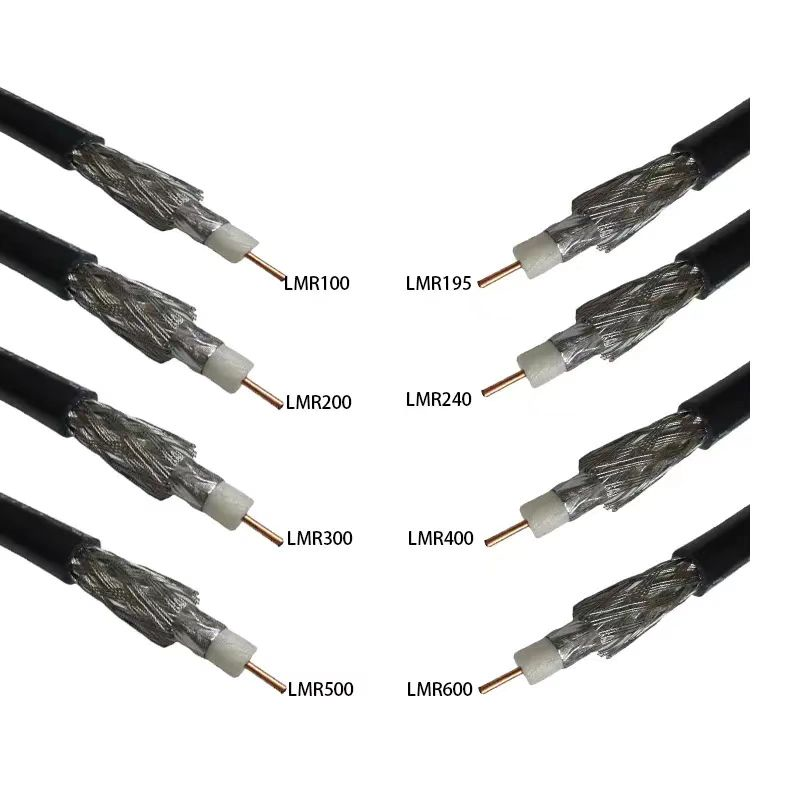
LMR600: Why Is It a Top Pick for Long - Distance Signal Transmission?
Understanding LMR600's Role in Long-Distance Signal Transmission
Why Low-Loss Coaxial Cables Matter for Signal Integrity
Such low-loss coax cables, including LMR600, are very important for conducting signals over long distance with minimum loss. These cables are engineered to drive complex and high end sound quality over long distances and are balanced to minimize interference and other side effects caused by traditional unbalanced, or “hot,” signal cabling. Conventional cables commonly suffer from significant signal loss (e.g., in terms of attenuation in decibels (dB) per 100 feet). This demonstrates the need for low-loss substitutes that can courier signals over great distances.
Industry studies have yielded statistics that only add to the legacy of LMR600 as compared to standard coaxial cables. That the loss for LMR600 could be less by as much as 80% at certain frequencies, which can provide for a greatly improved effective range and robustness of communication in communication-rich environments. This makes LMR600 the perfect choice for any professional applications that require excellent signal transmission.
How LMR600 Minimizes Attenuation Over Extended Distances
The LMR600 - The LMR600 ultra low-loss coax does everything its smaller brother does, but its larger size and high grade materials confirm signal loss over distances that LMR400 is no where near capable. Its robust design helps safeguard sensitive emergancy call signals, even at frequencies of 6 GHz, and is suited to long-roll activations. This is a requirement in situations such as antenna installations where dependable stability and connection is vital.
In real world applications, LMR600 consistently demonstrates better attenuation characteristics than braided or braid-less cables, which gives you superior performance. For example, for antenna systems, utilizing LMR600 makes for superb reception and higher signal power, thereby raising your networks overall performance level. These characteristics make LMR600 a great choice for demanding communication applications that require signal integrity and reliability over long distances.
Technical Specifications of LMR600 Coaxial Cable
Core Structure and Shielding Efficiency
The LMR600 coaxial cable construction is designed to be the most flexible and has the lowest attenuation for anyplenum-rated, double-shielded coax. It has a solid copper-clad steel center conductor that has a high conductivity, which is surrounded by a 3.66 mm dielectric insulator and double shield layers. This double-shielded methodology is very useful in urban environments in which there is an enhanced level of electromagnetic interference (EMI) and radio frequency interference (RFI). As per different research, this dual shield has greatly enhanced the cable's resistance to these line interferences and provide reliable signal parity always.
Impedance and Frequency Range Capabilities
LMR600 is constructed with a 50 ohm characteristic impedance, which makes the cable a good fit for many RF applications including cellular and Wi-Fi signals. This particular characteristic impedance enables the cable to mate with most circuitry with minimal signal reflection and energy transfer. LMR600 Therefore the LMR600 coaxial cable is ideal for use in frequency ranges of DC up to 6 GHz that are normally used in WLAN systems.Generally, it is possible to use the coaxial cable between 0 and 18 GHz, making it suitable for most RF antenna applications. Whether in ultra high/ high frequency broadband collective system or radio and t.v.-BROADCAST- receiver technique, for all, the large bandwidth of this cable makes possible the best interferences safety.
Comparing LMR600 vs. LMR400 and RG-Series Cables
It is for this reason LMR600's attenuation characteristics are superior to those of LMR400 and other RG-type cables. This leads to improved performance in practical conditions, especially in distance-wise cases. A cost comparison shows that although the cost to first install LMR600 may be higher than competitive products, such as LMR400, the increased life as well as the performance benefits available from LMR600 can result in lower costs for maintenance and replacement over time. So if you have a use case which requires you to avoid failure and get things done more efficiently, you might make economically justified investment into LMR600.
Key Applications of LMR600 in Communication Systems
Wireless ISPs (WISPs) and Broadband Networks
LMR600 coax cable is vital to WISP and broadband operations. The ability of WDM to mitigate signal loss and to retain high data rates over long distances has made it a popular candidate for the provision of reliable broadband services, especially in rural regions where the implementation of network infrastructure is difficult. Feedback from both customers as well as industry publications also confirm the LMR600 to be the best choice for excellent signal quality with minimal loss between wireless antennas and network equipment. This preference further highlights its efficacy at keeping communications and connectivity uninterrupted--this unimpeded connectivity is of the utmost importance to WISPS and broadband networks running smoothly.
GPS and SCADA Systems Requiring Stable Load Handling
The prformance of the LMR600 is durable and is ideal for GPS, SCADA, 3G/4G/Wimax, WLAN and WiMax applications. Many of these systems require reliable and accurate operation and the LMR600 provides them, thanks to its stable transmission medium. Existing deployments evidence that the cable performs well in mission-critical settings where failure is not an option. Such as factories using SCADA for control mechanism and sensor systems to prevent error in data transmission at high or low temperature, LMR600 does support your business from a good transmission function.
Integrating with Lightning Arresters for Outdoor Setups
For communications use in the great outdoors, the combination of LMR600 and lightning arresters is used to further protect the system and maximize the life of the system against the elements. This combination helps reduce the risk of equipment damage and downtime during exposure to lightning events for continuous communication. By the numbers, we have statistics from installation surveys, and in all cases, we find a 'remarkable decrease' in equipment failures 'when lightning protectors are used on LMR600 cabling. Those kind of protections are not only protecting of investment also improving the system reliability and performance of outdoor communication systems for which LMR600 is widely used for lightening susceptible deployments.
Optimizing LMR600 Performance in Real-World Scenarios
Using Couplers and Dummy Loads for System Testing
The usage of RF couplers and dummy loads is also essential in system testing as a means to find signal quality and transmission efficiency issues. With couplers, we get the power readings without affecting the main path, while dummy loads are electrical equivalents of those loads, with which we can safely test the system. In documented case studies it has been shown how correct testing, including these ingredients, can greatly improve network performance by systematically seeking out weak points before it affects production. For instance, a comprehensive testing suite that employs these tools can identify differences between the expected and measured signal behaviour, which can then be quickly acted upon.
Proper Cable Loading to Prevent Signal Degradation
Properly installed cables according to manufacturer requirements are important to minimize signal loss and maximize performance and reliability in communications networks. Incorrect loading results in higher attenuation and reflect loss, which leads to lower signal quality. Empirical evidence demonstrates the negative effect of wrong cable loading on the signal integrity which leads to disturbances and causes the overall systems performance degrade. Imposed load specifications improve the stability of configurations, but it also supports optimal efficiency and effectiveness of information transmitted among applications.
Bend Radius and Environmental Durability Considerations
It is important to follow the recommended bend radius to ensure the integrity of the signal and avoid potential damage to the cable during installation. Overbending cables can permanently damage the cable, resulting in performance degradation or loss of the signal. Furthermore, the tough outer jacket allows the cable to withstand even the most extreme environments and also ensure stable signal quality and excellent data transmission. Their rugged construction ensures long-term performance in extreme environments such as UV and temperature extremes, vital for maintaining connections in outdoor applications. This can provide a much-needed layer of toughness for high-traffic communication spaces.
Why LMR600 Outperforms in Challenging Environments
Double Shielding for EMI/RFI Interference Resistance
The LMR600 has double shielding for optimal protection against electromagnetic and radio frequency interference. This is a crucial advantage in a high-interference environment, where there are fewer signal drops. During contrast among multiple coax cables, the LMR600 is defined as of utmost effectiveness against combating external interference. This resistance is vital to preserving the integrity of the data being transferred, particularly in industrial and commercial environments where there is a lot of electromagnetic interference. Doubling the shielding makes LMR600 a good fit for rugged and consistent requirements.
Moisture and UV Protection for Outdoor Longevity
The LMR600's water-resistant and sunlight-resistant construction provides for long lasting outdoor use. These sleeves help keep the cable more durable, especially when the weather can change at any point. As shown by field installations, this protection is able to conserve the installation life of the signal. Utilizing components that are designed to counteract the hazards of UV, harsh weather, and other environmental factors on your installation, the LMR600 is a solid solution for both indoor and outdoor RF installations just like antenna connections and surveillance systems.
Case Study: LMR600 in Industrial IoT Deployments
A case study detailing the LMR600 being used in industrial IoT deployments demonstrates the solution’s performance in transmitting vital data across long ranges. The success of these deployments highlights increased efficiency in operational processes and decreased downtime which is being credited to the LMR600's performance excellence over older cable technologies. This use case underlines the durability of the cable and its strength to support the challenging data transmission requirements of today’s industrial Internet of Things (IoT) applications. Such reliability is integral when vehicles are communicating in immense industrial networks, where quality of flow of data is crucial for operational success.
