 EN
EN

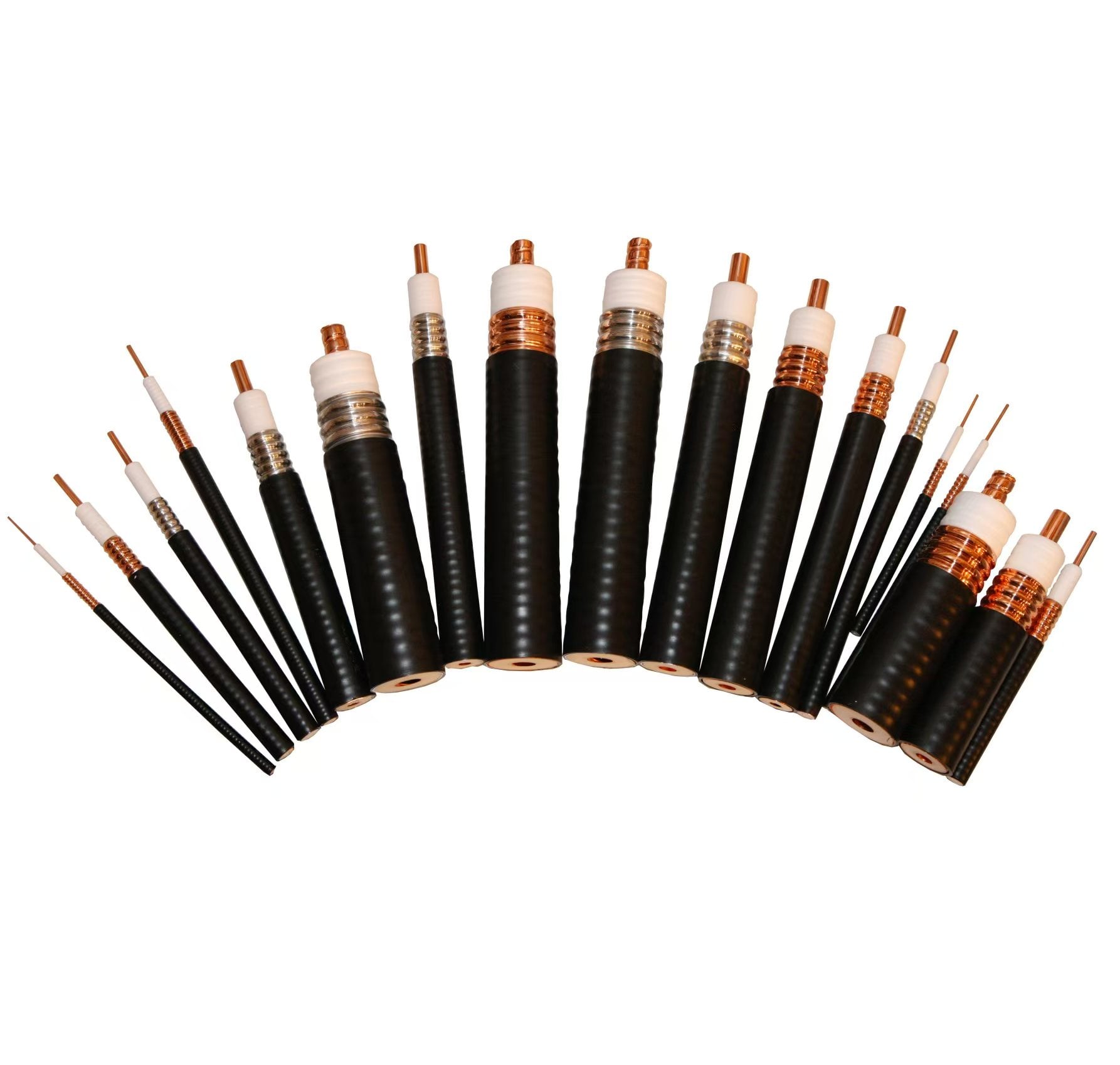
High-Quality RF Coaxial Cables: 5 Must-Have Traits
RF Performance: Signal Integrity, Impedance, and Frequency Support
Attenuation, return loss, and VSWR — core metrics for RF coaxial cable signal integrity
When it comes to maintaining good signal integrity in RF coaxial cables, there are really three main factors engineers look at: attenuation, return loss, and what's called VSWR. Let's start with attenuation, which basically tells us how much signal strength gets lost as it travels along the cable. This matters a lot for longer installations because something like 0.5 dB per meter might not seem bad on paper but can actually make a big difference in real world applications. Then we have return loss measured in decibels. This number shows how much of the signal bounces back instead of going through the system properly. Most professionals consider anything above 15 dB pretty good since that means most signals pass through without getting reflected back. The Voltage Standing Wave Ratio (VSWR) should stay under about 1.5 to 1 ratio to keep those unwanted reflections from messing up delicate receiver equipment. Some industry stats point out that when impedance starts drifting more than 5%, we're looking at potential losses of around 30% of our power output. That kind of numbers explains why manufacturers spend so much time perfecting their cable designs these days.
50-ohm vs 75-ohm impedance: matching system requirements to minimize reflections
Impedance matching is essential to prevent destructive signal reflections.
- 50-ohm cables are standard in wireless communication systems such as cellular networks and radar, where optimal power handling and low VSWR are critical.
-
75-ohm cables are preferred in broadcast and video applications due to their lower capacitance, which supports high-frequency signal fidelity.
Connecting mismatched components—such as a 75-ohm cable to 50-ohm equipment—can reflect up to 36% of the incident power, creating standing waves that distort signals. Maintaining end-to-end impedance consistency is therefore non-negotiable for reliable system performance.
Frequency range capability and its direct impact on attenuation and phase stability
The operating frequency directly influences cable performance and selection:
| Frequency Band | Attenuation Impact | Phase Stability Requirement |
|---|---|---|
| Sub-6 GHz | Moderate (0.1–0.3 dB/m) | ±2° phase tolerance |
| mmWave (24+ GHz) | High (0.8+ dB/m) | ±0.5° phase tolerance |
| At higher frequencies, skin effect and dielectric dispersion increase signal loss. Phase stability becomes especially crucial above 10 GHz—phase deviations exceeding 5° can disrupt timing in 5G beamforming arrays. Premium coaxial cables maintain phase coherence using helically wound shields and gas-injected foamed dielectrics, ensuring signal accuracy in demanding high-frequency applications. |
EMI Protection: Shielding Architecture and Effectiveness
Braided, foil, and hybrid shielding — trade-offs in coverage, flexibility, and RF coaxial cable EMI rejection
The way we design shielding matters a lot when it comes to protecting against electromagnetic interference. Braided shields are constructed from woven copper and give good mechanical strength with coverage ranging between about 70 to 95 percent. These work well in places with lots of vibration but don't perform so great at extremely high frequencies. Then there's foil shielding which covers almost everything since it uses thin layers of aluminum or copper. Great for those GHz range applications, but these foils tend to get damaged easily when bent back and forth repeatedly. That's why many engineers go for hybrid solutions that mix both methods together. They manage to block out noise pretty effectively with over 90 dB rejection while still being flexible enough not to break down. Because of this balance, hybrid shielding has become the go to option especially in sensitive areas like aerospace equipment and medical devices where getting rid of all that unwanted electrical noise just cant be compromised on.
Shielding effectiveness (SE) ratings and how multi-layer designs improve noise immunity
The shielding effectiveness (SE) of a cable, which is measured in decibels (dB), basically tells us how good it is at blocking out electromagnetic interference. Most regular commercial cables hit around 40 dB as their starting point, but when we get into military grade stuff, those numbers jump way up past 125 dB. When manufacturers go for multi layer designs like combining foil with braiding, they create two different lines of defense against interference. The foil part works great on reflecting away those pesky high frequency signals whereas the braided section handles the lower frequencies better. Putting these together cuts down on electromagnetic leakage quite substantially, maybe around 85% less than what we see with simple single layer shields. Getting the termination right all the way around 360 degrees and making sure grounding happens in segments really helps boost this performance. These practices become absolutely critical when dealing with places full of electromagnetic activity such as modern 5G cell towers or aircraft systems where signal clarity can mean the difference between success and failure.
Material & Construction Quality for Consistent RF Coaxial Cable Performance
Dielectric materials (foam PE, PTFE) and center conductor purity — their role in velocity of propagation and loss
What sits between the center conductor and the shield makes all the difference when it comes to how well the cable performs. Foam polyethylene and PTFE materials cut down on signal loss by around 40 percent compared to regular solid dielectrics because they have these really low dielectric constants, somewhere between 1.3 and 2.1. The result? Signals travel faster through them and stay stable even at frequencies above 6 GHz. For the center conductor itself, oxygen free copper is becoming popular choice these days. It delivers just over 100% of standard conductivity levels according to IACS measurements, which means about 25% less resistance than what we get with aluminum conductors. Plus, since OFC has such high purity levels, there's less distortion from skin effects happening at different temperatures. This helps maintain signal quality whether things are heating up or cooling down during operation, so performance stays pretty consistent no matter what kind of conditions the equipment faces.
Jacket compounds (LSZH, TPE, fluoropolymers) for environmental compatibility and mechanical resilience
Cable jackets serve as the first line of defense against environmental damage and physical wear. Materials labeled LSZH are specially formulated to limit harmful smoke when exposed to fire, and they pass important UL 1685 tests for vertical tray installations. This makes them particularly suitable for areas where people gather or work closely together. TPE materials stand out for their remarkable flexibility even at extremely cold temperatures around minus 55 degrees Celsius. They also hold up well against constant bending and rubbing that cables often experience in real world conditions. For harsh environments, fluoropolymer coatings such as FEP deliver exceptional protection from sunlight degradation, heat exposure up to 150 degrees Celsius, and corrosive substances found in industrial settings. Most importantly, these modern jacketing solutions maintain their integrity for more than a decade outdoors, keeping signal quality stable despite temperature changes that cause normal expansion and contraction cycles.
Mechanical & Environmental Reliability for Demanding Deployments
RF coaxial cables designed for high performance can handle some pretty tough situations. They're built to take on crushing forces exceeding 500 Newtons, survive around 10,000 bends, and work reliably even when temperatures swing between -55 degrees Celsius and +125 degrees Celsius. The outer jacket resists UV damage from sunlight exposure, and special layers block moisture so the cable maintains good signal quality even in humid conditions. Made with materials that don't react chemically, these cables stand up against fuels, various solvents, and salty air, which makes them ideal for places like airplanes, ships, and factories. When there's lots of vibration going on, the design keeps conductors inside from moving around, which helps maintain clear signals despite constant mechanical stress. Connectors rated IP67 stop dust and water from getting inside, making them suitable for dusty deserts or wet offshore platforms. These cables have been put through rigorous testing including military standard thermal shocks and accelerated aging processes. As a result, they deliver low PIM levels, keep latency consistent, and transmit signals without interruption, providing dependable performance exactly where things cannot fail.
FAQ
What factors impact RF coaxial cable signal integrity?
Key factors include attenuation, return loss, and VSWR, which are crucial for maintaining signal strength, minimizing reflections, and ensuring effective transmission.
How does impedance matching affect RF coaxial cable performance?
Impedance matching is vital to prevent signal reflections and power loss, ensuring reliable and consistent system performance.
What materials are suitable for RF coaxial cable jackets?
Jackets made from LSZH, TPE, and fluoropolymers offer environmental protection and mechanical resilience, maintaining signal quality in various conditions.
