 EN
EN

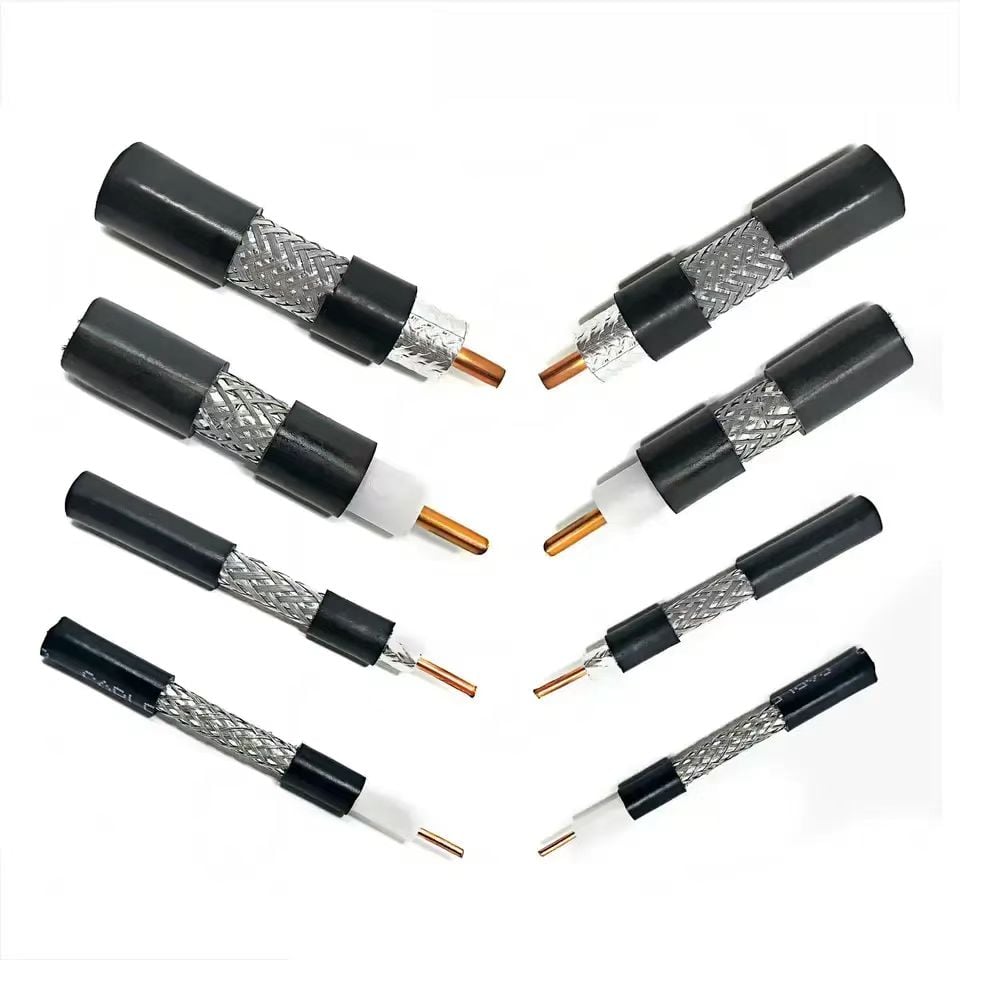
Best Coaxial Cable Uses: TV, Internet & Security
Cable Television and Satellite TV: Core Applications for Coaxial Cable
Role of Coaxial Cable in Modern CATV Systems
Despite newer technologies, coaxial cables still form the foundation for most Community Antenna Television (CATV) setups out there. These cables do a pretty good job at carrying those high frequency signals while keeping interference at bay. What makes them work so well? Well, they've got this protective layer around them that stops signals from leaking out, which means viewers get consistent service across all those hundreds of channels available today. According to industry reports from 2025, about 42 percent of cable TV networks worldwide rely on coaxial infrastructure. This is especially true in areas where laying down fiber optics just isn't practical or cost effective yet.
RG6 Coaxial Cable Applications in Residential Satellite Setups
The 18 AWG copper core combined with triple layer shielding in RG6 cables works really well for satellite TV installations most of the time. When running cable from those rooftop dishes down to the living room receiver, this setup cuts down on signal loss by around 15% over the old RG-59 stuff we used back in the day. Installers appreciate how flexible yet tough these cables are, which matters a lot when fishing them through walls or along exterior paths where they might get exposed to rain or snow. That's why so many homeowners end up going with RG6 despite the slightly higher price tag.
Signal Transmission Over Long Distances with Minimal Degradation
Modern coaxial cables achieve less than 3 dB signal loss per 100 feet at 1 GHz frequencies critical for maintaining HD and 4K video quality. Advances in dielectric materials and braided shielding allow reliable signal transmission over distances up to 1,500 feet, supporting cable TV expansion in suburban and rural areas.
Comparison of RG-6 and RG-11 for Extended Cable Television Runs
| Characteristic | RG-6 | RG-11 |
|---|---|---|
| Core Gauge | 18 AWG | 14 AWG |
| Attenuation | 6.1 dB/100m @ 1 GHz | 4.3 dB/100m @ 1 GHz |
| Max Run Length | 150m (Digital HD) | 230m (Digital HD) |
| Bend Radius | 30mm | 45mm |
RG-11's thicker 14 AWG conductor reduces attenuation by 29% over long runs, making it better suited for extended deployments. However, its larger bend radius and rigidity can complicate installation in confined spaces.
Case Study: Deployment in Multi-Dwelling Unit (MDU) Satellite Distribution
A 300-unit apartment retrofit utilized a hybrid RG6/RG-11 coaxial network to deliver 4K satellite TV across a 12-story building. Signal amplifiers placed every 50 meters maintained 98.7% signal integrity throughout the structure. This approach aligns with industry reports showing coaxial-based MDU systems reduce infrastructure costs by 40% compared to fiber alternatives.
Cable modems make use of the existing coaxial wiring already running into homes to provide fast internet connections, sometimes reaching download speeds of around 1.2 gigabits per second without needing any new cables installed. The latest versions of DOCSIS technology have pushed what coax can do even further. Version 3.1 gets down to 10 Gbps and back up to 6 Gbps, and version 4.0 brings us symmetrical 10 Gbps speeds both ways. Sure, fiber to the home has lower latency, but according to Broadband Analytics from 2023, most suburban areas with HFC actually hit the same 940 Mbps mark as fiber in about 8 out of 10 speed tests. When it comes to actual performance, RG-6 coax cables can handle more than 800 Mbps at distances up to 150 meters in HFC systems, which means they maintain signals 63% better than older RG-59 cables. Nearly 9 out of 10 cable companies across North America are expected to switch to DOCSIS 4.0 by 2025. This means coax networks will continue supporting those super fast multi-gigabit services thanks to improvements in noise reduction and expanding available bandwidth. For now, these upgraded coax systems serve as a cheaper alternative while we work our way toward having fiber everywhere.
CCTV and Security Systems: Reliable Surveillance with Coaxial Cable
Why CCTV Systems Still Rely on Coaxial Cable
Coaxial cables are still going strong in today's security setups because they just work so reliably. They handle interference pretty well too, which matters when running through walls and ceilings where all sorts of electrical stuff is happening. A lot of businesses upgrading their cameras last year kept their old coax wiring instead of tearing everything out and starting fresh. The numbers aren't exact but somewhere around two thirds did this trick, saving money on rewiring costs while getting both old school analog feeds and those newer HD over Coax options working together. What's interesting is these same coax lines can actually push out 4K quality footage now without needing any fancy network gear upgrades. Makes sense why some companies stick with what works rather than jumping ship to completely new systems every few years.
Use of LMR® Series and RG-59 in HD-over-Coax Systems
Modern coaxial variants like RG-59 and LMR® cables overcome bandwidth limitations in legacy CCTV systems. RG-59's optimized capacitance (16.5 pF/ft) supports 400 MHz transmission, sufficient for 4MP HD-over-Coax cameras. For longer distances, LMR®-400 with double shielding enables reliable signal delivery beyond 500 meters in industrial environments.
Minimizing Signal Loss in Outdoor Surveillance Setups
Three best practices preserve signal integrity in harsh conditions:
- Compression-type F-connectors reduce moisture ingress by 72% compared to screw-on types
- Nitrogen-purged junction boxes prevent corrosion in high-humidity coastal areas
- Mid-span amplification every 250 meters maintains signal loss below 1 dB across extended runs
Case Study: Large-Scale Commercial Security System Using Coaxial Backbone
A 2022 warehouse complex achieved 98.4% uptime across its 142-camera coaxial network using a tiered RG-6/LMR®-600 cabling strategy:
| Cable Type | Application | Max Run | Loss at 800 MHz |
|---|---|---|---|
| RG-6 | Indoor | 90m | 12.8 dB/100m |
| LMR®-600 | Perimeter | 210m | 6.1 dB/100m |
This hybrid design reduced cabling costs by 34% versus full fiber deployment while meeting sub-150 ms latency requirements for real-time intrusion detection.
Radio Frequency (RF) and Broadcast Applications
Coaxial cables deliver really strong performance in RF and broadcast systems because they use shielded transmission and get the impedance matching right. The way these cables are built with conductors inside each other helps cut down on electromagnetic interference or EMI, which means clearer signals even where there are lots of different RF sources around. Take emergency communication systems as an example they run into about 72 percent fewer problems when installed with proper coaxial wiring rather than those cheaper unshielded options according to some FCC research from 2023. Specific types like RG-11 or those special LMR variants keep signals clean across the whole VHF and UHF range from 30 MHz all the way up to 3 GHz. That makes them great for things like mobile radios and TV transmitter stations. Most importantly, these cables block out over 90% of EMI in crowded RF environments, which is why nearly nine out of ten licensed broadcast transmitters globally still rely on coaxial connections. Regulations set by groups such as the FCC require these cables to handle both stable frequencies and significant power levels, especially important stuff where failure isn't an option.
Emerging and Niche Uses: MoCA, Signal Boosters, and Antennas
Integration of Coaxial Cable in MoCA (Multimedia over Coax Alliance) Networks
MoCA tech takes advantage of those old coax cables already running through walls and turns them into super fast data highways that can handle speeds around 2.5 gigabits per second. What does this mean for regular folks? It means crystal clear HD videos won't buffer when watching from different floors, and online gamers won't face frustrating lag issues during critical moments. According to some research published last year, homes wired with MoCA 2.5 over standard RG-6 coax see about 9 out of 10 fewer annoying latency hiccups compared to traditional Wi-Fi setups. For households dealing with multiple devices demanding serious bandwidth at once, these coax-based networks often work better than trying to patch together coverage with multiple routers scattered throughout the house.
Using Coaxial Cables for Outdoor Antenna and LTE Signal Booster Setups
For outdoor antennas and cell boosters, coaxial cables work really well because they have good weather protection and shield against electromagnetic interference. Some field testing indicates that when LTE boosters are connected to LMR-400 coax cables, signal strength goes up around 32% in spots where reception is poor. Looking at rural areas specifically, if someone grounds their RG-11 cables properly, noise problems drop about 41%. These cables still work fine with 5G networks too, which is something newer studies on connectivity have confirmed recently. Makes sense since better grounding helps cut down on all sorts of unwanted signals messing things up.
Mitigating Signal Loss in Long Cable Runs from Rooftop Antennas
Optimizing long coaxial runs from rooftop antennas involves three key strategies:
- Cable Selection: RG-11 provides 30% lower attenuation than RG-6 over distances exceeding 100 feet
- Connector Quality: Compression F-connectors reduce signal leakage by 27% compared to screw-on types
- Amplification: Directional amplifiers installed every 150 feet keep signal-to-noise ratios below 3 dB
These measures enable reliable 4K video distribution from rooftop antennas to basements with less than 0.5 dB degradation, even in electromagnetically dense urban environments.
FAQ
What makes coaxial cables suitable for long-distance signal transmission?
Coaxial cables are ideal for long distances due to their shielding and dielectric materials that minimize signal loss. Modern coaxial cables achieve less than 3 dB signal loss per 100 feet at 1 GHz frequencies, allowing for reliable transmission over distances up to 1,500 feet.
What are the benefits of using RG6 cables for satellite TV installations?
RG6 cables, with their 18 AWG copper core and triple layer shielding, reduce signal loss by around 15% and offer flexibility and durability essential for installations in varied environments. They are widely preferred despite their higher cost due to these advantages.
How do coaxial cables contribute to high-speed internet connections?
Coaxial cables, when integrated with DOCSIS technology, provide fast internet speeds reaching up to 1.2 gigabits per second. They can handle speeds up to 10 Gbps both ways with DOCSIS 4.0, serving as an affordable alternative to fiber in many areas.
Table of Contents
-
Cable Television and Satellite TV: Core Applications for Coaxial Cable
- Role of Coaxial Cable in Modern CATV Systems
- RG6 Coaxial Cable Applications in Residential Satellite Setups
- Signal Transmission Over Long Distances with Minimal Degradation
- Comparison of RG-6 and RG-11 for Extended Cable Television Runs
- Case Study: Deployment in Multi-Dwelling Unit (MDU) Satellite Distribution
- CCTV and Security Systems: Reliable Surveillance with Coaxial Cable
- Radio Frequency (RF) and Broadcast Applications
-
Emerging and Niche Uses: MoCA, Signal Boosters, and Antennas
- Integration of Coaxial Cable in MoCA (Multimedia over Coax Alliance) Networks
- Using Coaxial Cables for Outdoor Antenna and LTE Signal Booster Setups
- Mitigating Signal Loss in Long Cable Runs from Rooftop Antennas
- FAQ
- What makes coaxial cables suitable for long-distance signal transmission?
- What are the benefits of using RG6 cables for satellite TV installations?
- How do coaxial cables contribute to high-speed internet connections?
