EN
EN

What Makes a Phase-Stable RF Cable Important?
In a microwave signal path, amplitude is only half the story. Timing matters too. Phase stable RF cables help keep the electrical delay of a connection predictable when temperature, handling, or cable routing changes. That predictability matters wherever a system compares signals, calibrates instruments, or combines multiple RF paths. For an RF systems engineer, the practical question is not whether a cable can pass a signal; it is whether the cable preserves the measurement or relationship that the system depends on.
Phase stable RF cables are especially relevant in test benches, production calibration, antenna arrays, laboratory fixtures, and high-frequency interconnects. In those environments, a small unplanned phase change can look like a change in the device under test. The result can be avoidable uncertainty, repeated setup work, or a test result that is difficult to reproduce.
What phase stability means in an RF cable
Every cable introduces electrical length, which appears as phase delay at a given frequency. A phase-stable design aims to keep that delay consistent under defined conditions. This differs from low insertion loss: a cable may have acceptable loss while still changing phase when it warms up or bends. It also differs from phase matching. Phase matching compares two or more assemblies with one another, while phase stable RF cables focus on how one assembly holds its phase over temperature, flexure, or time.
That distinction is useful when writing a specification. If a phased system needs multiple paths to begin with similar electrical length, phase matching may be required. If a test cable will be moved between calibrations, its phase-versus-flexure behavior is often the more immediate concern. Many demanding systems need both controls.
Why temperature can change a measurement
A coaxial cable’s phase response depends on conductor dimensions and the dielectric’s electrical properties. As temperature changes, materials expand or contract and the dielectric can change electrically. Those effects alter electrical length. In routine communication links, a modest shift may be tolerable. In a VNA calibration path or a comparison measurement, it can become part of the error budget.
That is why phase stable RF cables are selected around the actual operating profile, not simply the highest frequency printed on a datasheet. Ask what temperature the assembly sees during calibration, transport, installation, and operation. Passing a room-temperature qualification test is an entry condition, not the destination. The better question is: what happens to the connection after repeated temperature cycling in its intended environment?
Why flexure and routing matter
Physical movement can also change phase. Bending may alter conductor spacing, dielectric geometry, or the stress distribution along the cable. For a fixed installation with generous bend radius and strain relief, this may be manageable. For a lab lead that is repositioned several times a day, it should be evaluated explicitly. Phase stable RF cables are valuable because they turn a common handling variable into a defined performance requirement.
When comparing suppliers, ask how phase change versus flexure is measured. A useful method defines the frequency range, bend radius, motion pattern, connector condition, and reference setup. A VNA can sweep phase while the cable is placed through a specified bending procedure. Without those conditions, a phase-stability value is difficult to compare across datasheets.

Where phase-stable performance pays off
- RF and microwave test: Phase stable RF cables reduce the chance that moving a test lead changes a calibrated result.
- Calibration services: stable electrical delay supports repeatable fixtures and more defensible comparison measurements.
- Phased-array and timing-sensitive paths: predictable phase helps preserve the relationship among multiple channels.
- High-frequency production verification: controlled assemblies help separate product variation from interconnect variation.
- Fielded high-frequency systems: a phase requirement can inform cable routing, strain relief, connector selection, and maintenance planning.
These are not automatic guarantees. The system still needs an appropriate calibration method, connector care, torque control where applicable, and a cable length that suits the setup. But phase stable RF cables give the engineering team a more controlled starting point.
A practical selection checklist
- Define the frequency band and the maximum phase change your error budget can accept.
- Separate phase stability from insertion loss, VSWR, and phase matching; each answers a different engineering question.
- Specify the relevant stress: temperature range, bend radius, flex cycles, installation routing, and connector mating conditions.
- Request the test conditions behind a phase-stability claim, not only the headline value.
- Check the entire assembly. Connector interfaces, cable construction, length tolerance, and strain relief all affect real-world consistency.
- Plan incoming inspection and traceability so an approved sample can be related to delivered production batches.
For buyers, this moves the conversation from price-first purchasing to total measurement confidence. A lower-cost lead that forces recalibration or troubleshooting can cost more than its unit price suggests. In a fragmented RF interconnect market, clear acceptance criteria and batch traceability are often as important as comparing one headline specification.
Using a cable assembly in a controlled RF path
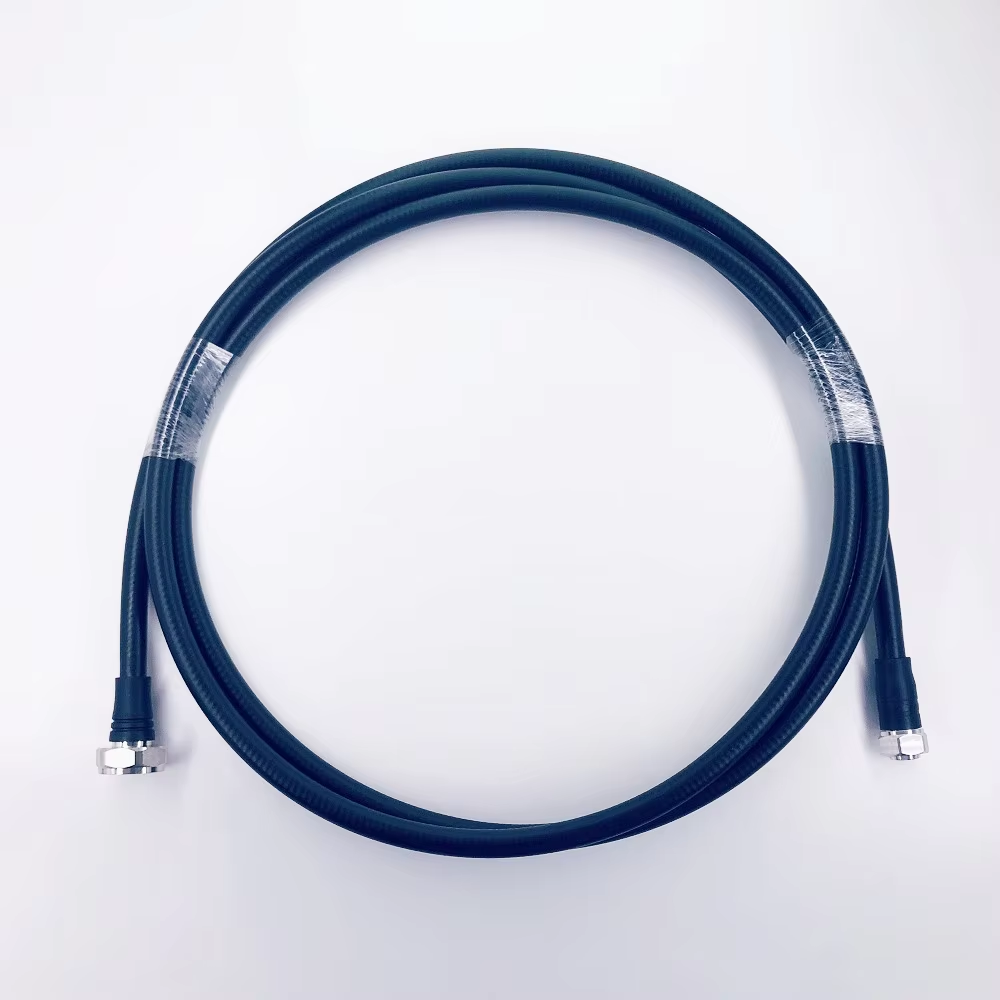
When a project calls for a confirmed product link, use only documented product information and validate suitability against the system specification. For example, a product page for a 30GHz Low PIM 3506 Cable Assembly With 3.5M To 3.5M can be a starting point for checking interface and frequency-related requirements. Its presence does not by itself establish phase-stability performance; the required phase behavior must be confirmed separately for the application.
Conclusion
Phase stable RF cables matter because they protect repeatability when the signal path is exposed to realistic changes in temperature and handling. They are most useful when phase is part of the measurement, calibration, or channel-to-channel relationship—not merely a theoretical parameter. Start with the system error budget, define the environmental and flexure conditions, and ask for a test method that makes the specification comparable. With that approach, phase stable RF cables become a practical control for signal integrity rather than a vague premium feature.