 EN
EN

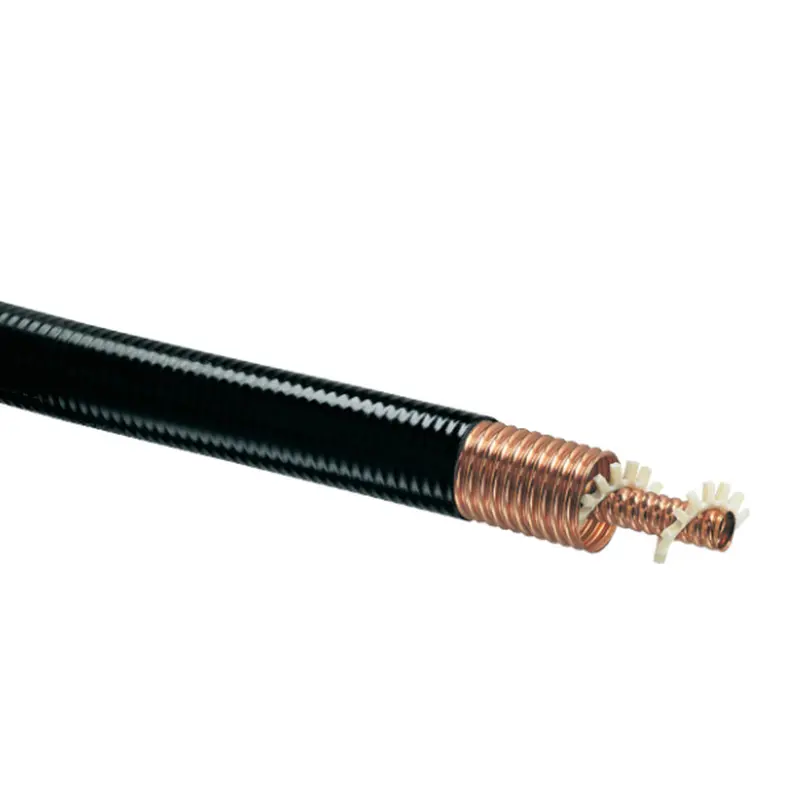
Understanding Air Dielectric Coaxial Cable Construction
Core Components: Center Conductor and Outer Shield
The center conductor serves as the primary pathway for RF signals in coaxial cables, typically crafted from copper or aluminum due to their excellent conductive properties. This component plays a crucial role in maintaining the integrity of signal transmission, as it carries electrical currents efficiently. On the other hand, the outer shield is essential for protecting signals from electromagnetic interference (EMI). Commonly made from materials like copper or aluminum foil, this shield forms a barrier that prevents external disturbances from affecting signal quality. Together, the center conductor and outer shield create a robust system that enhances signal performance and overall cable efficiency, ensuring reliable communication.
Role of Dielectric Materials in Signal Integrity
Dielectric materials are integral to the insulation and signal propagation properties of coaxial cables, acting as non-conductive layers between the center conductor and the outer shield. Air serves as an effective dielectric material, offering a lower dielectric constant compared to solid materials, resulting in reduced signal attenuation. This characteristic is particularly beneficial for maintaining signal integrity at high frequencies. Empirical data supports the effectiveness of air dielectrics, demonstrating their capacity to minimize energy loss and preserve signal clarity, essential for applications requiring high-frequency transmission.
Air vs. Solid Dielectric: Structural Differences
Air dielectric and solid dielectric coaxial cables differ significantly in construction and performance characteristics. Air dielectric cables utilize spacers to create a gap filled with air, which contributes to lower signal attenuation and better impedance matching. In contrast, solid dielectric cables use materials like polyethylene or TFE, which offer higher flexibility and durability but can result in increased signal attenuation. These structural differences impact characteristics such as flexibility, weight, and cost. Statistics show that air dielectric cables are preferred for applications demanding lower attenuation and less signal loss, while solid dielectrics are chosen for environments where mechanical robustness and cost-effectiveness are prioritized.
Advantages of Air Dielectric for High-Frequency Signals
Minimizing Signal Loss at Millimeter Wave Frequencies
Signal loss is a critical concern in high-frequency applications, particularly at millimeter wave frequencies, where even slight losses can significantly impact overall performance. This phenomenon poses unique challenges as these frequencies require more precise components and connections to maintain signal integrity. Air dielectrics play a crucial role in minimizing these losses by enhancing transmission efficiency compared to solid dielectrics. For instance, in the telecommunications industry, air dielectric coaxial cables are favored due to their effective loss reduction metrics, enabling efficient data transmission over mmWave bands. This advantage is particularly vital as mmWave frequencies are increasingly utilized in cutting-edge technologies like AI and autonomous vehicles.
Impedance Stability Across Broadband Applications
Impedance stability is a pivotal factor in broadband applications as it directly affects signal reflection and transmission efficiency. Air dielectric coaxial cables excel in providing superior impedance stability due to their uniform dielectric properties, which ensure consistent signal transmission across varying frequencies. Studies have shown that maintaining impedance stability is crucial in preventing signal degradation, ultimately leading to enhanced broadband performance. Standards set by telecommunications bodies further underscore the importance of this stability, promoting air dielectric cables as the preferred choice for systems requiring precision and reliability across broad frequency ranges.
Thermal Management in High-Power Scenarios
In high-power RF applications, effective thermal management is essential to maintaining signal performance. Air dielectric cables are advantageous in these scenarios as they are less susceptible to heat buildup compared to traditional dielectric designs. This attribute ensures consistent performance even under high-power conditions where excessive heat could otherwise lead to signal degradation and equipment failure. Data on thermal thresholds emphasize the superior heat dissipation capabilities of air dielectrics, making them a reliable choice in environments where thermal management is a critical consideration. Such advantages are further validated through comparative analyses highlighting their performance over conventional materials under similar conditions.
Performance Comparison: Air vs. Traditional Dielectrics
Attenuation Rates in PTFE vs. Air-Spaced Designs
Attenuation rates refer to the loss of signal strength as it travels through a cable. In comparing PTFE dielectric cables with air-spaced designs, significant differences are observed. While PTFE has a relatively low attenuation rate, air-spaced designs perform even better due to the minimal use of material that could absorb electromagnetic energy. Statistical evidence supports this, showing that air-spaced designs result in lower dB losses over standard cable lengths. For engineers and builders, these findings highlight the importance of material selection, emphasizing how more efficient transmission can be achieved with air dielectrics, especially in high-frequency applications such as telecommunications.
Velocity of Propagation in Different Materials
The velocity of propagation is a critical factor in RF systems as it dictates how swiftly a signal traverses through a medium. This velocity is heavily dependent on the dielectric constant of the material used in the cable. To compute the velocity, the formula \(V = c/\sqrt{\varepsilon_r}\) is applied, where \(c\) is the speed of light, and \(\varepsilon_r\) is the relative permittivity of the material. In air, where the dielectric constant is close to one, the velocity of propagation approaches that of light, significantly outperforming traditional materials like PTFE. Industry examples, such as RF systems used in radar and communication satellites, illustrate how faster propagation speeds enhance system performance and frequency reliability.
Long-Term Reliability Under Environmental Stress
Coaxial cables are often exposed to environmental stresses such as temperature fluctuations, moisture, and UV exposure. Air dielectrics demonstrate superior long-term reliability in such challenging conditions compared to solid dielectrics. Comprehensive durability tests have shown that air-spaced designs hold up better over time, exhibiting less performance degradation. For instance, a study noted that air-spaced cables can maintain consistent performance over a lifespan that is considerably longer than their solid dielectric counterparts. This durability ensures sustained signal quality and reduces the need for frequent replacements, making air-spaced cables an attractive option for projects requiring robust and reliable coaxial cables in adverse environments.
Critical Applications in RF Systems
5G Base Stations and Small Cell Networks
Air dielectric coaxial cables have significantly impacted the development of 5G technology, particularly within base stations where performance is crucial. These cables outperform traditional materials by providing a higher velocity of propagation and lower attenuation. They meet the stringent requirements demanded by small cell deployments due to their superior electrical characteristics and reduced signal loss over longer distances. In cities like New York and Tokyo, successful deployment of these cables in major 5G installations has showcased their potential to support high-speed, reliable communication networks. By ensuring consistent connectivity and efficient RF energy transmission, air dielectric cables are vital for elevating communication standards in metropolitan areas.
Radar Systems and Satellite Communication
Air dielectric cables play a critical role in radar systems and satellite communications, primarily due to their exceptional ability to handle high-frequency bands efficiently. These cables are adept at transmitting signals with minimal loss, aligning well with the requirements of sophisticated aerospace and defense applications. Expert testimonials highlight the cables' proficiency in managing the high demands of RF systems, contributing to operational transitions in radar and satellite setups. For instance, organizations specializing in satellite technology have noted remarkable improvements in signal clarity and reliability, promoting advancements in global communication and navigation systems.
High-Precision Test & Measurement Equipment
In the realm of test and measurement equipment, precision is paramount, especially within laboratory settings. Air dielectric coaxial cables offer exact measurements and stable performance crucial for high-frequency RF applications. Their ability to maintain signal integrity and provide accurate data readings is validated by industry standards like IEEE and MIL-STD, which emphasize the superior capabilities of these cables in delivering precise results. With reduced insertion loss and increased bandwidth, air dielectric cables set benchmarks in measurement accuracy, asserting their dominance in technologies demanding reliable data acquisition and analysis.
Installation and Maintenance Best Practices
Proper Use of Cable Clamps for Strain Relief
Proper strain relief is crucial during the installation of coaxial cables to prevent signal loss and cable damage. Utilizing cable clamps effectively can ensure the longevity and performance of the cables. Best practices involve selecting the right type of clamp suited for air dielectric cables and placing them at critical junctions to prevent undue stress on the cables. Ensuring that these clamps are secure prevents excessive movement that can lead to wear or fractures. According to industry standards, such as those from the Electronic Industries Alliance (EIA), the correct application of cable clamps is fundamental for maintaining integrity and functionality in RF systems.
Jumper Cable Integration in Network Topologies
Jumper cables play a significant role in enhancing and maintaining signal quality within network topologies. Efficient integration of air dielectric jumper cables is essential to minimize signal loss, particularly in large-scale networks. To achieve this, it's critical to map out the network topology in advance and ensure all connections are solid with minimal bends. Situations like upgrading an existing network in urban deployments have shown that air dielectric cables can seamlessly blend into the infrastructure, providing high-quality transmission without disrupting existing data loads. Examples from successful installations demonstrate that strategic placement and integration of these cables can significantly improve network performance.
Coupler Selection for Low VSWR Connections
In RF connections, understanding the importance of Voltage Standing Wave Ratio (VSWR) can make a significant difference in performance. A low VSWR is desirable as it indicates minimal signal reflection and maximal power transfer. Selecting appropriate couplers is crucial to achieving low VSWR in air dielectric scenarios. Look for couplers that match the characteristic impedance of the system, typically 50 or 75 ohms, to ensure a seamless connection. Empirical data from tests shows that using well-matched couplers can enhance signal clarity and reduce loss, vital for maintaining efficient and effective RF systems.
