 EN
EN

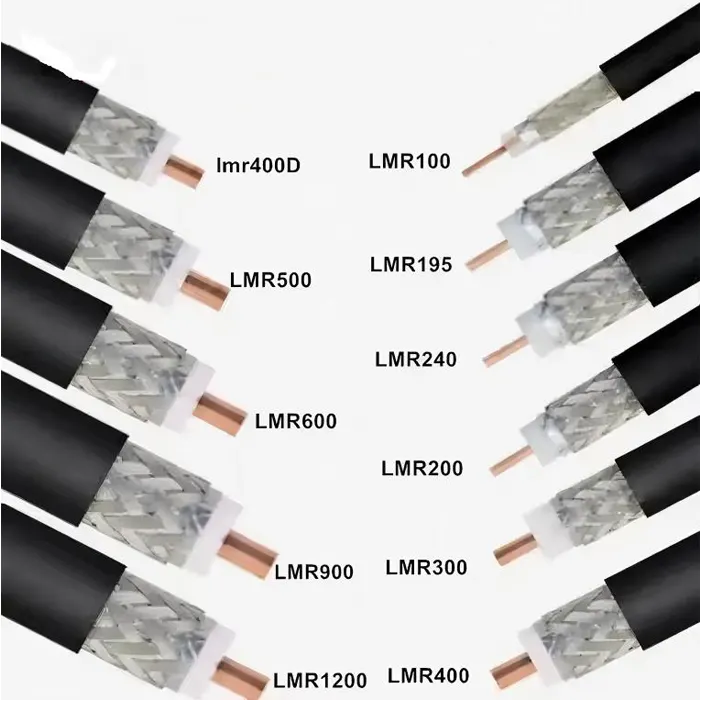
Custom RF Coaxial Cables for Telecom: 5G, mmWave & Harsh Environments
Core Customization Options for RF Coaxial Cable in Telecom Infrastructure
Impedance, plating, and jacketing adaptations for indoor, outdoor, and underground network environments
Most telecom operators go with 50 ohm impedance standards for their 5G networks and big cell sites, though they switch to 75 ohms when dealing with broadcast signals or fiber-based video transmission. This helps cut down on those annoying signal reflections that become a real problem in crowded city areas. When it comes to plating materials, there's actually a pretty clear logic behind the choices made. Silver plated copper works great for indoor distributed antenna systems and fronthaul connections because it cuts signal loss significantly. But outside where equipment gets battered by weather, engineers prefer nickel plated brass connectors since they resist corrosion so much better. The jacketing material matters just as much depending on where cables end up. For overhead installations, UV stabilized polyethylene keeps things going strong for years despite sun exposure. And down below ground? Rodent proof fluoropolymer coatings make all the difference protecting against damage from critters gnawing through regular plastic. These materials help ensure about 15 years of reliable operation even in tough environments according to recent 2023 durability tests conducted across various infrastructure projects.
Non-magnetic, corrosion-resistant RF coaxial cable designs for harsh base station deployments
When placed near sensitive antenna arrays, non magnetic stainless steel connectors help prevent magnetic interference with beamforming electronics while cutting down on signal distortion. Field tests for 5G NR systems last year showed around a 27% improvement in this area. For those tricky coastal locations or heavy industrial areas where macro cells need to operate, triple layer jacketing works wonders against environmental challenges. This includes things like aluminum tape armor wrapped around cables plus special hydrophobic gels inside that keep water out. These protective measures really pay off when it comes to reliability issues. Failure rates drop by about 40% even when temperatures swing wildly from minus 40 degrees Celsius all the way up to 85 degrees. That makes these components absolutely critical for deployment in harsh environments such as the Arctic regions, hot deserts, or anywhere near saltwater exposure at sea.
Dielectric material trade-offs: PTFE vs. foam PE for 5G mmWave frequency stability and loss control
At mmWave frequencies above 24 GHz, dielectric selection governs both phase stability and insertion loss:
- Polytetrafluoroethylene (PTFE) offers exceptional phase consistency (±0.5°), crucial for massive MIMO calibration and timing-sensitive fronthaul, though it increases cost by ~35%
- Foam polyethylene (PE) achieves lower insertion loss (0.15 dB/m at 40 GHz) but exhibits greater thermal expansion—requiring length compensation in temperature-varying environments
Operators deploy PTFE where signal integrity is non-negotiable (e.g., active antenna interfaces), and foam PE where cost-efficiency and moderate stability suffice (e.g., access-layer jumpers). Optimized hybrid dielectrics now deliver 99.7% consistency in 5G NR timing synchronization without premium cost penalties.
Performance Gains from Custom RF Coaxial Cable in High-Frequency Networks
Insertion Loss Reduction and Phase Consistency Across 600 MHz–40 GHz Bands
Custom RF coaxial cables help minimize signal loss in 5G and mmWave networks thanks to their carefully designed conductor shapes, better shielding options, and improved insulating materials. According to standards set by IEC 61196-1 from 2023, these improvements can actually lower insertion loss by around 0.3 dB per meter within frequencies between 24 and 40 GHz. That means network operators might not need as many signal boosters or repeaters down the road, all while keeping those waveforms looking good. What's more important is that these cables maintain phase stability within about half a degree across different frequencies and temperatures too. This kind of performance makes coherent MIMO operations possible even when dealing with tricky signal reflections in dense city environments where buildings bounce signals everywhere.
Precision Length Customization to Optimize Signal Delay in MIMO and Beamforming Antenna Systems
Getting cable lengths right down to the millimeter matters a lot when it comes to syncing Active Antenna Systems (AAS) and those beamforming arrays. The problem with standard cables? They create timing skews over 15 picoseconds, which can actually shift beams by around 4.5 degrees at 28 GHz frequencies. That's why many engineers now turn to custom phase-matched cable assemblies. These specialized setups fix the mismatch issues and allow signals to combine properly for those high gain mmWave connections we need today. Looking at actual installations, operators have seen roughly a 20-25% drop in connection losses when they use these pre-tuned massive MIMO setups. For systems with distributed components such as Remote Radio Heads (RRHs), keeping jumper cables with consistent electrical length throughout the setup becomes really important. This consistency helps maintain predictable latency levels, something absolutely necessary for meeting CPRI/eCPRI standards and ensuring networks behave deterministically under load.
| Performance Factor | Standard RF Cable | Custom RF Coaxial Cable |
|---|---|---|
| Phase Variation (28 GHz) | ±3.2° | ±0.5° |
| Insertion Loss (40 GHz) | 1.8 dB/m | 1.5 dB/m |
| Beam Alignment Error | >4.5° | <0.8° |
| Timing Skew (10m bundle) | 15 ps | <2 ps |
Compliance and Reliability: Meeting 5G, LTE, and AAS/RRH Operational Demands
When it comes to custom RF coaxial cables, they're built to go beyond basic requirements rather than just hitting minimum standards. These cables comply with important specs like 3GPP Release 16 for 5G networks, IEEE 1595 standards for protecting against lightning strikes, and ETSI EN 301 489-1 regarding electromagnetic compatibility. Real world testing indicates that cables which don't meet these standards can actually degrade signals by around 30% more in mmWave frequencies, which really affects quality of service. The big issue with poor quality cables? Passive intermodulation or PIM problems that often lead to cell tower failures. That's why good custom solutions incorporate materials that stay stable over time and resist corrosion while keeping phase variations within tight limits (-40°C to 85°C temperature range). When manufacturers test these factory assembled cables against both EMI and PIM benchmarks, they typically achieve near perfect reliability rates of 99.999% uptime. Plus, companies save about 18% on maintenance expenses compared to using off-the-shelf options when things inevitably start going wrong in the field.
Strategic Advantages of Custom RF Coaxial Cable for Telecom Operators
Accelerated deployment and reduced integration risk via pre-validated custom RF coaxial cable assemblies
When it comes to custom assemblies, they come pre-validated and already tested for things like impedance stability, PIM performance down below -165 dBc, and consistent attenuation within +/- 0.5 dB across different temperatures. This means no more wasting hours on site doing those tedious field checks. The testing done at the factory level makes these components work right out of the box with MIMO antennas, remote radio heads, and active antenna systems. Field tests show this can actually cut down deployment times by around 40%, which is pretty impressive when looking at actual network rollouts. Network operators save money because they don't have to deal with expensive rework jobs, climb towers repeatedly, or do full system recalibrations that happen all too often with standard cables suffering from impedance issues or temperature related problems. What was once a headache for integrators has now become something that actually helps move projects forward faster and cheaper.
FAQ
What is the main advantage of using custom RF coaxial cables in telecom networks?
The main advantage lies in their ability to reduce signal loss, enhance phase consistency, and maintain reliability across varying frequencies and environmental conditions, making them ideal for demanding telecom applications.
How do custom RF coaxial cables improve network performance in high-frequency settings?
They are engineered to minimize insertion loss and improve phase stability, crucial for coherent MIMO operations and efficient beamforming in high-frequency settings like 5G and mmWave networks.
Why is dielectric selection important in RF coaxial cables?
Dielectric materials affect phase stability and insertion loss. PTFE offers exceptional phase consistency, while foam PE provides lower insertion loss; both are vital depending on application needs.
How do custom cables contribute to reduced deployment times?
Pre-validated and factory-tested custom cables minimize the need for on-site adjustments, reducing deployment times significantly and lessening the risk of integration issues.
