 EN
EN

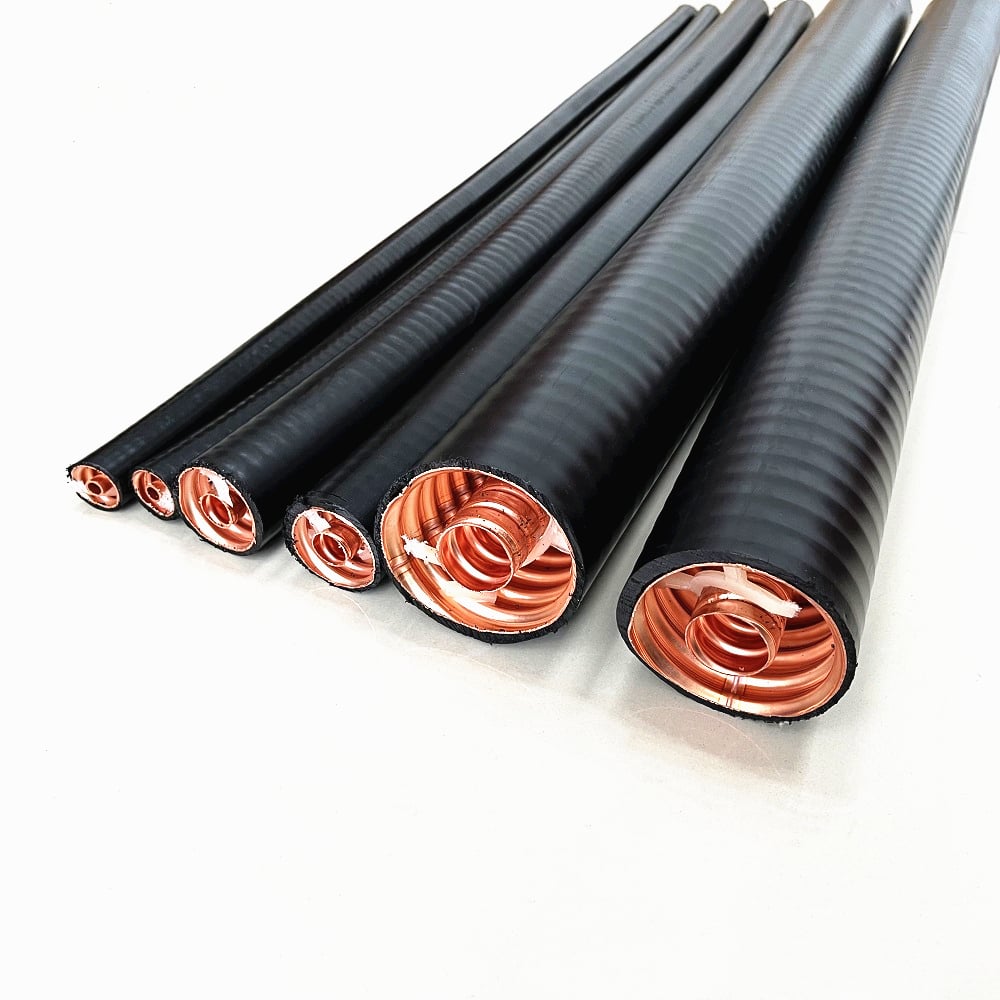
Air Dielectric Coaxial Cables for 5G Base Stations
Why Air Dielectric Coaxial Cable Is the Optimal Choice for 5G and mmWave Base Stations
Physics of Low Loss: How Air Dielectric Minimizes Attenuation Above 2.5 GHz
Air dielectric coaxial cables take advantage of air's incredibly low dielectric constant (around 1), which happens to be the lowest among all practical insulators, making them great at reducing signal loss above 2.5 GHz frequencies. Compared to traditional options like foam or solid polyethylene dielectrics, air doesn't cause much molecular polarization so it absorbs far less energy. At around 6 GHz, this can cut down on signal attenuation by nearly 40%. When we get into those higher millimeter wave ranges, this property really matters because signal loss gets worse much faster as frequency increases. Real world tests show these air dielectric cables maintain about 92% signal quality even after running through 100 meters at 28 GHz. That's way better than what most foam core cables manage, which usually fall below 70% performance. Maintaining clean signals like this is crucial for advanced modulation techniques used in modern networks and especially important for keeping latency low in 5G backhaul systems.
Thermal Stability and High Power Handling for Dense Urban 5G Base Stations
In urban areas, 5G base stations typically run with transmit powers over 200 watts, which means they really need good thermal management solutions. Air dielectric coaxial cables are becoming popular because their hollow core allows heat to escape about three times quicker compared to traditional solid fill designs. For rigid cable options, we see insertion loss drift stays below 0.05 dB throughout the entire industrial temperature spectrum from minus 40 degrees Celsius all the way up to plus 85 degrees Celsius. This matters a lot for equipment installed on rooftops where direct sunlight can cause serious heating issues. When it comes to semi-flexible cables, they keep impedance stable with VSWR ratios under 1.15:1 even when bent tightly around corners. This helps prevent those annoying PIM problems that pop up when integrating compact antenna arrays. All these features together make sure networks stay online reliably. And let's face it, carriers can't afford to be offline since downtime costs them roughly $740,000 every single hour according to Ponemon Institute research from last year.
Top Validated Air Dielectric Coaxial Cable Types for Base Station Deployment
Rigid Air Dielectric Lines: Precision Performance at 3.5 GHz and Beyond
Rigid air dielectric coaxial cables provide extremely low signal loss for fixed feeder applications working above 2.5 GHz frequencies. What makes these cables special is their seamless outer conductor design which keeps the air gap geometry consistent throughout. This consistency cuts down on signal loss by around 30% compared to similar foam core cables when used at millimeter wave frequencies. For anyone dealing with signals at 3.5 GHz and beyond, this level of precision means better signal integrity overall. That's why many telecom companies prefer these cables for their macro base station antenna feeders, especially since path loss can be such a limiting factor. To keep everything running smoothly, most manufacturers have started incorporating pressurization systems that maintain dry air inside the cable at about 3 to 5 pounds per square inch. These systems stop moisture from getting in and help keep the voltage standing wave ratio under control even in harsh weather conditions. Installation does come with its challenges though. Technicians need to follow strict bending radius guidelines during setup. But despite these requirements, rigid air dielectric cables still stand out for their long lifespan and excellent phase stability, making them ideal for those permanent tower installations where reliability matters most.
Semi-Flexible Air Dielectric Variants: Balancing Installation Practicality and 24–28 GHz Efficiency
Air dielectric cables that are semi flexible sit somewhere between top performance and easy deployment, especially useful in crowded cities and inside buildings where small cells need installation. The outer conductor made from corrugated copper lets these cables bend as tightly as eight times their own diameter, which makes retrofitting possible even on busy rooftops and allows for neat installations in cramped mechanical areas. Tests have shown only around 0.6 dB loss every 30 meters at frequencies hitting 28 GHz, so data speeds stay strong without compromise. These cables also feature precisely molded spacers for the dielectric material, stopping the central conductor from shifting when there's vibration or temperature changes, keeping signal quality stable over time. While they do show slightly more signal loss compared to rigid versions, semi flexible cables still offer the best mix of radio frequency performance, physical flexibility, and how quickly technicians can install them in most situations across the 24 to 28 GHz range.
Real-World Performance: Air Dielectric Coaxial Cable vs. Foam PE in Base Station Scenarios
CBRS Band Field Validation: 22% Lower Path Loss Over 120 m at 3.7–3.98 GHz
Field tests with CBRS bands have shown that air dielectric coax cables really outperform those made with foam polyethylene. When looking at feeder lines around 120 meters long operating between 3.7 and 3.98 GHz frequencies, network operators consistently saw about a 22% drop in signal loss. This happens because air has almost perfect dielectric properties (epsilon r close to 1.0) compared to the natural friction and signal degradation issues found in foamed materials. The better signal quality means towers can broadcast stronger signals overall. In busy city areas where cell traffic is heavy, this leads to anywhere from 15% to 30% more data throughput per base station. Plus, the coverage area expands naturally without needing extra equipment like repeaters. For telecom companies, all these advantages mean they can deploy new infrastructure faster, their power amplifiers work harder but last longer, and overall costs go down significantly. The financial benefits are pretty clear too, with return on investment coming in 3 to 5 years earlier than expected thanks to delayed need for hardware replacements and better adherence to service level agreements.
Critical Installation and Environmental Best Practices for Air Dielectric Coaxial Cable
Moisture Ingress Prevention, Pressurization, and Outdoor Long-Run Reliability
Keeping signal quality intact in air dielectric coax cables really depends on having a dry, stable space inside where the dielectric material sits. Outdoor installations and longer cable runs need continuous dry air pressure between 3 and 5 pounds per square inch to stop condensation problems. Even small amounts of moisture can cause serious signal loss issues, up to 15 to maybe 20 decibels over just 100 meters when working with those high frequency mmWave signals. When sealing connectors, technicians typically apply two layers of protection first they wrap with silicone self fusing tape, then cover with heat shrink boots that are both UV resistant and have adhesive lining on them. For rigid cables running through walls or across buildings, proper installation includes creating drip loops and installing vent valves facing down so any water droplets fall away before reaching the pressurized area inside. On longer horizontal stretches beyond 30 meters, it's smart practice to put in expansion joints roughly every 15 to 20 meters apart. This helps manage temperature changes without breaking the seal. Looking at actual field reports from places near coastlines where humidity is always high, we see that systems with good pressurization last around 8 to 10 extra years compared to those without this protection. So while some might think pressurization is just an added feature, experienced installers know it's actually essential for making sure these systems work reliably over time.
FAQ Section
-
What is the main advantage of using air dielectric coaxial cables for 5G?
Air dielectric coaxial cables offer lower signal attenuation and better thermal management, making them ideal for high-frequency applications like 5G. -
How do air dielectric cables manage temperature better than other types?
The hollow core of air dielectric cables allows heat to escape more efficiently, which is crucial for managing the high power levels used in urban 5G base stations. -
What are the installation challenges associated with air dielectric coaxial cables?
Installation requires adherence to strict bending radius guidelines and the use of pressurization systems to prevent moisture ingress. -
Why are air dielectric cables preferred over foam polyethylene cables?
Air dielectric cables offer better signal quality and lower path loss, which enhances data throughput and coverage area without additional infrastructure.
Table of Contents
- Why Air Dielectric Coaxial Cable Is the Optimal Choice for 5G and mmWave Base Stations
- Top Validated Air Dielectric Coaxial Cable Types for Base Station Deployment
- Real-World Performance: Air Dielectric Coaxial Cable vs. Foam PE in Base Station Scenarios
- Critical Installation and Environmental Best Practices for Air Dielectric Coaxial Cable
- FAQ Section
