EN
EN

Why HFFR Cable Jackets Matter in Telecom Installations
When a telecom cable route is designed, attention often goes first to attenuation, impedance, connector interfaces, and bend radius. Those factors matter. Yet the cable jacket is the part that installers touch, route through a building, and depend on when conditions become abnormal. That is why HFFR deserves a place in the early specification review. HFFR, short for halogen-free flame-retardant, describes a material approach intended to help a cable resist flame spread without relying on halogen-containing compounds.
For an RF systems engineer, the signal path is only as dependable as the environment around it. A feeder cable can meet an electrical target on paper and still be a poor choice for a crowded riser, equipment room, tunnel, or shared indoor pathway if its jacket does not fit the project’s fire-safety requirements. The right HFFR conversation is therefore not “is it better than every other jacket?” It is “does this route create a reason to specify HFFR, and what evidence should the project team request?”
What an HFFR cable jacket is designed to do
An HFFR jacket combines two practical ideas. “Halogen-free” refers to avoiding halogen elements in the jacket compound; “flame-retardant” means the material is formulated to reduce flame propagation under defined test conditions. In a fire scenario, these characteristics are relevant because burning cable materials can affect smoke conditions, corrosive-gas exposure, equipment recovery, and evacuation visibility.
That does not mean every HFFR cable has the same fire performance. Compound formulation, cable construction, installation method, and the test standard requested by the buyer all matter. You might assume the label HFFR answers the entire safety question. It does not, quite. It should begin a specification discussion about the exact route, applicable code, and test evidence.
Why HFFR matters in telecom spaces
Telecom infrastructure is frequently installed where people, power systems, and sensitive electronics share space. Think of indoor antenna runs, data rooms, equipment shelters, transport hubs, and multi-service cable pathways. In these environments, an HFFR jacket can be a relevant risk-control choice because the project may place value on limiting halogen acid gas concerns and reviewing smoke behavior alongside flame performance.
Two commonly referenced test families help procurement teams ask more precise questions. IEC 60754 addresses methods for determining halogen acid gas content evolved during combustion of cable materials. IEC 61034 addresses measurement of smoke density from burning cables under defined conditions. These references are not proof that a particular HFFR product complies with a requirement. Instead, they give a buyer a useful checklist: which test report applies, which cable construction was tested, and does the report match the project specification?
Here is a question worth asking before a cable is approved: if a cable route crosses occupied or enclosed areas, what fire-performance evidence does the building or customer actually require? Asking this early is usually easier than changing a cable schedule after installation has started.
HFFR selection is a material decision and an installation decision
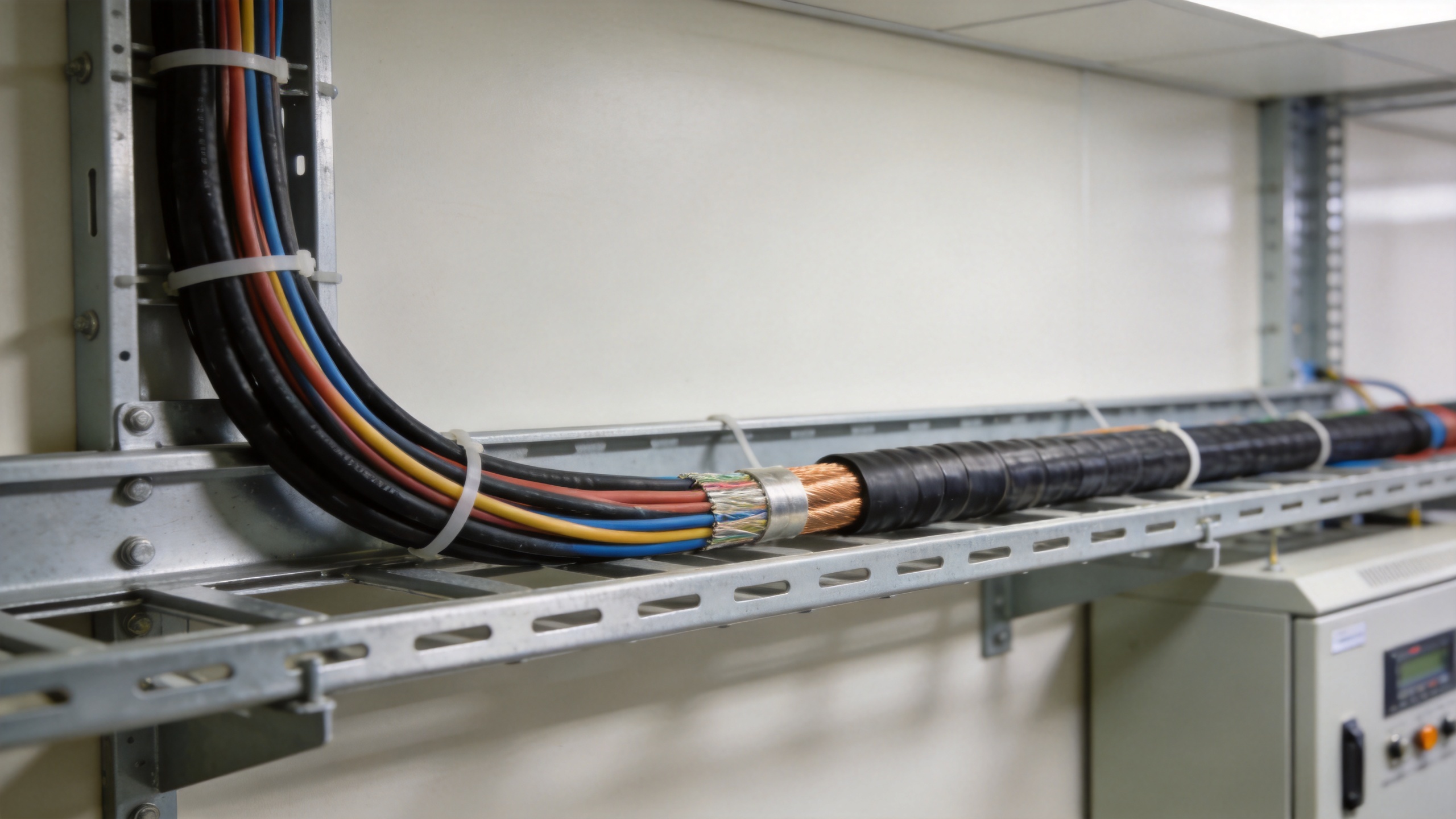
HFFR should be evaluated with the same discipline used for electrical performance. First, identify the environment: indoor or outdoor, enclosed or ventilated, fixed route or repeated handling. Next, confirm the mechanical needs, including flexibility, pull tension, bend radius, abrasion exposure, and connectorization method. Then review the requested flame, smoke, and halogen-related documentation against the project requirement.
This is where a simple material label can be misleading. An HFFR jacket may be appropriate for an indoor feeder route, but the installer still needs to preserve the manufacturer’s bend-radius guidance and avoid damage during pulling. A damaged jacket is not a minor cosmetic issue; it can compromise the protection expected from the cable construction. So that is the material side of the decision. Now comes the installation side: route planning, cable support spacing, penetrations, labeling, and separation from incompatible services all affect the finished system.
How to specify HFFR without overclaiming
A practical HFFR request should be clear enough for suppliers and installers to act on. Rather than asking only for “a fireproof cable,” define the installation location, cable type, operating environment, and required test documentation. Ask whether the quoted cable jacket is HFFR; ask which test standards are relevant to the offered construction; and ask for current documents rather than relying on a generic material description.
- State the cable application, such as RF feeder, coaxial link, or indoor telecom distribution.
- Describe the route: equipment room, vertical riser, transport facility, campus building, or other installation context.
- Request the applicable flame, smoke, and halogen-acid-gas test evidence required by the project.
- Confirm mechanical handling limits before installation, including bend radius and pulling practice.
- Check that accessories, terminations, and routing methods do not undermine the intended cable selection.
Both HFFR and other jacket options can be valid in the right deployment. If the priority is indoor fire-safety documentation and route-specific risk management, then HFFR deserves more weight in the decision than a simple unit-price comparison.
An RF feeder example: keep safety and signal planning together
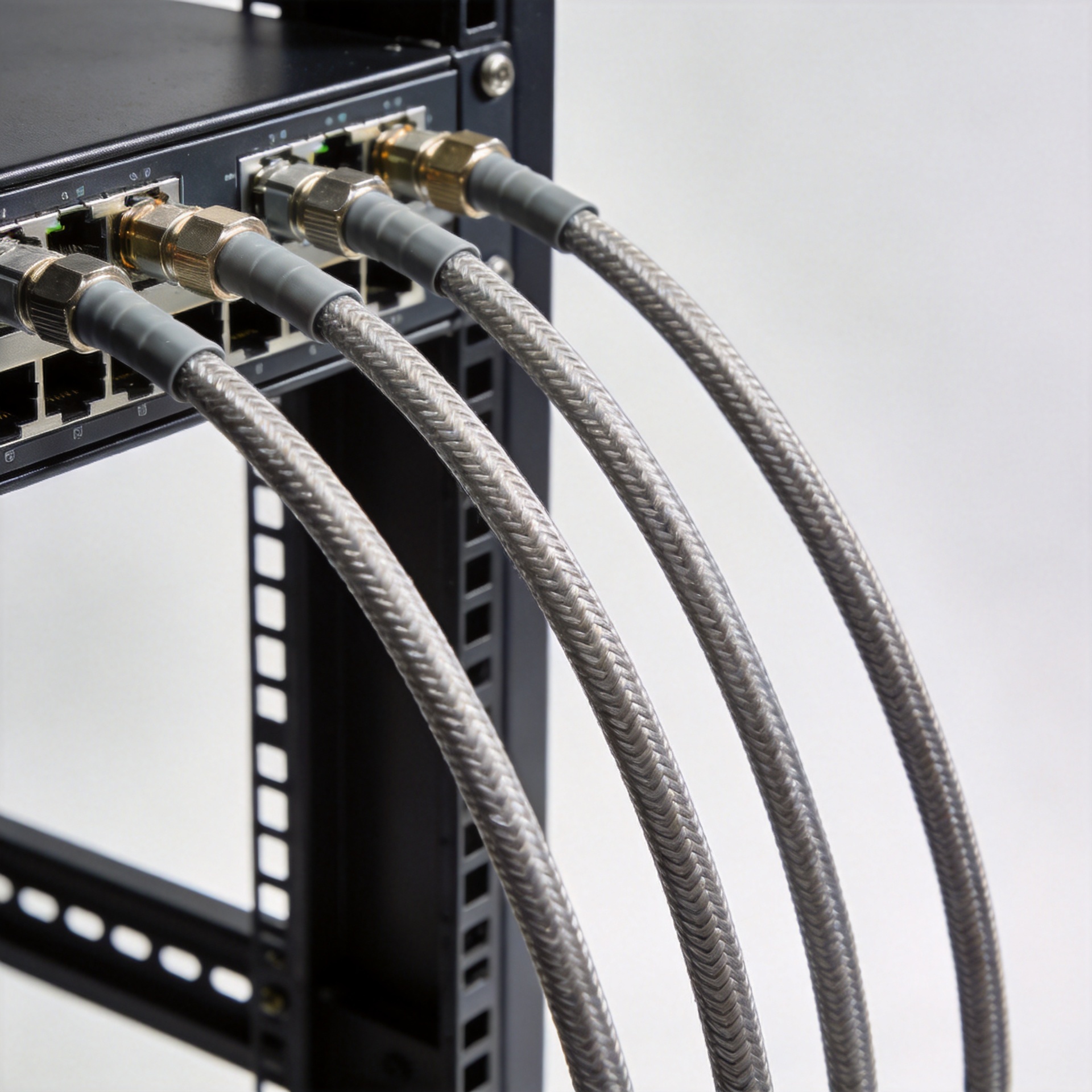
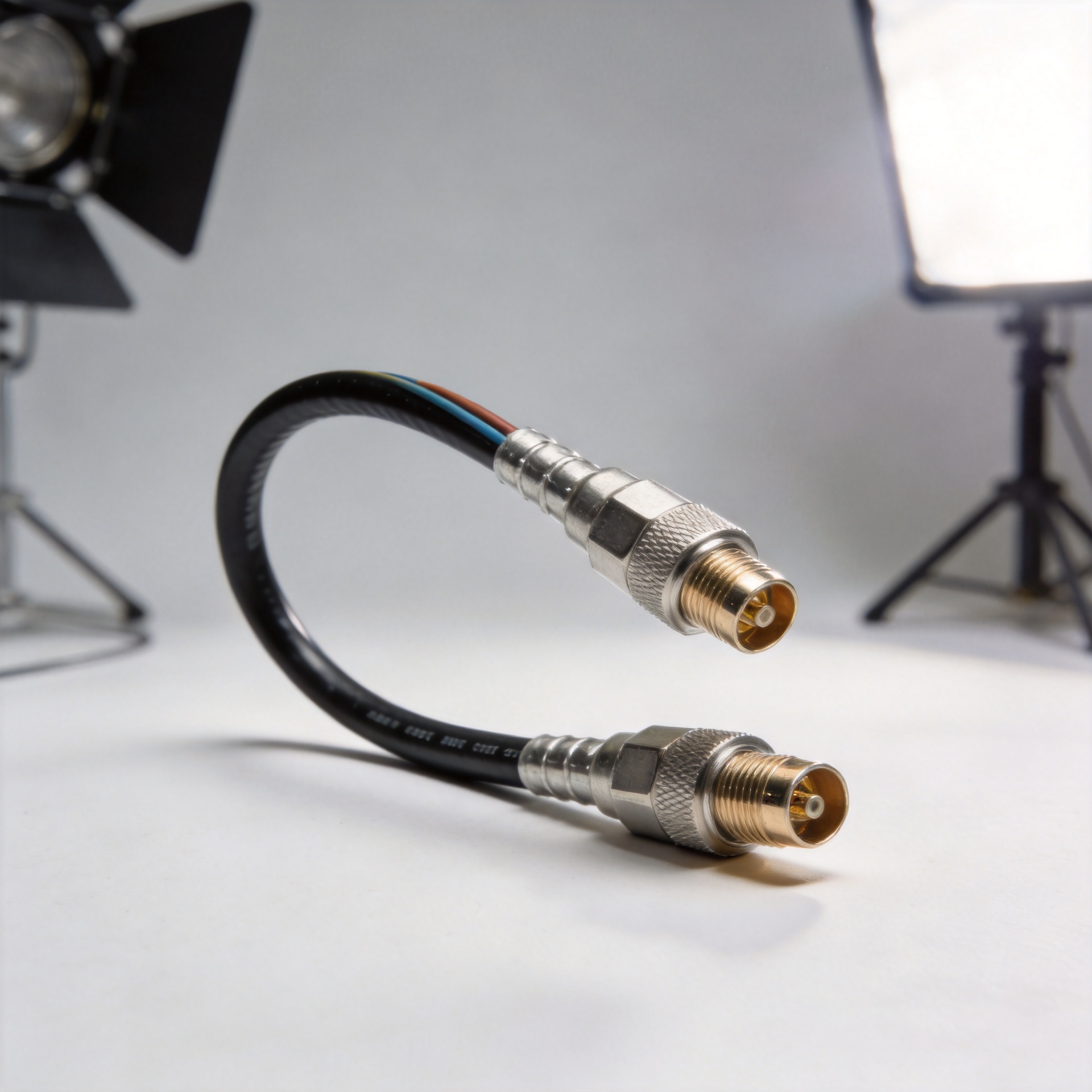
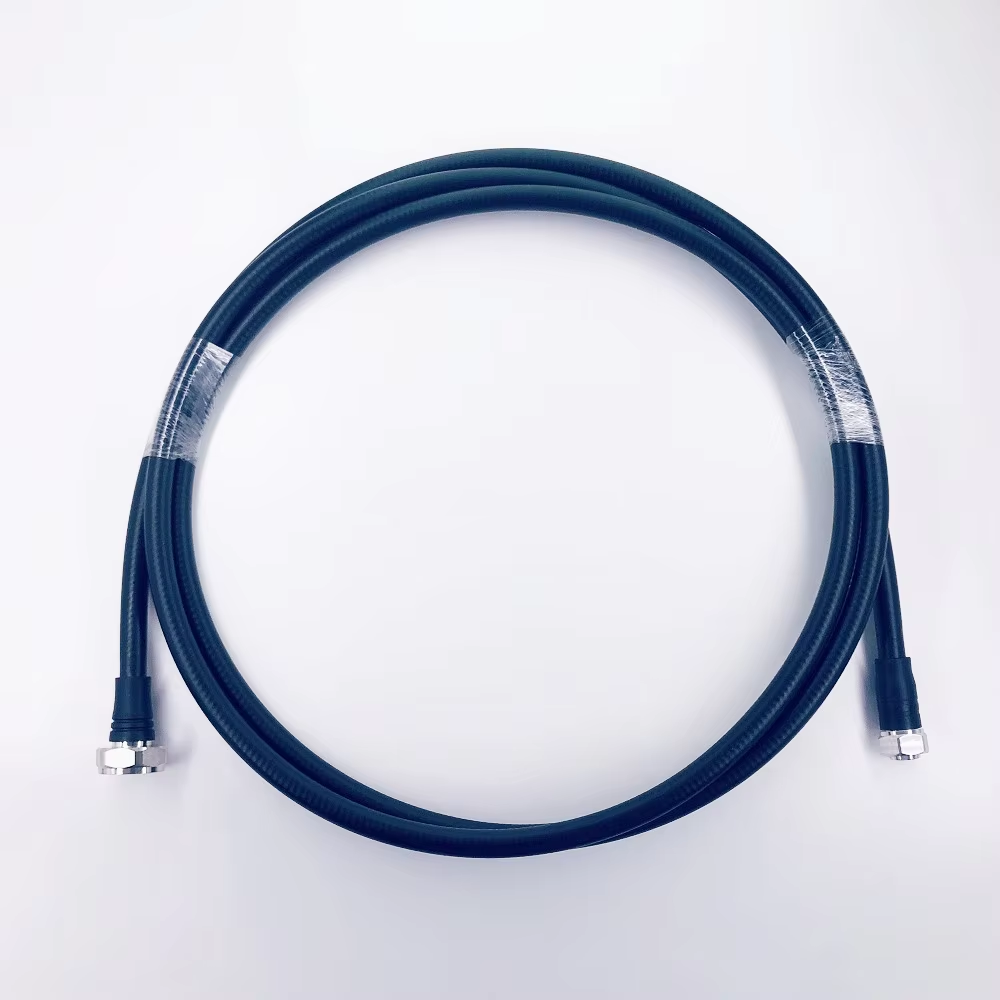
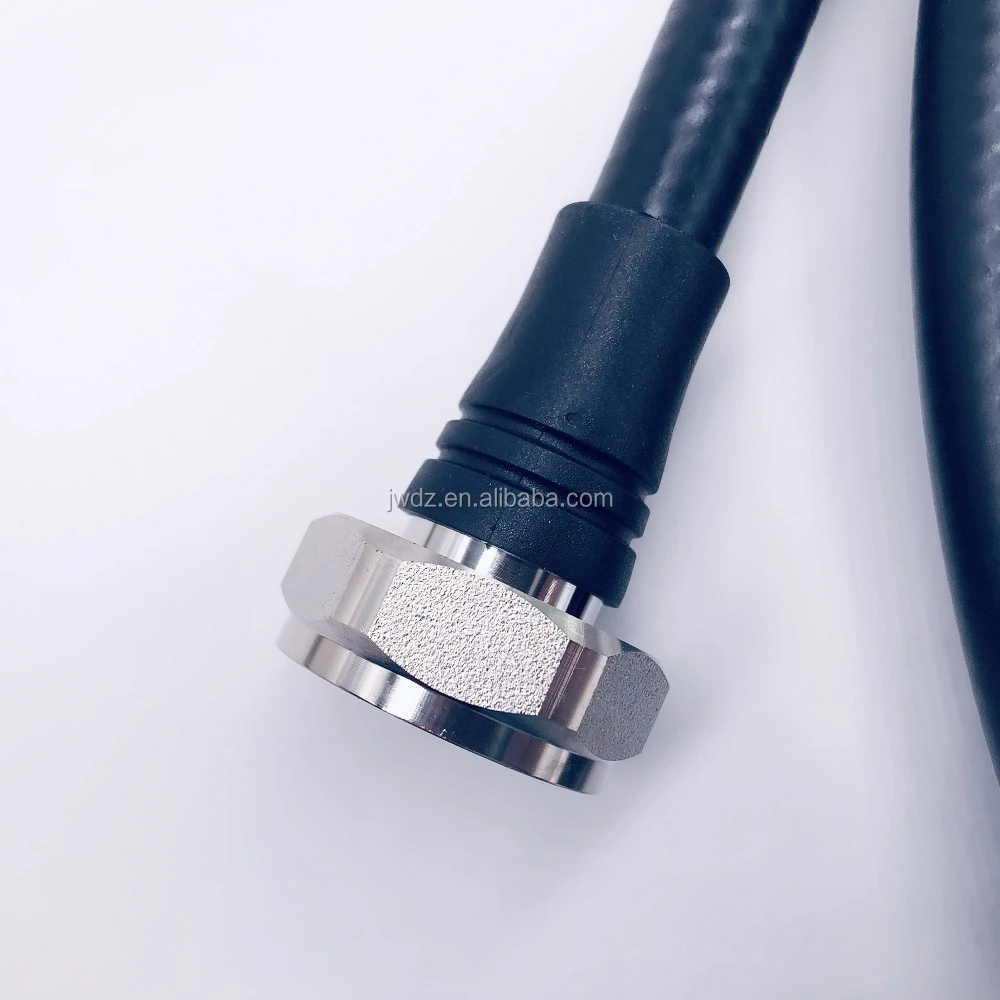
For a feeder run, electrical and jacket requirements should be considered together rather than assigned to separate teams. The confirmed product record for HCAAY(Z)-50-12 1/2-inch low-loss flexible cable with a flame-retardant halogen-free jacket provides an example of how product naming can bring those considerations into the same discussion. The project team should still validate the actual documentation, route suitability, and installation instructions before approval.
In other words, choosing HFFR is not a substitute for RF design. It complements RF design by making the cable jacket part of the installation-risk review. For telecom buyers, installers, and system integrators, that is a more durable way to select cable: protect the signal path, understand the route, and verify the material evidence that matters for the site.
Quick HFFR review before release
Before issuing a purchase order, record why HFFR is requested for the route. Confirm that the quoted HFFR jacket matches the cable construction under review. Ask for the test evidence associated with that HFFR construction, not merely a general material brochure. During installation, protect the HFFR jacket from cuts and excessive pulling force. At handover, retain the HFFR documentation with the cable schedule. This short HFFR check helps engineering, procurement, and installers work from the same requirement.
Conclusion: make HFFR part of the early checklist
HFFR cable jackets matter because telecom installations do not operate in a vacuum. They run through real buildings and real operational spaces, where fire behavior, smoke conditions, maintenance access, and signal reliability can all influence the final choice. Treat HFFR as a route-specific specification decision, not a marketing shortcut. When the environment calls for it, a well-documented HFFR cable can help the installation team align material selection with the project’s safety and performance priorities.