EN

Low PIM Cables: Why They Matter in 5G Indoor Coverage
Indoor 5G coverage is often discussed in terms of radios, antennas, spectrum, and DAS topology. Yet the passive RF path between those elements can quietly set the practical limit on network quality. Low PIM cables matter because passive intermodulation can create unwanted signals inside a receive band, reducing the margin that a crowded indoor system needs for stable uplink and downlink performance.
As an RF systems engineer, I start with the whole signal path rather than one data-sheet line. Cable attenuation is important, but a low-loss run that develops a nonlinear junction at a connector, shield seam, or damaged section can still undermine an otherwise sound indoor-DAS design. This is especially relevant where multiple carriers, bands, and antenna nodes share limited building pathways.
What passive intermodulation means in an indoor 5G signal path
Passive intermodulation, usually shortened to PIM, is nonlinear distortion generated by passive hardware under RF energy. When two or more signals encounter an imperfect metal-to-metal contact or another nonlinear point, the path can produce additional frequency products. Some of those products may fall near, or inside, frequencies that the system is trying to receive.
Think of the RF path as a water line with a damaged valve: the pipe may be intact for most of its length, but turbulence at one junction changes what reaches the end. In an indoor DAS, a seemingly minor discontinuity can become significant because the system may contain many interfaces, distributed antennas, splitters, feeders, jumpers, and close-proximity transmit and receive paths.
Low PIM cables are designed and assembled to reduce the risk of such nonlinear behavior. That does not mean a cable alone determines the final PIM result. Antennas, connectors, torque, cable routing, contamination, and the quality of every mating interface remain part of the system-level outcome.
Why PIM can affect 5G indoor coverage even when attenuation looks acceptable
A conventional loss budget asks how much desired signal is lost along the cable route. PIM asks a different question: does the passive path generate interference that raises the receiver’s noise floor or desensitizes a receive channel? Both questions matter. A run can meet expected insertion-loss values and still introduce a nonlinear problem that is not visible in a simple continuity check.
Indoor 5G deployments frequently combine several bands and may support multiple operators. That density increases the need for clean passive behavior. The more signals and interfaces that coexist in a DAS antenna system, the more important it becomes to control the conditions that create intermodulation products. The effect is not necessarily an obvious outage; it may appear as inconsistent coverage, reduced throughput in busy areas, difficult-to-explain uplink degradation, or a commissioning result that does not match the design model.
There is another practical reason to focus on low PIM cables: troubleshooting after ceilings, risers, or equipment rooms are finished is expensive. The cable that looks intact can still contain a hidden issue from excessive bending, a strained termination, or handling damage. A PIM-aware specification shifts verification earlier, before a hard-to-access cable route becomes a rework project.
Common cable-related causes of PIM in indoor DAS installations
Cables do not automatically create PIM simply because they are coaxial. Problems are more likely when a cable assembly or its installation introduces a nonuniform, stressed, contaminated, or poorly controlled interface. The following causes deserve attention during design, receiving inspection, and installation.
- Damaged or stressed cable construction: exceeding the stated bend radius, crushing a cable during pulling, or applying excessive tension can disturb the conductor or dielectric geometry.
- Termination inconsistency: poorly prepared, loose, over-torqued, or under-torqued connectors can create unstable contact conditions at the end of an otherwise suitable cable.
- Contamination at mating surfaces: dust, metal particles, moisture, or damaged plating can interfere with a clean electrical contact.
- Uncontrolled interfaces: adapters, mixed component families, or improvised re-terminations add junctions that deserve the same review as the primary cable assembly.
- Shield and mechanical integrity issues: seams, poor bonding, or physical deformation can compromise the uniform RF behavior expected from the assembly.
It is tempting to treat PIM as a cable-specification issue only. It is not, quite. The installation detail that often decides the outcome is the quality and repeatability of each connection. In a high-density indoor deployment, repeatable handling procedures are as important as selecting a low-PIM product family.
How to specify low PIM cables for 5G indoor coverage
For an awareness-stage project, the objective is not to chase a single universal PIM number. The right acceptance criterion depends on the operating bands, radio configuration, architecture, test method, and the operator or system integrator’s requirements. Instead, build the specification from the system outward.
- Map the active frequency plan. Document the bands, combined services, and future expansion assumptions so cable and connector performance are evaluated in the actual operating context.
- Define the RF path and interface count. Identify every jumper, adapter, splitter connection, and antenna termination. More interfaces mean more points that require controlled materials and installation practices.
- Request assembly-level evidence. Ask how cable assemblies are terminated, whether RF sweep or PIM-related verification is available, and which test conditions are used. A qualified sample and a repeatable production process are not the same thing.
- Set mechanical installation limits. Carry bend-radius, pulling, routing, labeling, and torque requirements into the installation method statement—not merely the purchase order.
- Plan test access before construction closes. Include a practical test plan for the passive path during commissioning, with clear ownership for correcting failures.
If your priority is dependable multi-band indoor coverage, then repeatable assembly and installation control deserve more weight than a small unit-price difference. The lower-priced option may look similar on a basic specification list, but the cost equation changes when an inaccessible run has to be traced and replaced after handover.
What to check when selecting a cable assembly supplier
Supplier evaluation should examine the assembly process as well as the catalog description. Ask whether the supplier can discuss connector compatibility, cable routing constraints, torque control, and test documentation in terms that match the project RFQ.
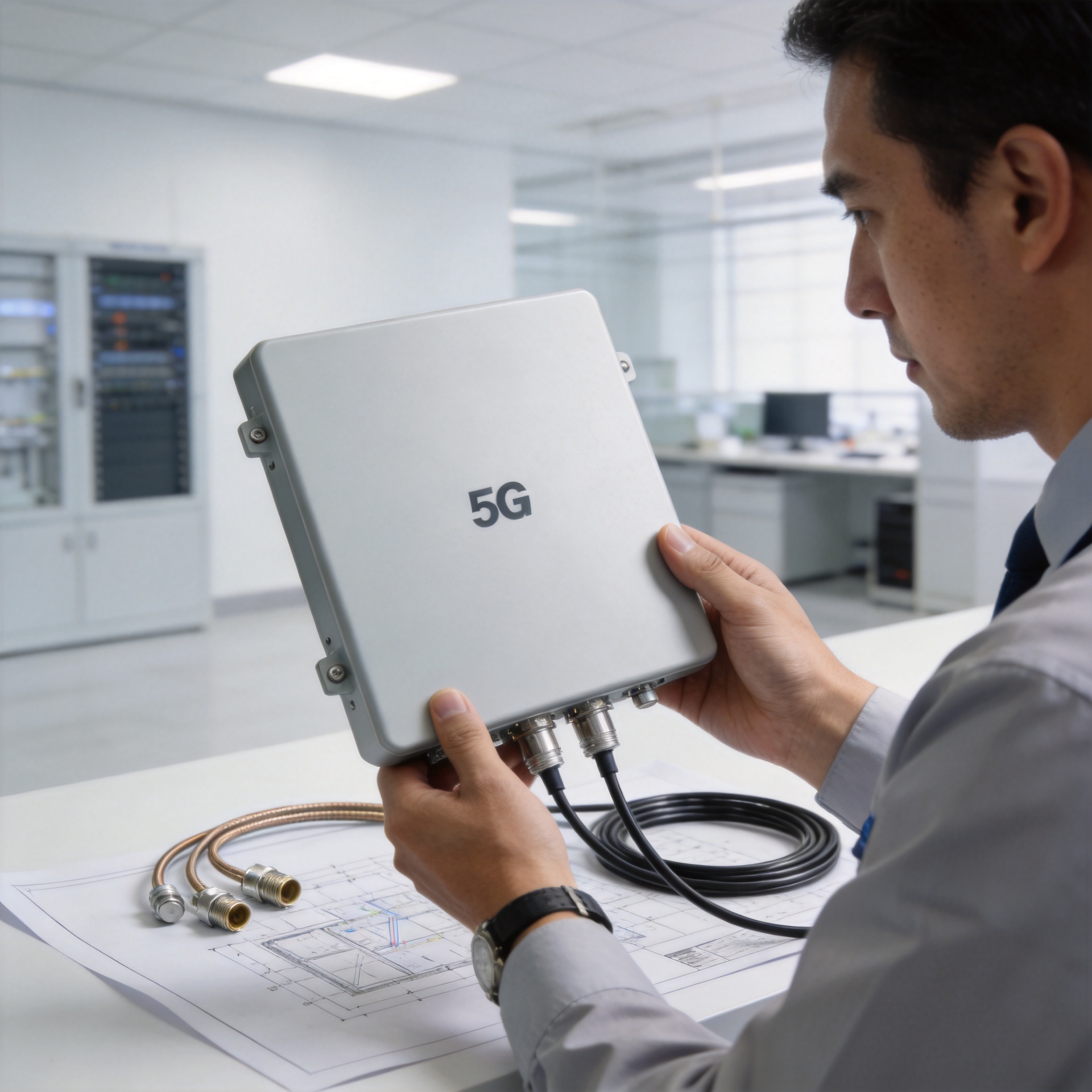
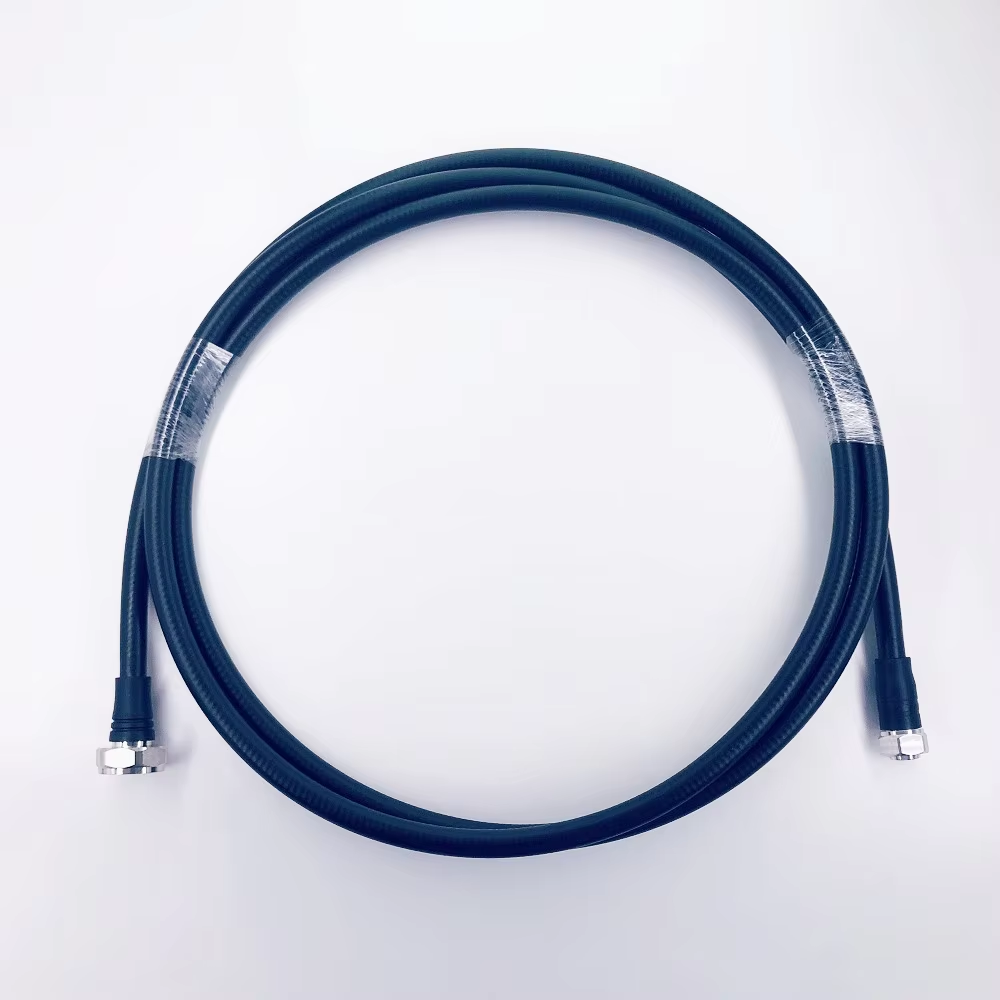
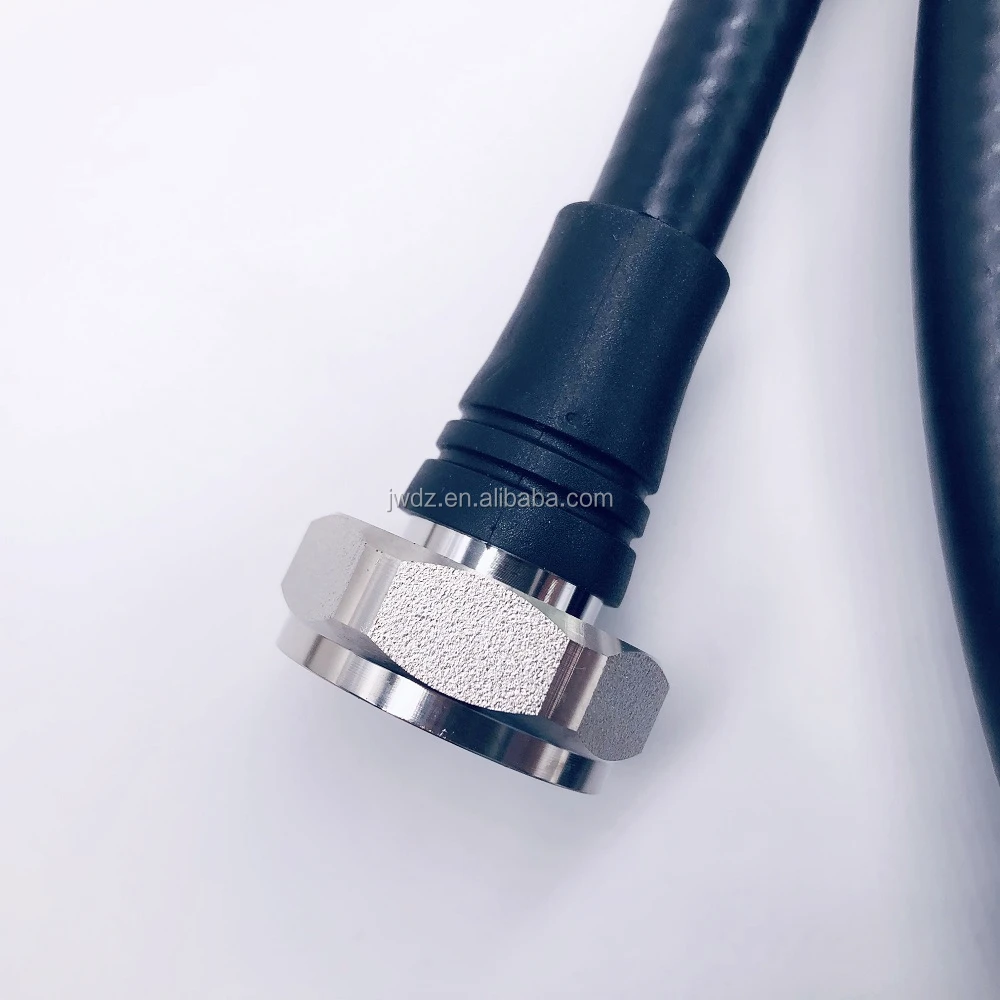
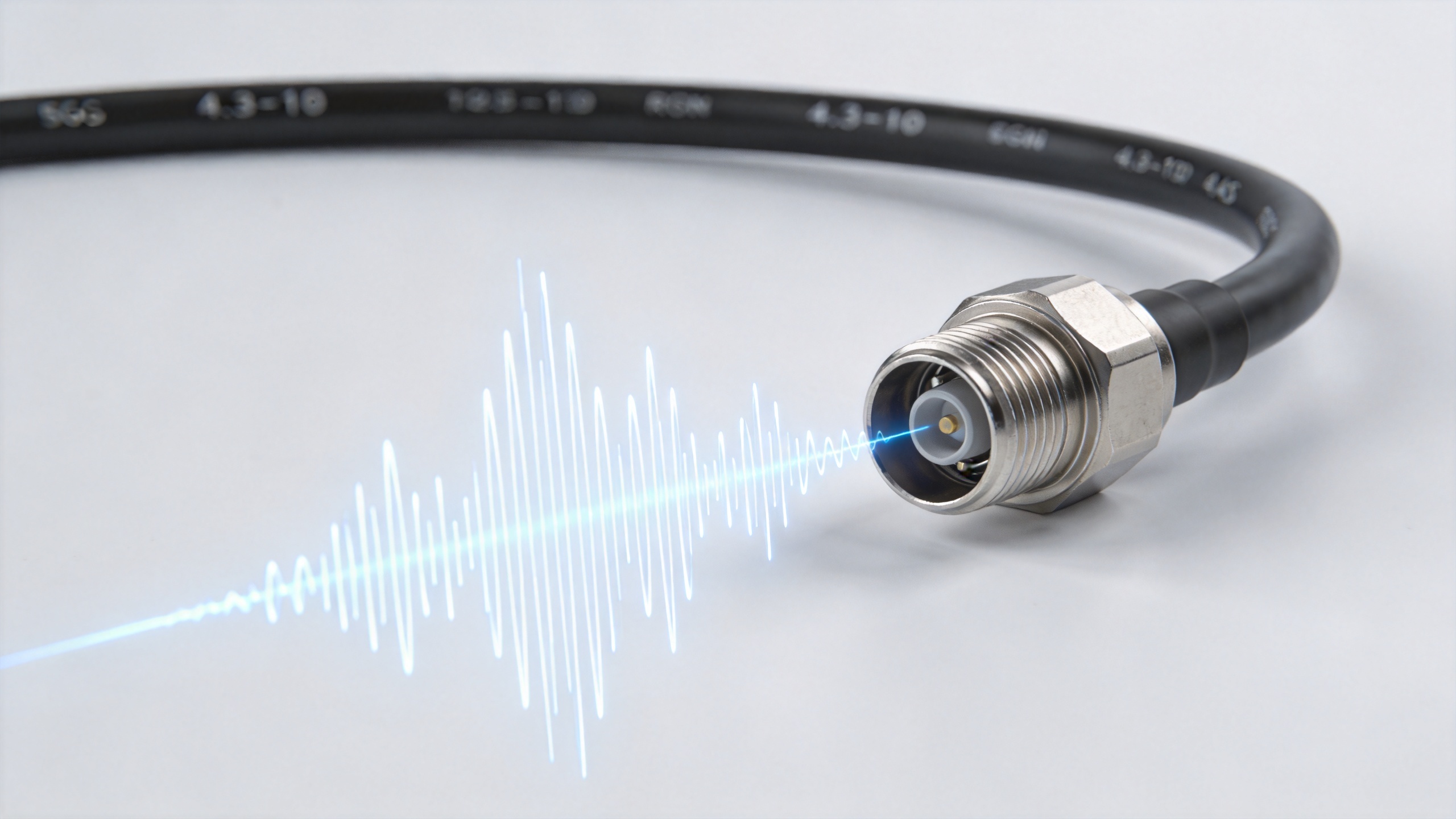
For projects requiring a compact 4.3-10 cable assembly format, one relevant catalog option is the Factory Low PIM 5G Cable Assembly MINI DIN 4.3-10 Male to 4.3-10 Male For 1/4 Cable. Verify the final choice against the actual frequency plan, interfaces, routing constraints, and acceptance procedure.
A practical commissioning checklist for low PIM cables
Before the indoor system is handed over, use a process that treats the passive path as an engineered subsystem:
- Confirm installed cable types, lengths, and connector combinations against the approved design.
- Inspect routing for crushed sections, unsupported weight, sharp turns, and bend-radius violations.
- Clean and inspect mating surfaces before final connection; protect unused interfaces from contamination.
- Apply the specified torque with the appropriate controlled tool and record any exceptions.
- Perform the required RF and PIM-related tests under the project’s defined conditions, then isolate anomalies by section rather than replacing components blindly.
- Preserve assembly IDs, test records, and as-built routing information for future maintenance.
Low PIM cable review matrix for indoor-DAS teams
The review below keeps low PIM cables visible at every handoff. In a multi-team build, low PIM cables need an engineering requirement, a purchasing requirement, an installation requirement, and a commissioning requirement—not just a line on the bill of materials.
| Project handoff | Question to document | Why low PIM cables are relevant |
|---|---|---|
| RF design | Are low PIM cables specified for the actual bands and interfaces? | Low PIM cables support a controlled passive path from the first design review. |
| RFQ | Does the RFQ define how low PIM cables are assembled and verified? | Low PIM cables should be evaluated as assemblies, not only bulk cable. |
| Receiving | Can incoming staff identify each batch of low PIM cables? | Traceability makes low PIM cables easier to isolate if a test result changes. |
| Routing | Are installers protecting low PIM cables from sharp bends and crushing? | Mechanical damage can defeat the intended behavior of low PIM cables. |
| Termination | Are mating interfaces on low PIM cables clean and correctly torqued? | Connector discipline preserves the benefit expected from low PIM cables. |
| Change control | Are adapters added to low PIM cables reviewed before installation? | Every added interface changes the passive path around low PIM cables. |
| Commissioning | Are low PIM cables included in the section-by-section test plan? | A measured result validates the installed behavior of low PIM cables. |
| Handover | Do as-built records identify routes containing low PIM cables? | Clear records shorten maintenance work involving low PIM cables. |
| Expansion | Will future bands reuse the installed low PIM cables? | Future planning prevents the passive path around low PIM cables from becoming an unknown. |
| Maintenance | Are replacement low PIM cables controlled to the same process? | Consistent replacements help retain the system benefit of low PIM cables. |
This matrix is not a substitute for the project acceptance specification. It is a reminder that low PIM cables deliver their intended value when the surrounding interfaces and installation practice receive the same level of control.
Conclusion: treat low PIM as a system discipline
Low PIM cables are important to 5G indoor coverage because they help protect a complex passive path from generating interference that conventional loss calculations may not reveal. They are most effective when paired with compatible connectors, controlled assembly, correct routing, clean mating surfaces, calibrated torque, and a commissioning plan that verifies the installed system.
The practical rule is simple: specify the RF path as a system, not a collection of individual parts. When that discipline is applied early, indoor DAS teams have a better chance of achieving predictable coverage and avoiding expensive post-installation troubleshooting.