EN
EN

RF Cable Manufacturers: What B2B Buyers Should Ask Before Ordering
Choosing among RF cable manufacturers is not simply a matter of comparing a price per meter. For a telecom, broadcast, DAS, industrial wireless, or test-equipment project, the cable and its terminations influence the link budget, installation effort, qualification workload, and long-term serviceability. A practical RFQ should give engineering, procurement, and site teams the same set of verifiable answers before a purchase order is released.
This buyer-focused checklist helps teams evaluate RF cable manufacturers with fewer assumptions. It is especially useful when you need a low-loss feeder, a finished coaxial assembly, or a custom configuration with specific lengths, connectors, and jacket requirements.
1. Start with the operating conditions, not a catalog family name
Ask the manufacturer to confirm the exact application: operating frequency range, nominal impedance, required power handling, cable run length, installation route, and indoor or outdoor exposure. “RF cable” is too broad for a dependable RFQ. A flexible jumper for an equipment rack has different mechanical and environmental needs from a long outdoor feeder on a tower.
- What frequency band and impedance must the assembly support?
- What is the maximum allowable insertion loss at the required frequency and finished length?
- What connector interfaces, genders, and mating conditions are required at each end?
- What minimum bend radius and routing constraints apply during installation?
- Will the cable face UV exposure, temperature cycling, humidity, vibration, salt air, or flame-retardancy requirements?
Reliable RF cable manufacturers should convert these inputs into a controlled specification rather than offer a generic “equivalent” without documenting the trade-offs.
2. Request electrical performance for the finished assembly
A bulk-cable datasheet is useful, but it does not prove the performance of a finished cable assembly. Connector selection, termination workmanship, length, and test conditions all affect the result. Ask which values apply to the delivered configuration and at what frequencies they are measured.
| What to ask | Why it matters | Evidence to request |
|---|---|---|
| Insertion loss limit | Supports the system link budget | Frequency-specific limit for the finished length |
| VSWR or return loss | Shows how well impedance matching controls reflections | Sweep range, limit, and test-port configuration |
| Power handling | Prevents overheating or degradation in transmit paths | Frequency, ambient condition, and duty-cycle basis |
| Phase or delay matching | Important for matched sets and array applications | Matching tolerance and measurement method |
When comparing RF cable manufacturers, require results that use the same reference plane, frequency range, and cable length. A report is most useful when it identifies the finished part number or lot rather than presenting only a representative curve.
3. Clarify construction, materials, and environmental suitability
Ask what construction is actually being quoted: center conductor, dielectric, outer conductor or shielding design, jacket material, nominal diameter, and permitted tolerances. These details affect attenuation, shielding, flexibility, weight, and installation reliability. For outdoor feeders, ask whether the proposed jacket and sealing approach fit the real installation environment.
If the project has a compliance requirement, identify the standard or customer specification in the RFQ and ask the supplier to state its applicability. The IEC 61196 series is commonly referenced for RF coaxial cable characteristics and test requirements, but the relevant part and acceptance criteria depend on the cable type and application. Do not treat a standard reference as proof of compliance without supporting documentation.
4. Treat the sample as a qualification plan
A sample should reduce uncertainty, not just confirm that the cable looks correct. Tell custom cable manufacturers which properties your team will inspect and test. For a new source, request a sample that matches the intended production configuration, including length, connectors, jacket, labeling, and packaging where practical.
- Approve a controlled drawing or specification before the sample is built.
- Check interface fit, dimensions, bend behavior, and labeling.
- Verify RF performance using the agreed frequency range and test method.
- Record the sample’s part number, revision, and test result as the production baseline.
- Define how substitutions, process changes, or connector changes will be communicated.
This sequence makes it easier to detect a gap between a successful sample and later production lots.
5. Ask how quality is controlled from termination to shipment
Visual inspection alone cannot confirm electrical performance. Ask RF cable manufacturers how they control connector termination, strip dimensions, torque or crimp settings, test coverage, and lot traceability. The strongest answer is not a broad promise of quality; it is a clear explanation of what is measured, how exceptions are handled, and what records can be supplied with the order.
- Is RF sweep testing available for every assembly, a defined sample rate, or only on request?
- Can the supplier provide test records tied to a lot or order line?
- How are nonconforming assemblies identified, segregated, and reworked?
- Can material, connector, and production records support your supplier-qualification process?
For projects with a high cost of field replacement, make the required documentation part of the purchase specification rather than a post-order request.
6. Confirm what “custom” includes and how changes are controlled
Custom work can include non-standard lengths, connector combinations, labels, jacket options, packaging, and matched electrical sets. Before selecting custom cable manufacturers, ask for a drawing-review process, quotation assumptions, minimum order quantity, prototype lead time, and a formal rule for engineering changes. A small alteration in connector orientation, cable length, or material can affect both fit and RF behavior.
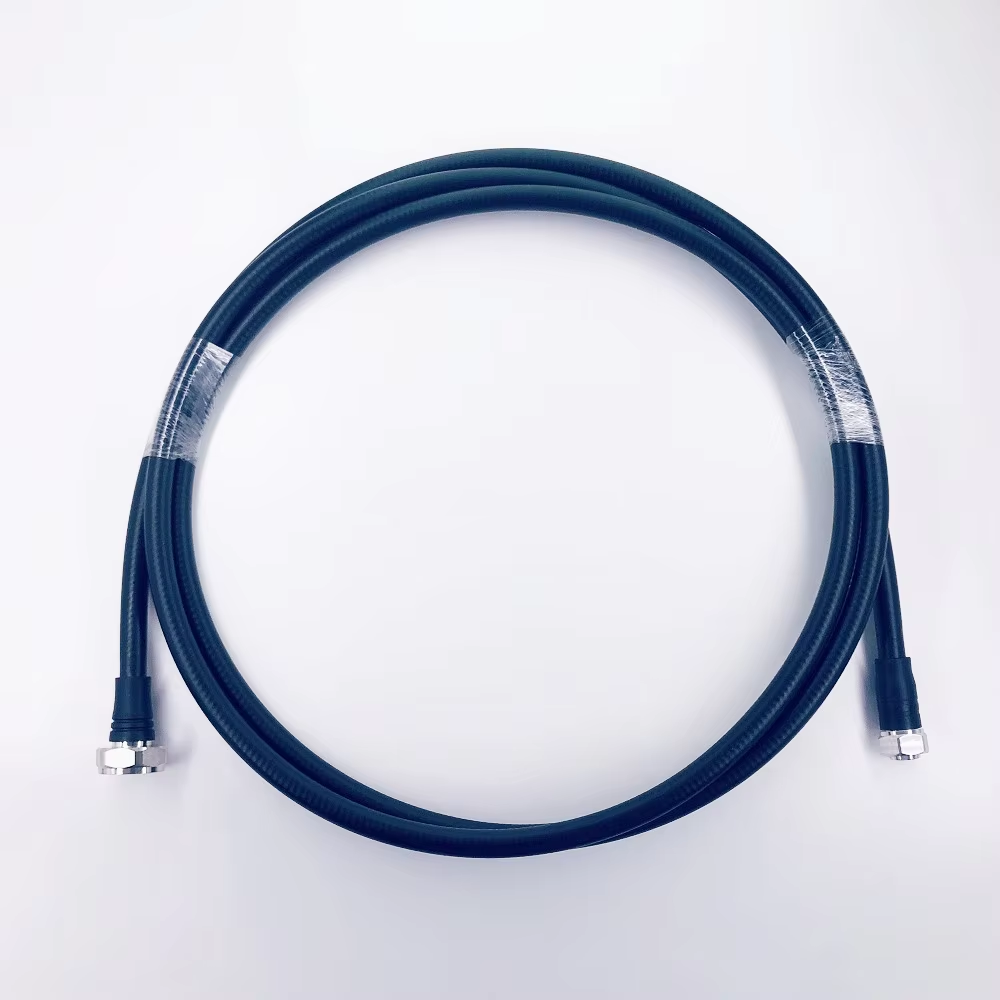
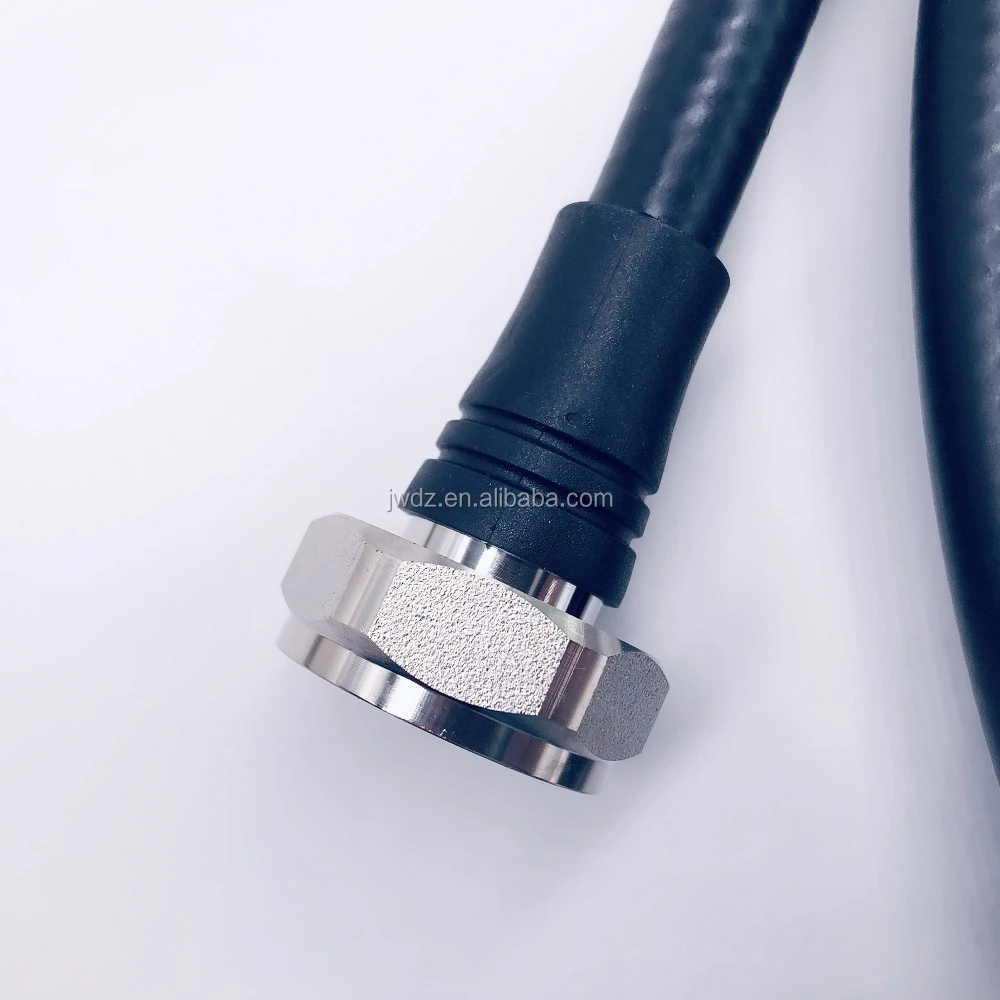
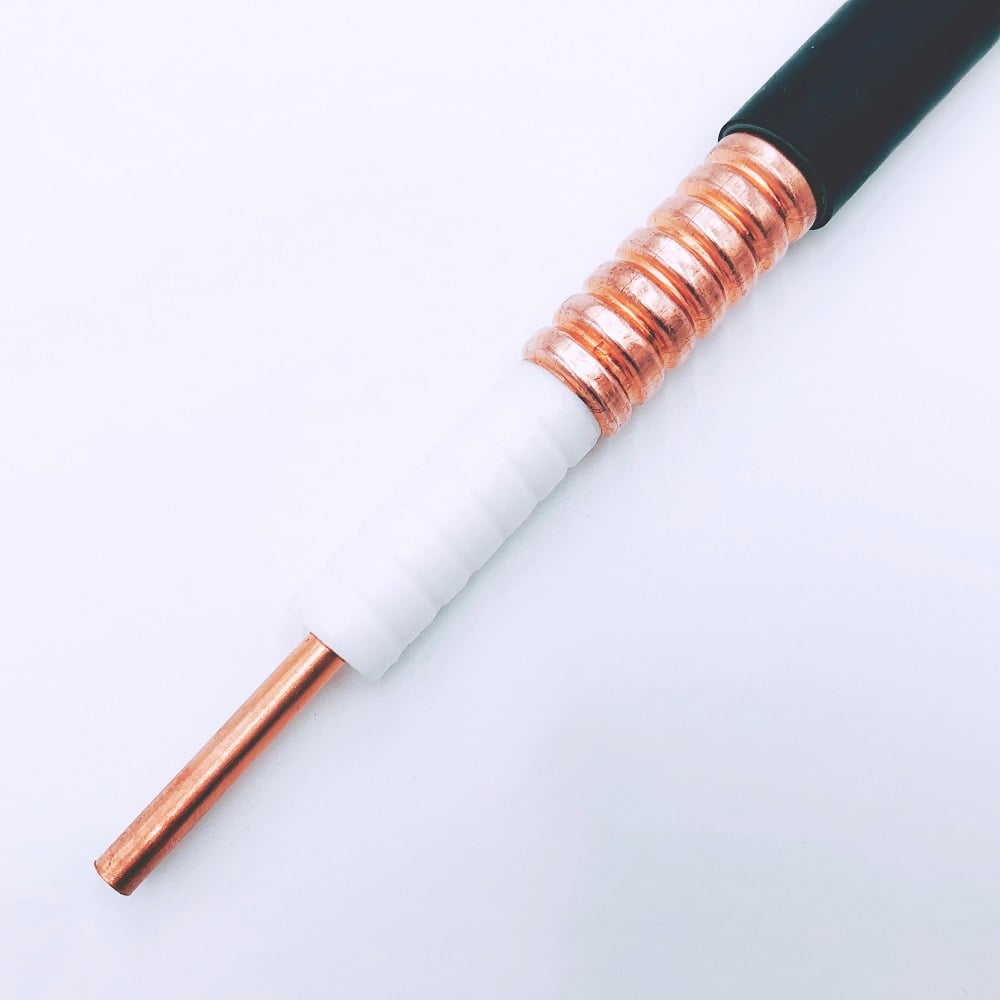
For example, a buyer sourcing a 1/2-inch low-loss flexible cable should confirm the exact finished configuration rather than rely on the family name alone. The manufacturer’s HCAAY(Z)-50-12 1/2-inch low-loss flexible cable can be used as a starting reference for a technical discussion, while the final order should still state the required connectors, length, jacket, testing, and acceptance criteria.
7. Make lead time and continuity part of the supplier decision
For deployment schedules, ask for separate timing for samples, first production, repeat orders, and any special materials. Also ask which inputs are long lead, how capacity is planned, and whether the supplier will notify you before a material or process change. RF cable manufacturers that communicate these constraints early help procurement teams manage risk instead of discovering it after an installation date is fixed.
For recurring programs, agree on the approved part number, revision control, packaging requirements, inspection documents, and a forecast or buffer-stock approach where appropriate. That creates a repeatable supply process rather than a series of one-off RFQs.
A practical RF cable manufacturer RFQ checklist
Before ordering, your RFQ should capture the application, frequency range, impedance, target loss, connector interfaces, finished length, bend radius, environmental conditions, documentation, sample plan, test method, acceptance limits, quantity, lead time, and change-control expectations. Ask suppliers to answer each item in writing. The most suitable RF cable manufacturers make technical assumptions visible, provide evidence for the finished assembly, and work with buyers to lock the approved configuration before volume production.
That discipline protects electrical performance, improves incoming inspection, and gives procurement a clearer basis for comparing price, quality, delivery, and long-term support.