EN

Choosing a High Gain Panel Antenna for Outdoor-to-Indoor Coverage
Outdoor-to-indoor RF projects often look simple on a drawing: place an antenna outside, point it toward the building, and expect stronger service inside. In practice, the outcome depends on the complete radio path. A high gain panel antenna can be a useful directional tool when a defined outdoor source must serve a limited indoor target zone, but gain alone cannot overcome a blocked path, an incompatible band, or poor installation geometry.
For DAS and IBS engineers, the first question is not “What is the highest-gain option?” It is “What signal path and indoor area must this antenna support?” That question turns a high gain panel antenna from a catalog specification into a component selected for a measurable coverage objective.
Start with the coverage path, not the dBi number
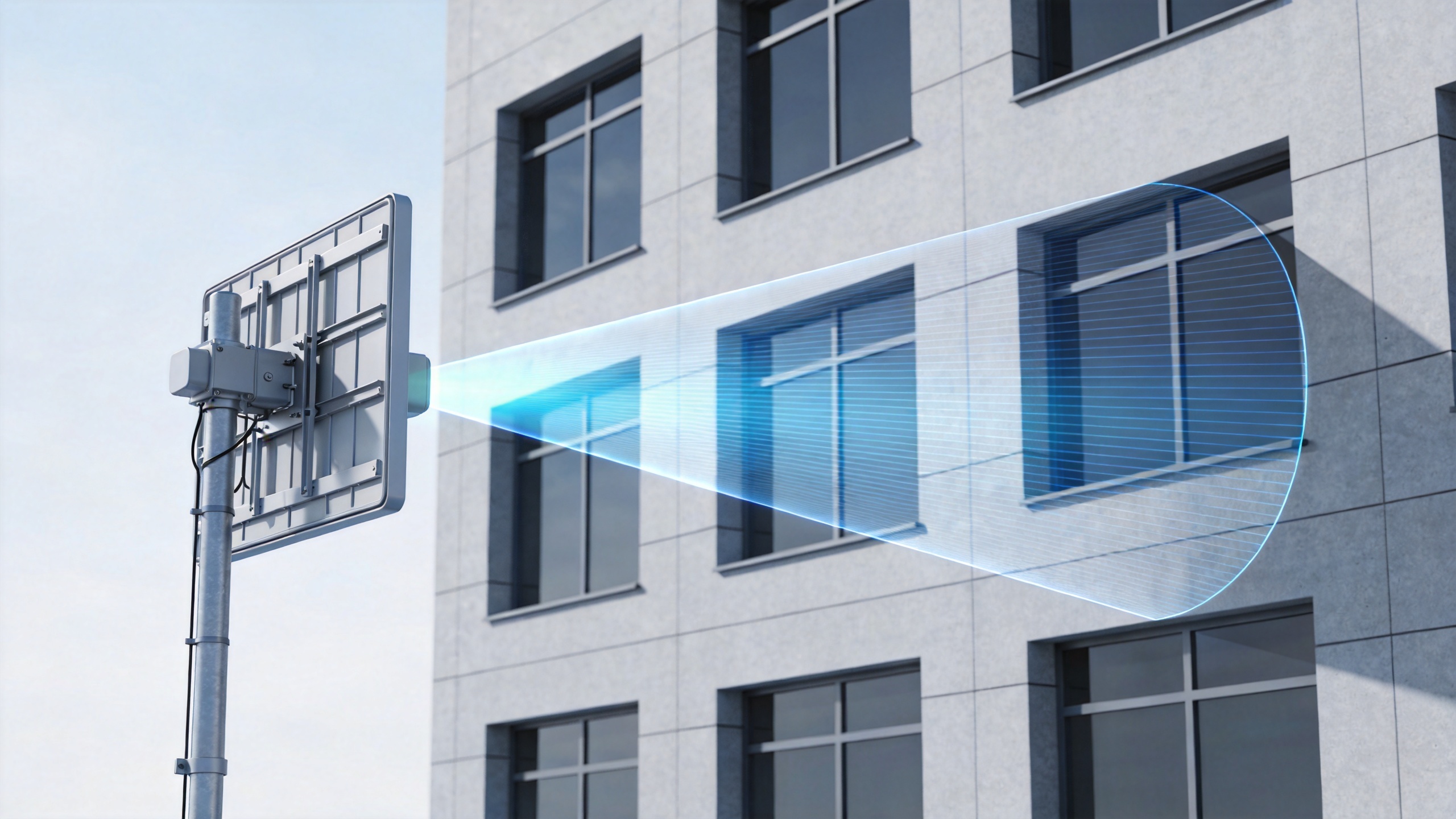
A panel antenna is directional. It concentrates energy into a forward sector instead of distributing it around the mast like an omnidirectional antenna. This behavior makes a high gain panel antenna appropriate when there is a known source direction and a defined target such as a building façade, entrance-side office area, corridor, warehouse edge, or indoor distribution feed point.
Map the path before comparing products. Identify the source location, the proposed mounting point, the exterior wall or window line, the rooms that need service, and the materials between them. Concrete, coated glass, metal cladding, elevator cores, shelving, and rooftop equipment can change the practical result. Higher-frequency signals generally face more attenuation through building structures than lower-frequency signals, so a design that is adequate at one band may not behave the same way at another.
A useful early decision is whether the high gain panel antenna is intended to:
- improve a directional donor link before an indoor DAS or repeater stage;
- cover a controlled exterior-to-interior edge zone directly;
- feed a sector within an IBS/DAS architecture; or
- bridge a specific point-to-point or point-to-area RF path.
These scenarios require different gain, beamwidth, mounting, and cable-loss decisions. They should not be treated as interchangeable.
Match frequency coverage before comparing gain
The operating band is the first non-negotiable specification for a high gain panel antenna. Confirm the live or planned cellular, private-network, or RF bands at the site, then verify that the antenna supports the required range with the relevant system equipment. A broadband label is helpful only when the actual band coverage and connector interface match the design.
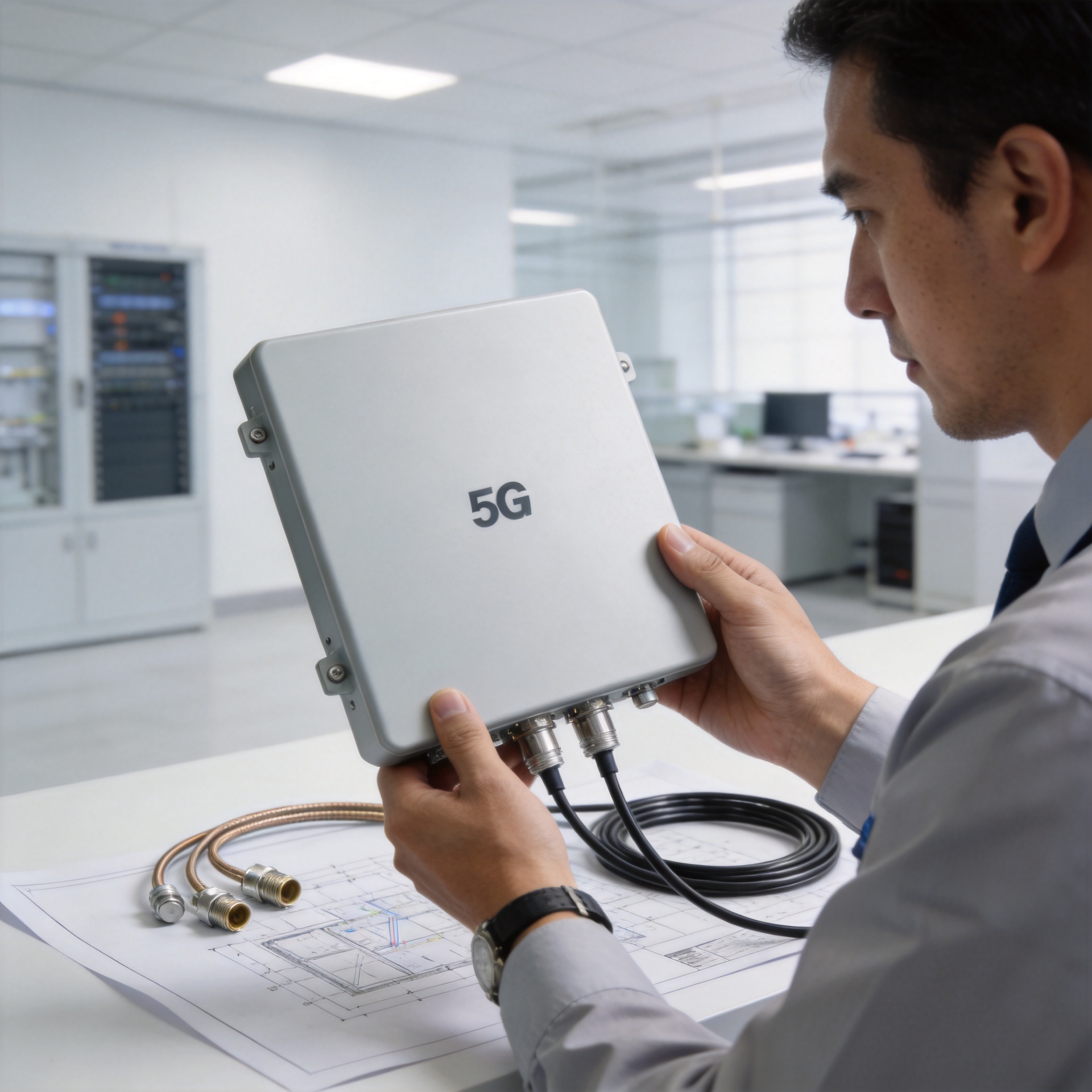
For example, Zhenjiang Jiewei lists a 5G 698–3800 MHz RF Antenna High Gain Outdoor Panel Antenna with a stated 7–8 dBi range for IBS/DAS use. That makes it a relevant example for projects whose approved bands fall within that range; it does not remove the need to validate the full link budget, system compatibility, and site conditions.
During specification review, check frequency range, impedance, connector type, polarization, passive intermodulation requirements where applicable, and the compatibility of every cable, connector, splitter, and indoor component. A high gain panel antenna is only one link in the RF chain, and a mismatch elsewhere can reduce the benefit of careful antenna selection.
Understand the gain-and-beamwidth trade-off
Gain describes how strongly an antenna focuses energy relative to a reference antenna in its intended direction. It does not automatically mean that every indoor location receives a stronger signal. As a directional antenna becomes more focused, its useful angular coverage may become narrower. This is why a high gain panel antenna must be selected with the target-zone geometry in mind.
| Project condition | What to prioritize | Selection implication |
|---|---|---|
| Long, clear path to a small target | Focused energy and accurate alignment | A higher-gain, narrower-beam panel may be appropriate. |
| Wide façade or several adjacent indoor zones | Useful horizontal coverage width | Compare beamwidth carefully; a moderate-gain panel can be more forgiving. |
| Dense interior obstructions | Distribution design and measurement | Do not assume an outdoor high gain panel antenna can replace properly placed indoor antennas. |
| Variable mounting orientation | Aiming tolerance and mechanical adjustment | Use an adjustable bracket and document the azimuth and downtilt plan. |
Ask for horizontal and vertical radiation-pattern data, not only the peak dBi number. The better choice is the panel whose pattern covers the required sector with enough margin, rather than the one with the largest isolated gain claim.
Choose polarization and mounting for the actual environment
Polarization must align with the network design and the rest of the RF path. When using a high gain panel antenna in a multi-antenna, MIMO, or cellular coverage architecture, confirm whether the planned antenna uses single, dual, or cross polarization and how that interacts with the donor or distribution equipment. Avoid treating polarization as an afterthought after the mechanical installation is complete.
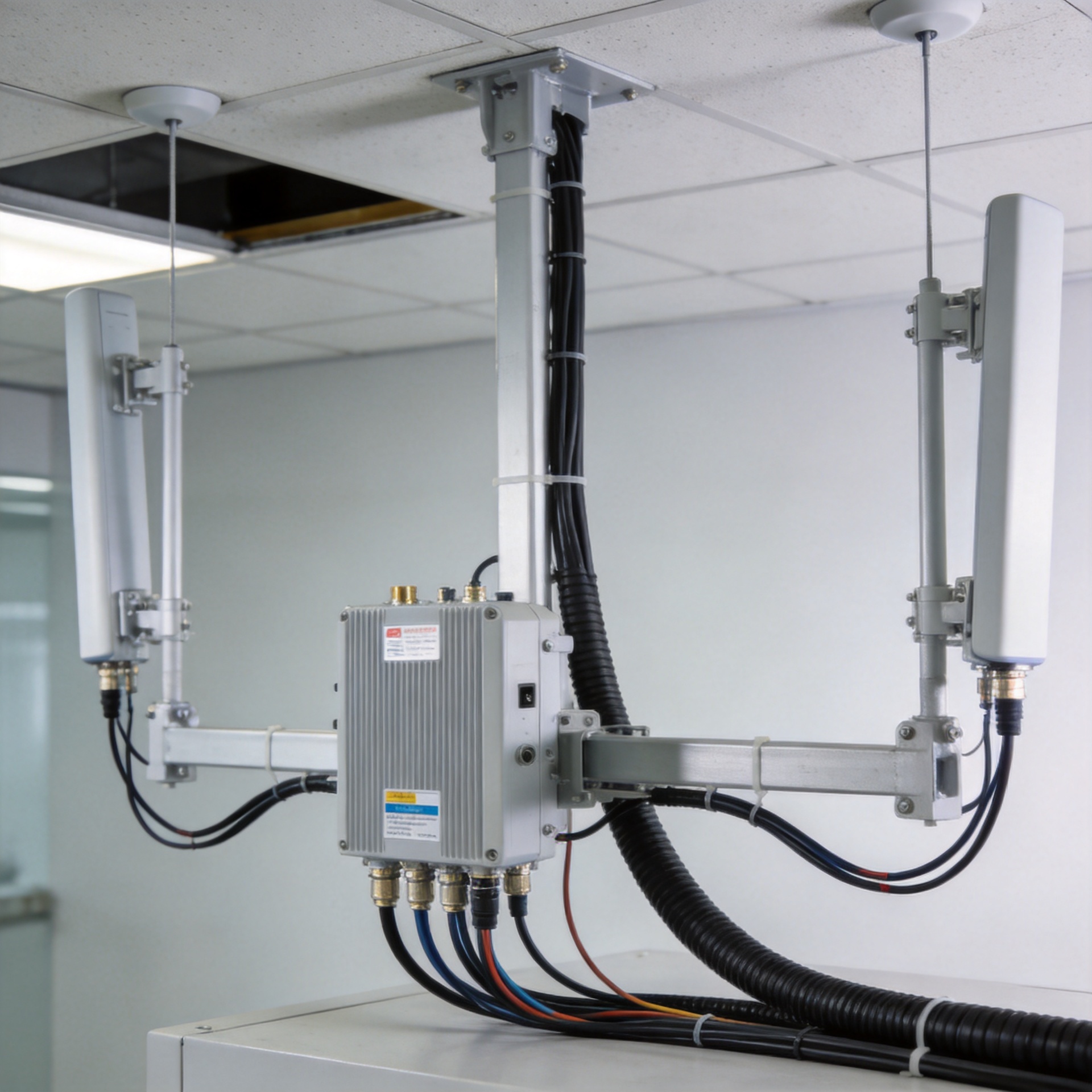
Outdoor mounting also affects reliability and repeatability. Select a bracket that can hold the intended azimuth and downtilt under wind loading. Keep the panel clear of large metal surfaces where possible, maintain sensible separation from nearby antennas, use suitable weatherproofing for connectors, and provide a cable route that protects bend radius and drainage. A high gain panel antenna that shifts a few degrees after installation may no longer illuminate the intended path.
Account for cable loss and the indoor architecture
Every meter of feeder cable and every connector adds loss. For outdoor-to-indoor projects, calculate the end-to-end link rather than choosing a high gain panel antenna first and hoping its gain offsets an unplanned cable run. A short, well-selected cable path can be more valuable than a nominal gain increase that is consumed by feeder loss.
Also define where the directional outdoor antenna ends and where the indoor coverage system begins. A high gain panel antenna can help collect or direct RF energy, but broad multi-room, multi-floor, or highly obstructed coverage may require an IBS/DAS design with appropriately located indoor antennas. Use the directional panel to serve the role it can measureably perform, rather than assigning it the entire building coverage problem.
Use a commissioning checklist before finalizing the choice
- Verify bands: confirm the required operating bands and system interfaces.
- Survey the path: check line of sight, exterior materials, and likely indoor attenuation points.
- Set the target zone: define the area, not merely the building, that the high gain panel antenna must support.
- Compare patterns: review horizontal and vertical beamwidth alongside gain.
- Plan installation: specify height, azimuth, downtilt, polarization, bracket, grounding, and weatherproofing.
- Calculate losses: include feeder, connector, splitter, and device losses in the link budget.
- Measure after installation: validate received signal, quality metrics, and performance at representative indoor points; then adjust aiming if needed.
Make the final decision from measurements and requirements
The right high gain panel antenna is the one that fits the required band, RF path, target-zone width, polarization, cable plan, and installation environment. For consideration-stage procurement, use the product data sheet as the starting point and compare it against the site survey and link budget. A 7–8 dBi broadband panel may be suitable for one outdoor-to-indoor DAS task, while another site may need a different beamwidth, gain level, or a more complete indoor distribution approach.
By evaluating the complete path before ordering hardware, engineers can use a high gain panel antenna as a controlled directional component—not as a guesswork fix for every indoor coverage issue.