EN
EN

LMR-400 Bulk Cable Buying Guide: Specifications to Verify Before Ordering from Suppliers
Having sourced RF interconnect components across multiple infrastructure deployments, I've learned that the verification gap between a sample qualification and a production batch order is where most bulk cable procurement problems actually begin. When you're ordering lmr 400 coax bulk cable in quantity—whether for a cellular backhaul rollout, a distributed antenna system build, or a broadcast transmission upgrade—the specifications on the datasheet are your baseline, not your guarantee.
This guide walks through the specific parameters to confirm before committing to a bulk order, how to distinguish genuine LMR-400 from compatible alternatives, and what incoming inspection should actually look like when the reels arrive.
Critical Electrical Specifications to Confirm Before Placing a Bulk Order
At its simplest, lmr 400 coax selection for bulk procurement comes down to a few core electrical parameters. But the specification you locked in at sample qualification may not match what ships in the production batch months later.
Key values to verify against your supplier's documentation before order placement:
| Parameter | Nominal Value | What to Verify |
|---|---|---|
| Impedance | 50 ohms | Confirm tolerance range (typically ±3 ohm); request production lot TDR verification rather than relying on datasheet nominal alone |
| Attenuation at 1 GHz | ~4.25 dB per 100 ft | Ask for per-batch sweep data; datasheet figures reflect design targets, not necessarily the batch you receive |
| Velocity factor | ~85% | Relevant for phasing-critical applications; verify foam PE dielectric consistency across the reel |
| Max operating frequency | 8 GHz | Confirm the specified product covers your application band, especially for mmWave adjacent deployments |
If your deployment is primarily below 500 MHz, the attenuation difference between original and compatible cable matters less than it does at 2.4 GHz or above. But if you're running frequencies above 1 GHz across extended cable runs, a half-dB discrepancy per 100 feet compounds quickly across a distributed system—and that's before you factor in connector termination quality.
Distinguishing Original LMR-400 from Compatible and Generic Alternatives
The lmr 400 designation originates with Times Microwave Systems (stock code 54001), but the market includes a wide range of compatible alternatives that use "LMR-400" informally to indicate cable type rather than manufacturer. For bulk lmr 400 coax procurement, that distinction matters most, where sample performance and production batch consistency may diverge.
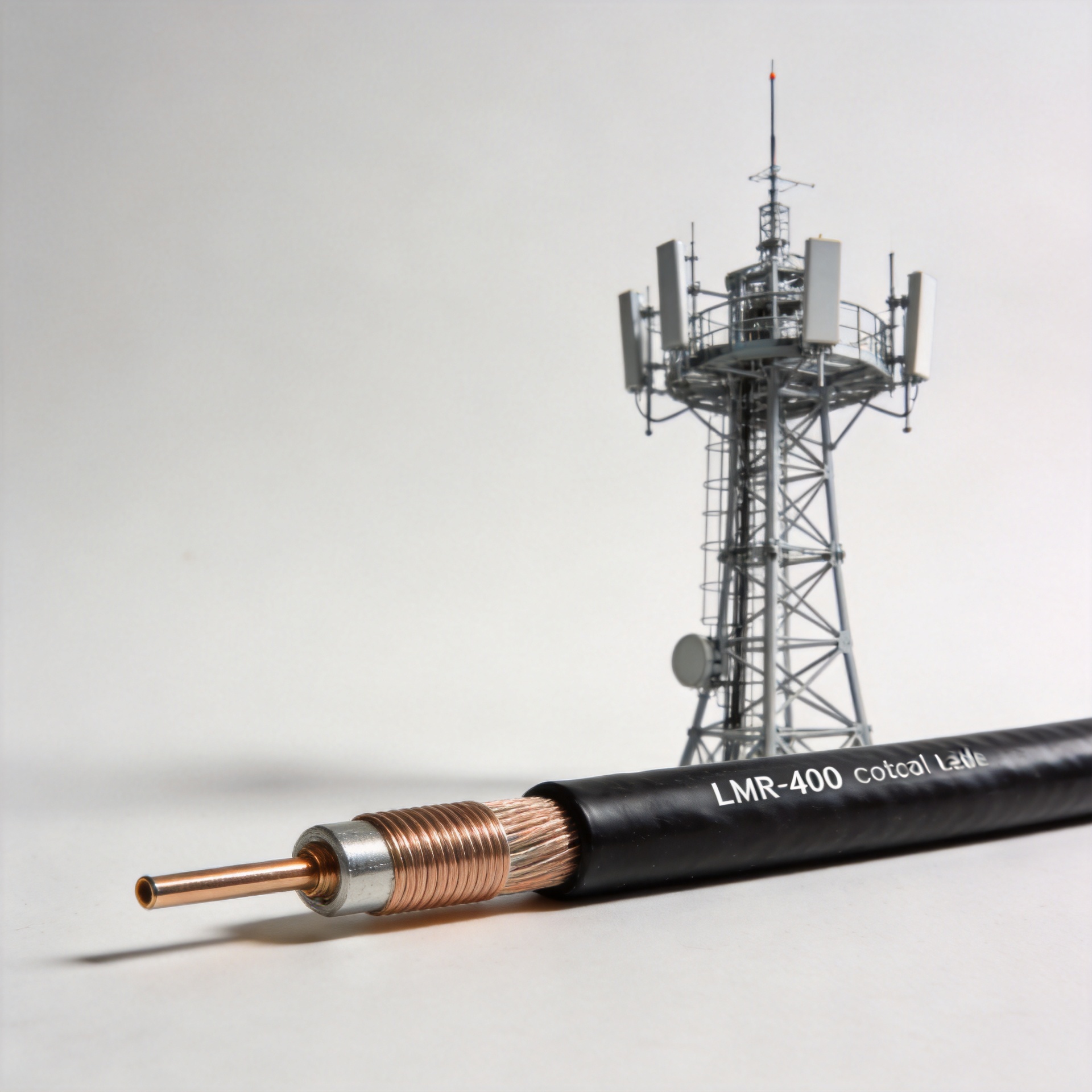
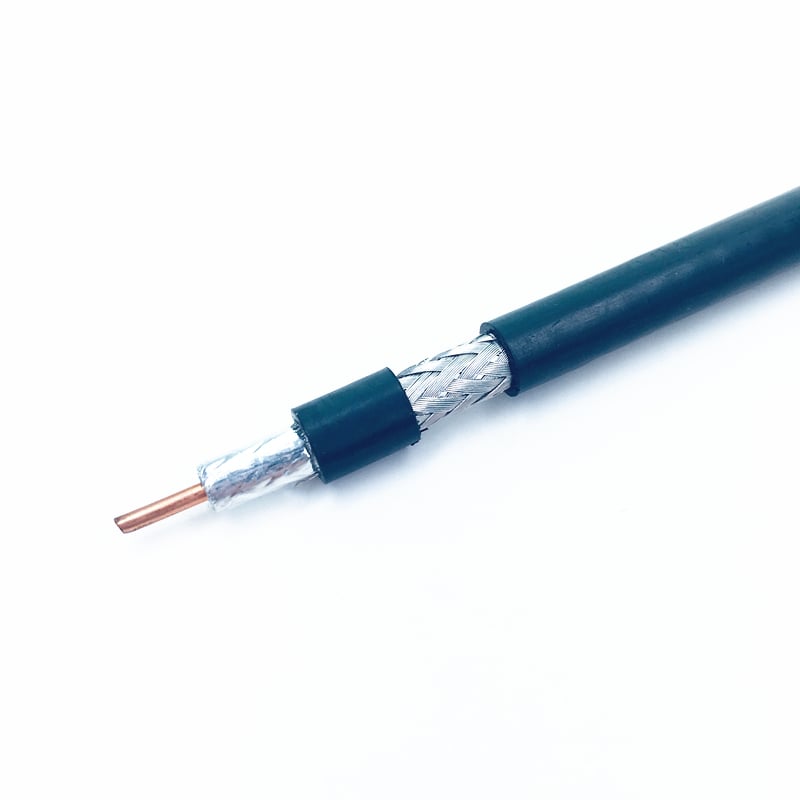
The structural difference to verify is the center conductor. Times microwave systems lmr 400 uses a copper construction with a higher copper content than many compatible and counterfeit copies. Generic alternatives often reduce copper in the center conductor to cut material cost—a difference that may not be apparent at initial installation but degrades oxidation resistance and long-term insertion loss stability over a system's service life.
Key construction elements to specify and verify when ordering bulk lmr 400 coax:
- Center conductor: Specify bare copper or confirm the CCA (copper clad aluminum) ratio explicitly. Request material certifications for bulk orders; don't rely on label claims alone.
- Dielectric: Foam polyethylene at approximately 85% velocity factor. A visual cross-section on incoming samples should show consistent, uniform cell structure.
- Jacket: UV-resistant black polyethylene rated for outdoor exposure. Genuine Times Microwave product carries the LMR-400 trademark on the jacket; compatible cables carry alternative markings—verify which you've specified and which you've received.
- Shielding: Dual-layer shield construction with bonded foil and braid. For compatible product, verify braid coverage percentage matches the spec your system was designed around.
A cable assembly qualification test is not the same as a production batch inspection. Qualification confirms the design is sound. It doesn't tell you whether the batch you receive six months later matches that design—especially from suppliers who source from multiple production facilities.
Incoming Inspection Recommendations for Bulk LMR-400 Orders
In my experience—and this depends heavily on the supplier's quality management maturity—batch variation on bulk cable shipments is more common than buyers expect, particularly when large orders are fulfilled from consolidated production runs.
For a bulk order of lmr 400 coax, a practical incoming inspection protocol should include:
- Visual jacket and marking check: Compare markings on the reel to the specified product. Inconsistent, faded, or missing markings are a red flag regardless of whether you ordered original or compatible cable.
- Center conductor diameter verification: Use a micrometer on a cut sample. LMR-400 center conductor nominal OD is approximately 0.108 inches (2.74 mm); significant deviation indicates a non-conforming or mislabeled batch.
- Impedance TDR sweep: Even a short TDR sweep on each reel identifies impedance anomalies and dielectric inconsistencies that visual inspection cannot detect.
- Insertion loss spot check: A swept attenuation measurement on a cut length sample—if you have the test equipment—confirms whether the batch matches the spec your loss budget was built around.
- Documentation review: Request batch test reports—not just product datasheets—for any bulk order above your installation risk threshold. A supplier unable to provide batch documentation is a risk signal.

I used to evaluate incoming cable reels purely against the product datasheet—until I realized that batch-to-batch consistency is the relevant variable for large project procurement, not just the headline spec.
Packaging, Reel Standards, and Logistics for Bulk LMR-400 Orders
Standard bulk configurations for lmr 400 coax are typically 500-foot and 1,000-foot reels. Genuine lmr 400 cable should arrive with consistent jacket markings and batch documentation. For multi-site rollout planning, confirm the reel type—wood or plastic—as this affects handling, storage, and what happens to the cable if the reel is stored outdoors before installation.
Verify these packaging parameters before placing a bulk order:
- Reel footage accuracy: Confirm measured footage matches labeled footage—not just accept the label claim. Discrepancies of 5-10% are not unheard of in unverified bulk commodity cable.
- Bend radius specification: LMR-400 minimum bend radius is approximately 1 inch for repeated flex and 4 inches for fixed installation. Confirm reels are wound to a diameter that won't induce permanent deformation during storage.
- Storage and moisture protection: If reels will be stored before installation, confirm UV and moisture barrier packaging for outdoor storage scenarios.
- Export documentation: For cross-border procurement, confirm that test reports, material certifications, and product documentation meet import requirements for your destination country.
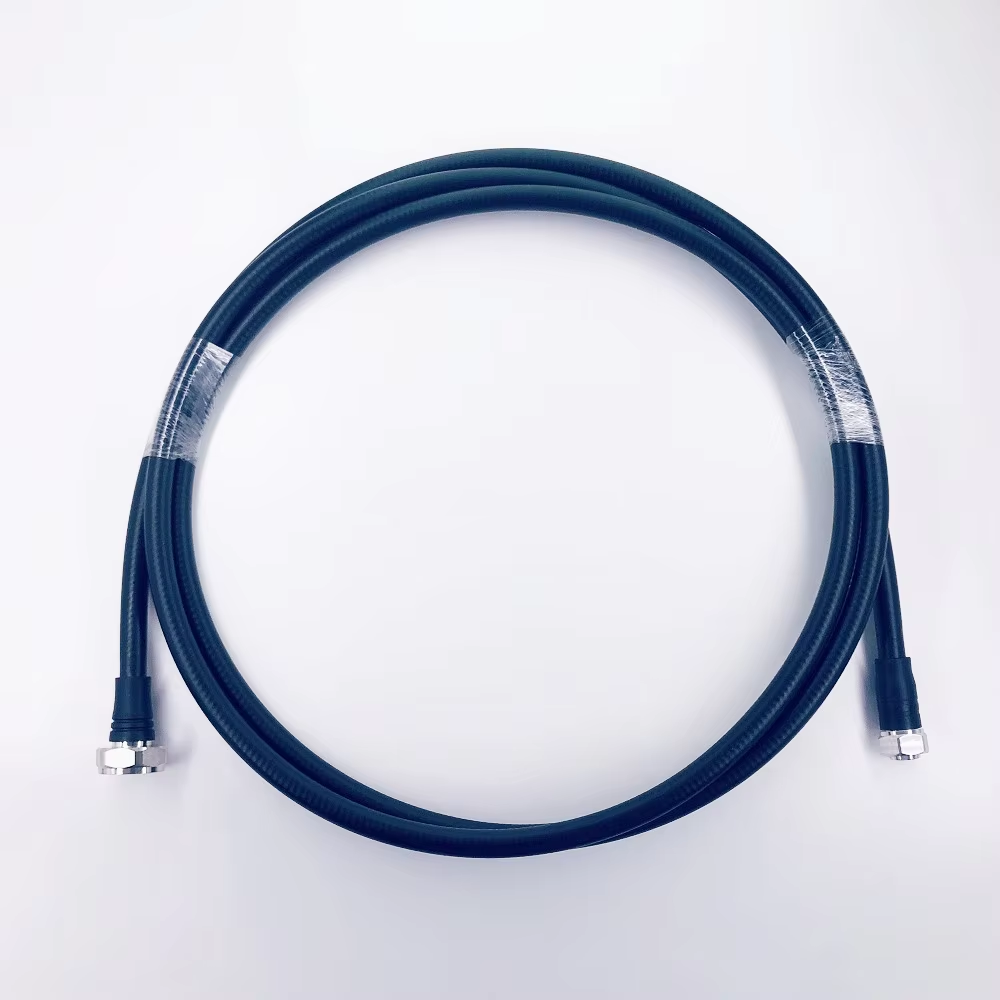
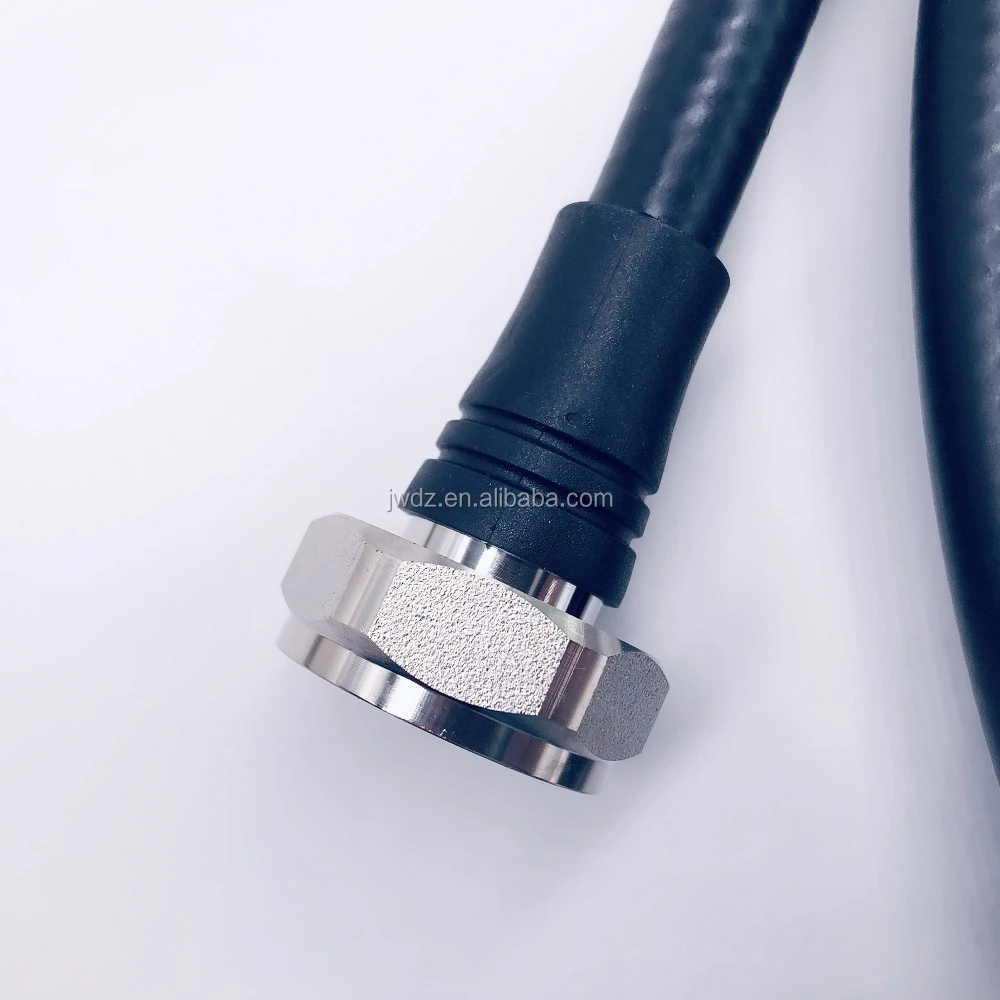
If your project requires both bulk cable and terminated assemblies, consolidating procurement at a single factory source reduces the specification gap risk between cable and connector termination. Our LMR-400 Flexible Low Loss RF Coaxial Cable is available for bulk supply, and we also manufacture compatible assemblies including 4.3-10 to N Male LMR-400 pigtail jumpers for direct integration into your system BOM.
Supplier Qualification Criteria for Repeat Bulk Orders
The decision framework for selecting a bulk lmr 400 coax supplier reduces to three criteria: documented specification traceability, batch-level quality reporting capability, and logistics reliability at your volume and delivery cadence.
Before finalizing a supplier for repeat bulk orders, verify they can provide:
- Batch-specific test reports, not just product-level datasheets
- Material certifications for center conductor copper content
- A track record of similar-volume orders with verifiable references
- Confirmed reel labeling accuracy and footage verification process
- A clear non-conformance response protocol for batches that fail incoming inspection
Suppliers with 25 or more years of RF interconnect manufacturing experience—covering coaxial cables, connectors, and cable assemblies for telecom and broadcast infrastructure—are better positioned to provide consistent batch documentation across large orders than general distributors sourcing from multiple origin manufacturers.
The specifications on the LMR-400 datasheet are the starting point. What you confirm before placing the bulk lmr 400 order determines whether the reels that arrive on site match the performance your system was designed around.