EN
EN

RG316/U Coaxial Cable Explained: PTFE Dielectric Properties, Specifications and Typical Applications
As an RF systems engineer who has evaluated dozens of coaxial cable assemblies for high-frequency signal routing, I can tell you that cable selection is rarely the first thing engineers audit when a system underperforms. Most attention goes to the amplifier chain, the antenna match, or the connector interface—and the short cable runs get overlooked. That changes the first time you trace a persistent signal quality issue back to a cable that was simply not rated for the thermal or chemical environment it was operating in. When that environment demands both compact form factor and reliable performance up to 3 GHz, rg316 is the coaxial cable specification most RF engineers reach for.
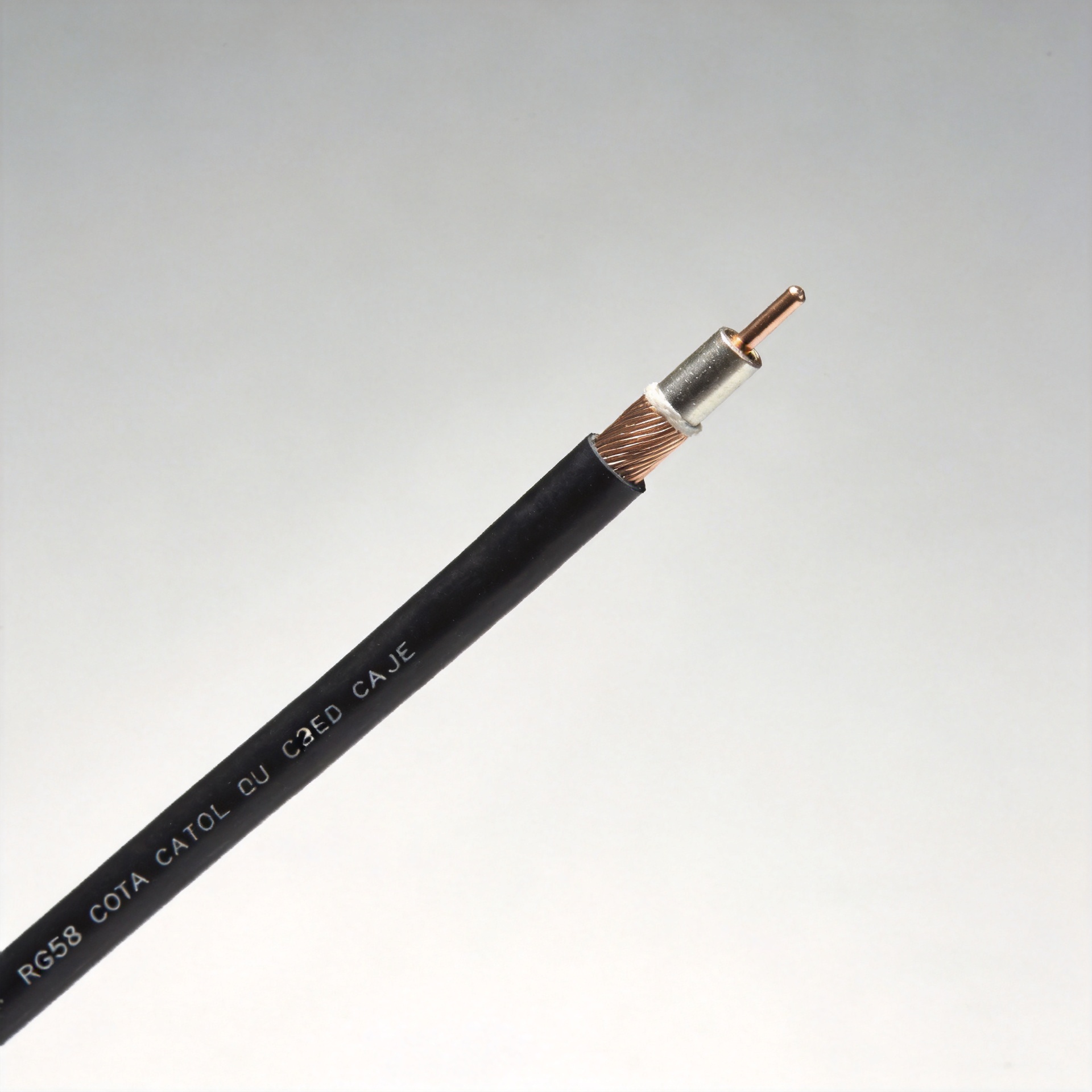
The RG316/U coaxial cable—also designated M17/113-RG316 under military specification—combines a PTFE dielectric, silver-plated conductors, and a 2.5 mm outer diameter into a cable that covers a specific but widely needed performance range. This article unpacks what those rg316 cable specs mean in practice, why PTFE dielectric matters for demanding deployments, and which application environments this cable is built for.
Understanding the RG316/U Designation
The "RG" prefix stands for Radio Guide, a standardized naming convention originating from U.S. military specification MIL-C-17, which classifies coaxial cables by impedance, physical dimensions, and dielectric materials. The "316" identifies the specific design variant within that system. The "/U" suffix carries a specific meaning: "universal utility," indicating the cable is specified for use across military and commercial applications without modification.
RG316/U also carries the parallel designation M17/113-RG316. Seeing this on a product datasheet confirms the cable meets MIL-C-17 requirements for conductor construction, dielectric material, and electrical performance. For procurement teams qualifying cables for defense electronics or aerospace systems, that dual designation is often a hard requirement in the bill of materials, not a nice-to-have.
Beyond the naming convention, "/U" signals standardization across the connector ecosystem. An rg316 cable built to /U specification is designed to mate reliably with the broader range of SMA, BNC, SMB, and MMCX connector series built to the same standard—critical when you are sourcing cable assemblies from multiple suppliers for a single platform.
PTFE Dielectric Properties: Why They Define RG316/U Performance
Think of the dielectric in an rg316 coaxial cable like the insulation in a pressurized fluid line: the quality of that material determines not just how much signal energy stays in the conductor, but how the cable behaves when temperature, solvents, or physical stress are part of the operating environment. PTFE—polytetrafluoroethylene—is one of the most demanding-environment dielectric materials used in coaxial cable production, and it is the reason rg316 specifications appear wherever performance margins cannot be sacrificed.
PTFE has a dielectric constant of approximately 2.1, close to that of air. This low value translates directly into lower signal propagation loss per unit length compared to cables using polyethylene (PE) or PVC dielectrics. The practical implication: at the same frequency, an rg316 coax cable running PTFE dielectric delivers more signal power to the terminating device than a physically similar cable with a higher dielectric constant material.
The temperature performance is equally important. PTFE maintains its dielectric properties across –55°C to +200°C—a range that covers everything from Arctic cold-soak conditions to engine-bay proximity in aerospace platforms. Standard PE-insulated cables typically derate above 80–85°C. The FEP outer jacket of rg316 cable matches this thermal range while also providing resistance to most industrial solvents, fuels, and hydraulic fluids. For any deployment where the cable's environment is not a controlled equipment room, that resistance profile moves from a specification footnote to a procurement requirement.
What doesn't appear on most datasheets but matters for long-term measurement accuracy: PTFE resists outgassing under vacuum and remains dimensionally stable across thermal cycles. For test and measurement instruments that require stable impedance over repeated heating and cooling cycles, that stability directly protects measurement repeatability over the instrument's service life.
RG316/U Coax Cable Specifications
The core rg316 coax cable specifications are consistent across compliant manufacturers:
- Characteristic impedance: 50 ohms
- Maximum operating frequency: 3 GHz
- Outer diameter: approximately 2.5 mm
- Nominal capacitance: approximately 29.4 pF/ft
- Inner conductor: stranded silver-plated copper clad steel (SPCCS)
- Outer conductor: silver-plated copper braid
- Dielectric: extruded PTFE
- Outer jacket: FEP (fluorinated ethylene propylene)
The silver plating on both conductors serves a specific function at RF frequencies: current flow concentrates at the conductor surface (the skin effect), and silver's lower surface resistivity compared to unplated copper reduces resistive losses in the 500 MHz to 3 GHz range where rg316 is most commonly deployed. The 50-ohm impedance aligns with the dominant standard across RF and microwave systems, covering virtually all test equipment ports, SMA and BNC connector interfaces, and signal routing within telecom chassis and base station enclosures.
Typical Applications of RG316/U Cable
The rg316 cable's combination of small form factor, PTFE dielectric, and 3 GHz frequency capability positions it in four primary application environments:
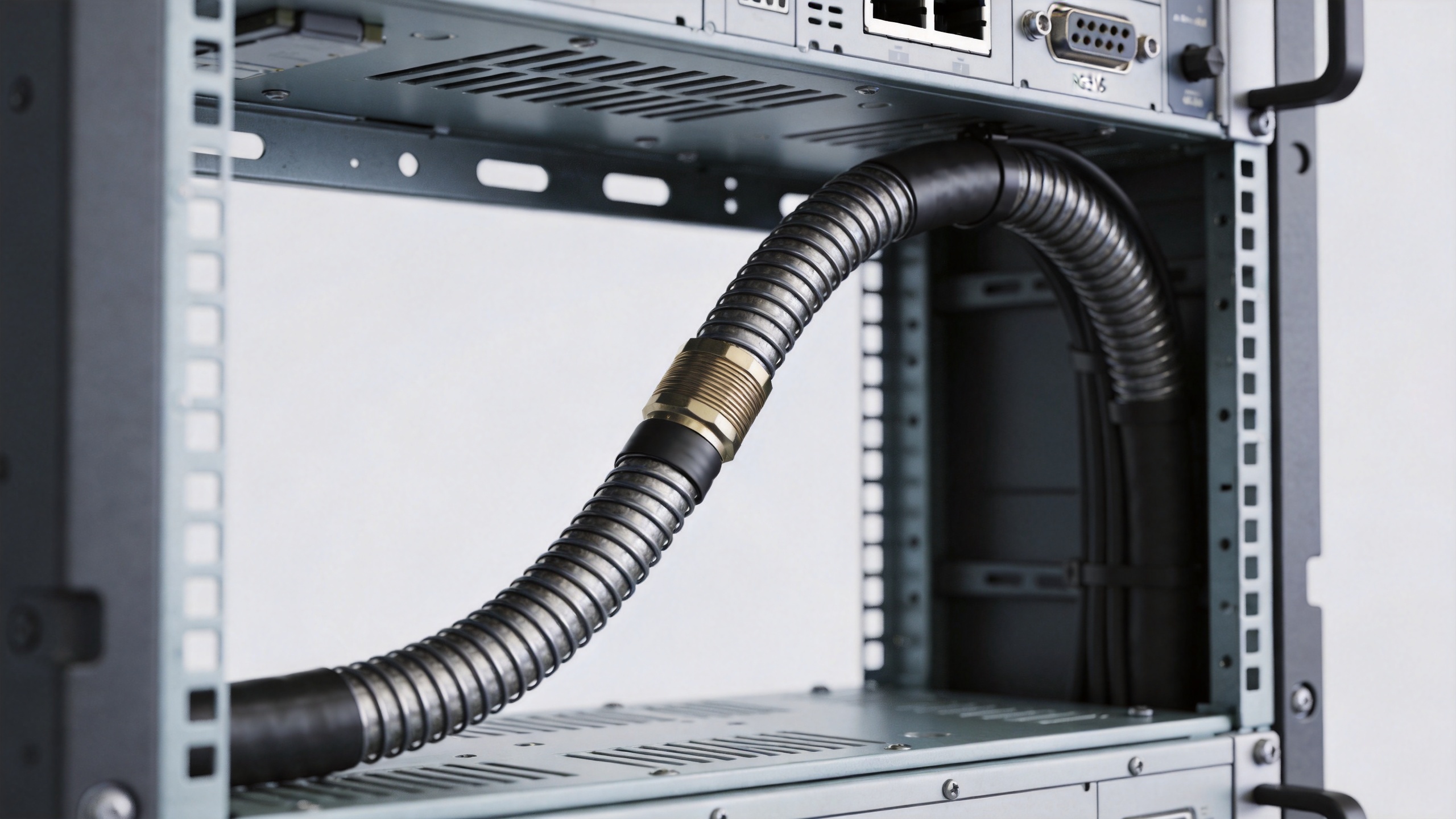
Telecom Equipment Internal Connections: Inside base stations, RF distribution units, and communication equipment enclosures, cable routing must fit tight bend radii without significant performance penalty. The 2.5 mm outer diameter and flexible FEP jacket of rg316 coaxial cable make it one of the few 50-ohm cables that can be routed through dense board-to-board and board-to-chassis paths at the frequencies used in modern telecom equipment. The PTFE dielectric holds up under the continuous low-level heat generated in high-density electronics enclosures where standard PE cables would gradually degrade.
Aerospace Avionics: Avionics bays are among the most thermally variable environments a cable can inhabit. Altitude changes, solar heating, proximity to engines, and cold-soak events during high-altitude cruise create wide temperature swings in short operational cycles. The rg316/u cable's full-range PTFE performance profile, backed by M17/113 military qualification, makes it standard in avionics wiring harnesses where signal integrity cannot degrade with altitude or temperature.
Military Electronics: For defense electronics procurement, the M17/113 designation represents a verified compliance path that quality teams require for vendor qualification. PTFE's chemical and solvent resistance is an additional advantage in military field environments where exposure to fuels, hydraulic fluids, and cleaning agents is routine rather than exceptional. Sourcing rg316 cable from manufacturers who can document M17/113 compliance simplifies the qualification process on both sides of the procurement relationship.
Test and Measurement Instruments: Precision RF instruments—spectrum analyzers, signal generators, network analyzers—require internally routed cables that maintain repeatable electrical characteristics over thousands of thermal cycles. RG316/U's dimensional stability under repeated heating means the instrument's measured impedance stays consistent from unit to unit and over service life in a way that PE-insulated alternatives cannot guarantee. This is the application where the datasheet's rg316 cable specs directly determine metrology quality.
Selecting RG316/U: Single vs. Double Shield and Sourcing Considerations
I used to evaluate coaxial cables purely on their individual datasheet values. Experience taught me that system performance is determined by how the cable behaves at the mating connector interface and within the actual deployment environment, not what the datasheet claims under controlled lab conditions. Two decisions worth making before finalizing a rg316 cable assembly specification:
First, determine whether you need single-shield (RG316/U standard) or double-shield (RG316-DS). In environments with high external RF interference (military platforms with radar emissions, test chambers with high-power signals nearby), double shielding provides a meaningful improvement in transfer impedance and isolation that standard single-shield rg316 coax cable cannot match.
Second, confirm batch-to-batch consistency requirements before committing to a supplier. If your application is test and measurement equipment requiring matched cable segments, silver plating consistency across production batches matters to insertion loss repeatability. Request production consistency data, not just sample qualification results.
For sourcing rg316 coax cable for telecom internal connections, aerospace assemblies, or test instrument applications, Zhenjiang Jiewei's RG316 High Quality 50 ohm RF Coaxial Cable is manufactured to the standard RG316/U specification with silver-plated SPCCS inner conductor and PTFE dielectric. For adjacent applications where semi-rigid routing is required within the same assembly, particularly in test fixtures or military chassis where RG316/U flexible sections connect to semi-rigid trunk runs, their RG402 High Quality 50 ohm RF Coaxial Cable provides a 50-ohm semi-rigid alternative within the same product family.
The rg316 cable specification has remained consistent precisely because it solves a specific problem well: 50-ohm signal routing in thermally and chemically demanding environments where compact dimensions matter. Understanding which parts of that specification are non-negotiable for your application—and which can flex based on budget or availability—is the practical engineering decision the datasheet alone will not make for you.