EN

Why Low PIM Matters in Distributed Antenna Systems
In an indoor coverage project, it is easy to focus on antenna placement, cable length, and downlink power. Those items matter. Yet an antenna DAS is also an uplink system, and its quietest receive path can be limited by a problem that is invisible on a conventional sweep: passive intermodulation, or PIM. Low PIM is not a premium label added to an antenna datasheet. It is a system requirement that helps a distributed antenna system preserve receiver sensitivity when multiple carriers share the same RF path.
For engineers planning an antenna DAS, the practical question is not simply “Does this antenna cover the band?” It is “Will the full installed RF chain remain linear enough under real multi-carrier power to avoid creating interference inside the receive band?” The answer depends on the antenna, but also on every connector, jumper, feeder, adapter, mounting interface, and installation practice around it.
What PIM means in an antenna DAS
PIM occurs when two or more RF signals pass through a passive path that is not perfectly linear. Small nonlinear junctions can generate new frequency products. In an antenna DAS, those products may fall close to, or directly inside, an uplink receive band. The receiver sees them as unwanted energy, which can raise the effective noise floor and make weak user signals harder to recover.
That distinction matters because passive parts do not need an active amplifier to create the issue. Loose or contaminated connector interfaces, dissimilar-metal contact points, damaged plating, poor torque control, stressed cable assemblies, and some mechanical joints can all contribute. A low-PIM antenna helps, but a low-PIM system needs the same discipline at every RF interface.
Public technical guidance commonly reports antenna-system PIM targets in the region of −150 to −160 dBc under a 2 × 20 W test setup. Treat that range as a way to frame the discussion, not as a universal acceptance value. Frequency pair, test power, test method, operator specification, and whether the result is reported in dBc or dBm all change what a valid comparison looks like.
Why low PIM becomes more important in dense indoor coverage
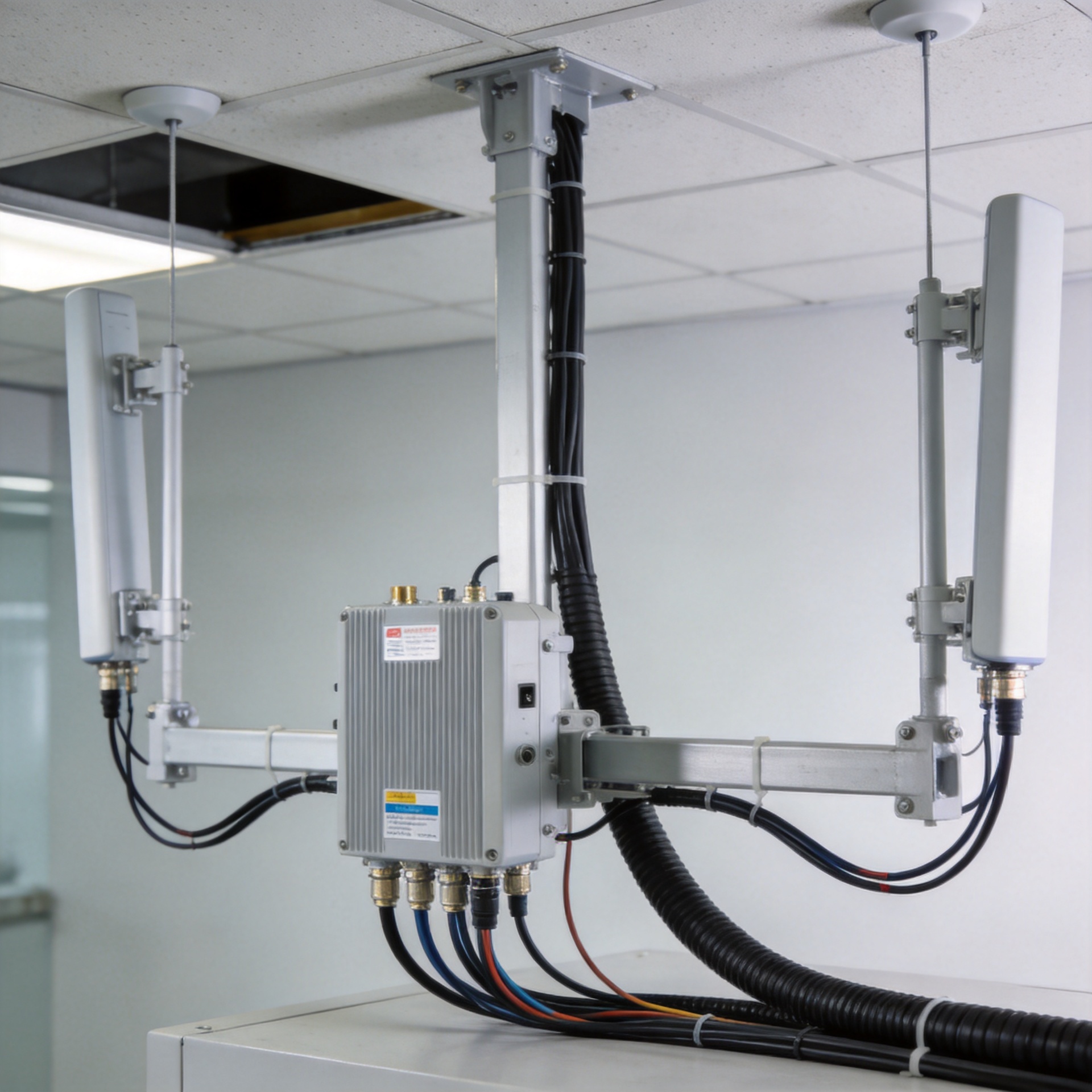
A distributed antenna system divides coverage across many antenna nodes so a building can receive more even service than a single high-power source can provide. This is valuable in offices, hospitals, transport hubs, venues, and other indoor environments with attenuation, partitions, and high user density. It also means there are more RF branches and more opportunities for small interface defects to accumulate.
In a lightly loaded single-band installation, a marginal PIM source may be difficult to notice. In a multi-band, multi-carrier antenna DAS, the RF environment is less forgiving. Carrier combinations can produce intermodulation products at frequencies that matter to the uplink. The result may appear as intermittent capacity loss, unexplained receiver desense, or a site that passes basic coverage checks but performs poorly when traffic rises.
One public test example reported an 18% download-speed reduction when PIM increased from −125 dBm to −105 dBm. That is not a universal forecast for every DAS; propagation, load, spectrum, and radio design all matter. It does illustrate the engineering principle: a PIM change that seems modest in a measurement can have a material effect once it becomes in-band interference.
Low PIM is a chain property, not only an antenna specification
The most common mistake is to approve a low-PIM antenna and assume the project is protected. Actually, the installed antenna DAS is only as quiet as its weakest passive interface. The useful shift is from a component view to an RF-chain view:
- Antenna: verify the requested frequency coverage, polarization, power handling, and PIM condition—not only the headline PIM value.
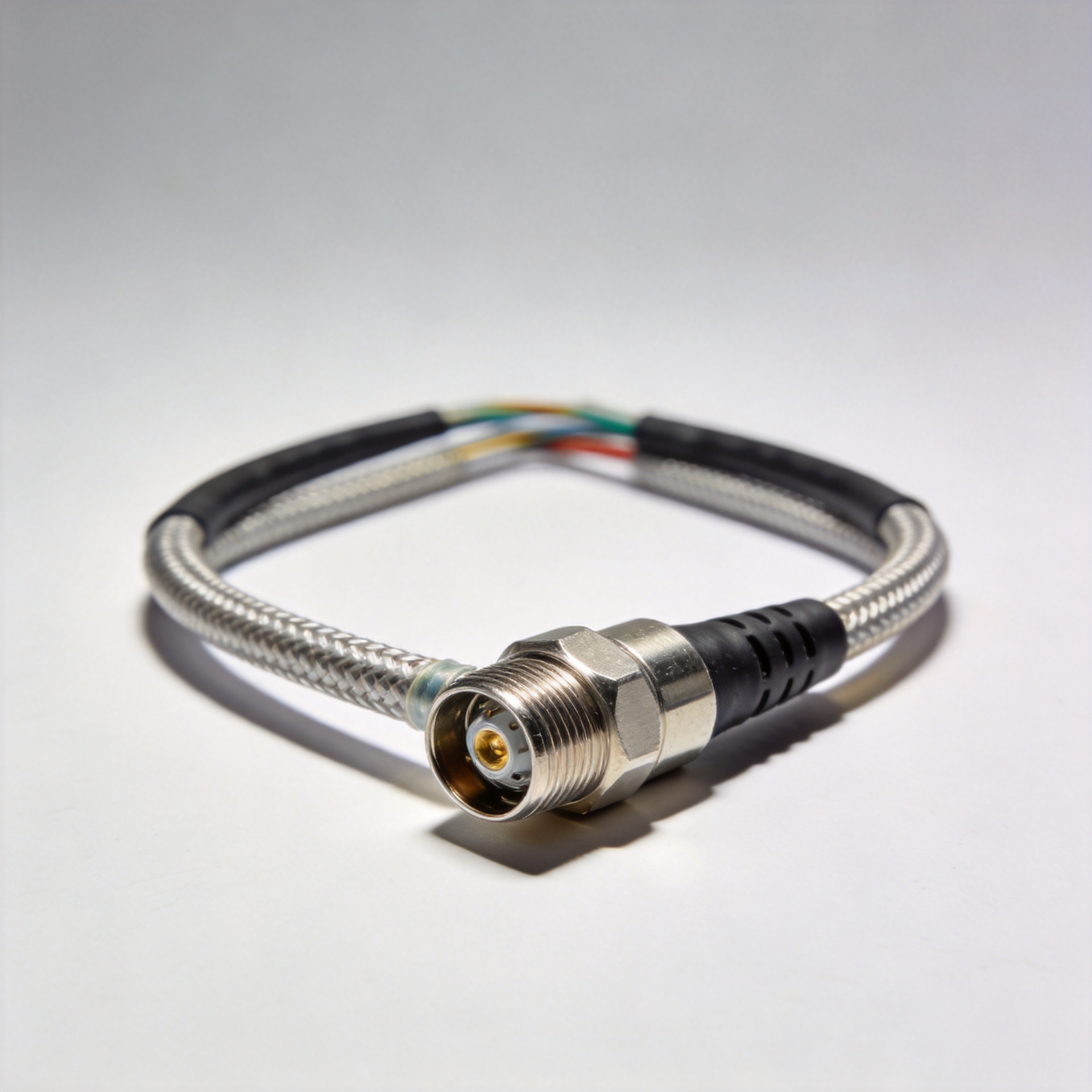
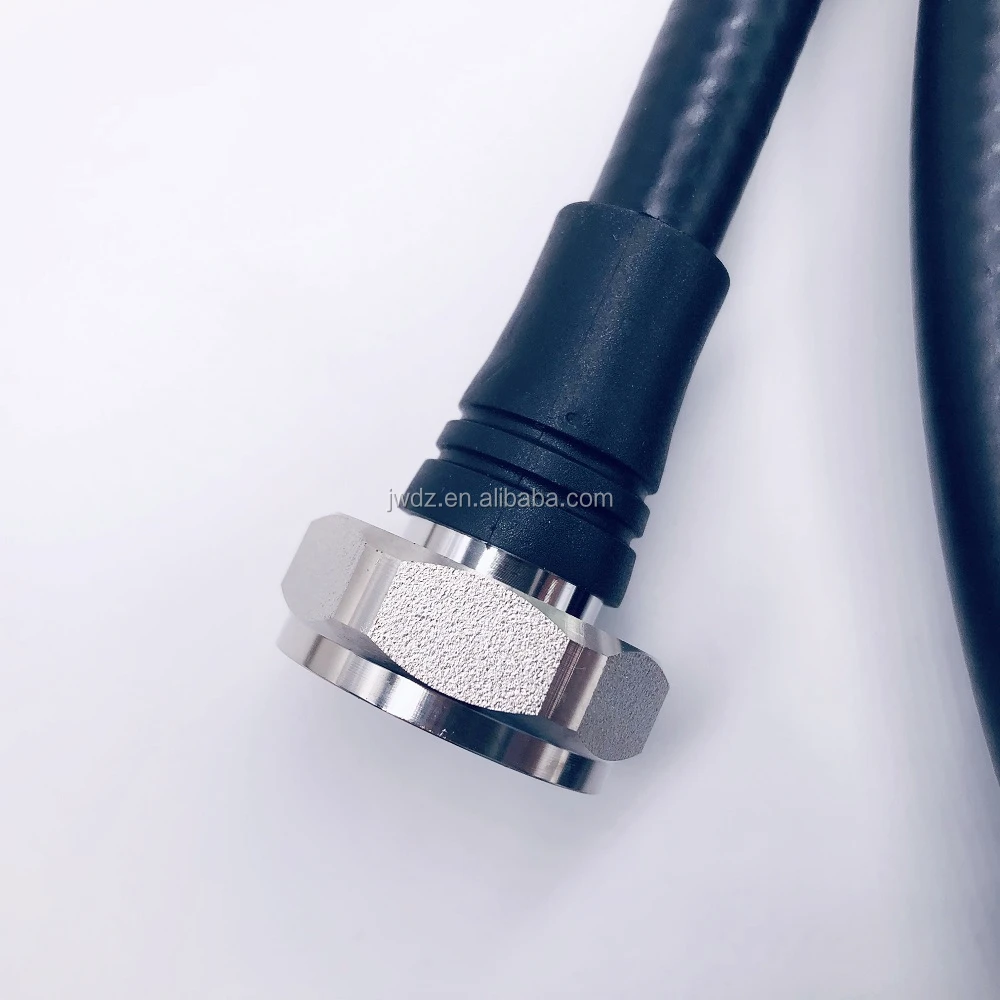
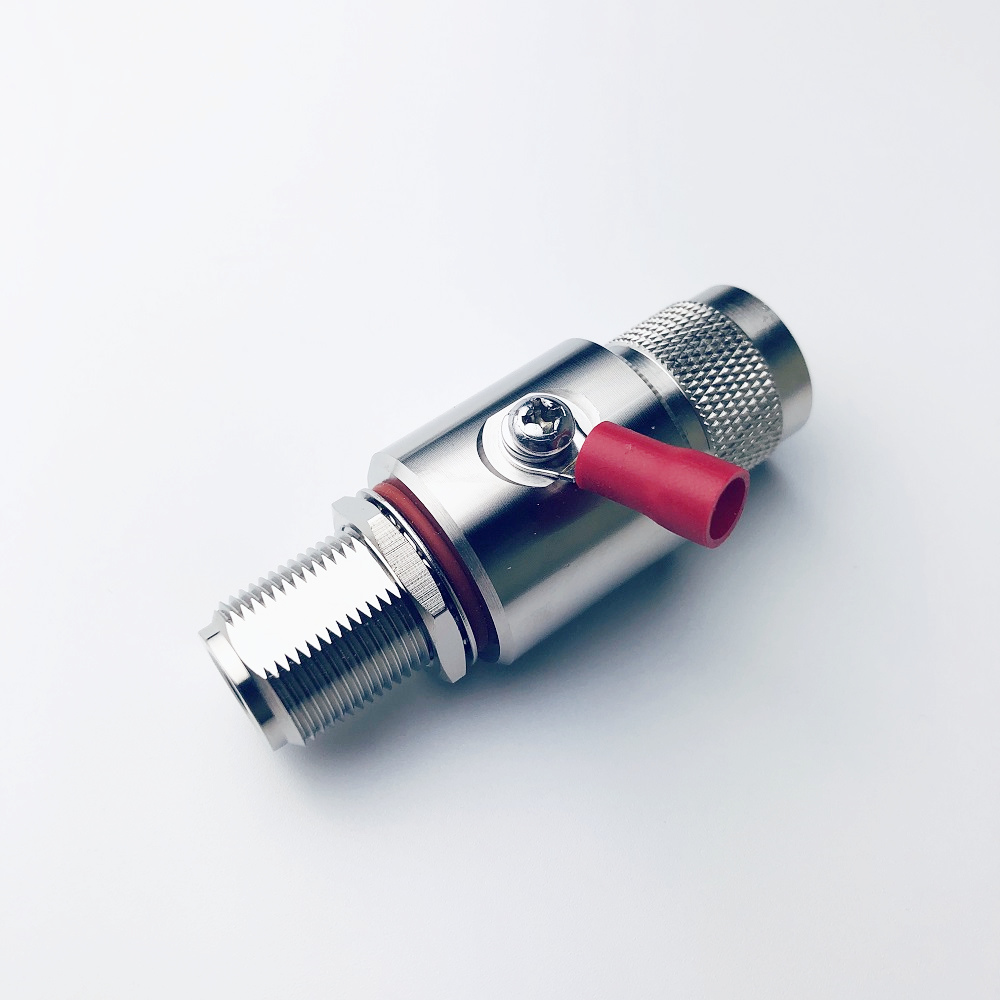
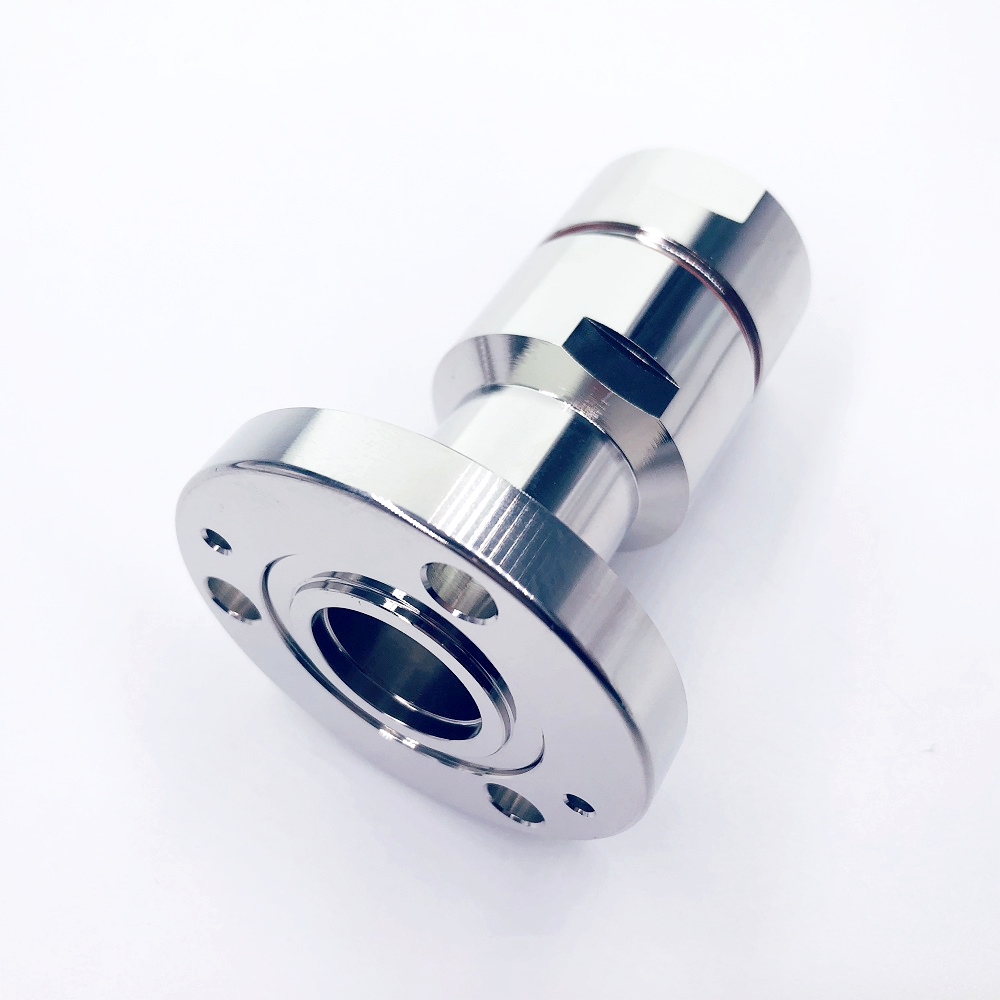
- Connectors and adapters: confirm mating interfaces, plating condition, torque requirements, and compatibility. An adapter added late in the build can become the weakest junction.
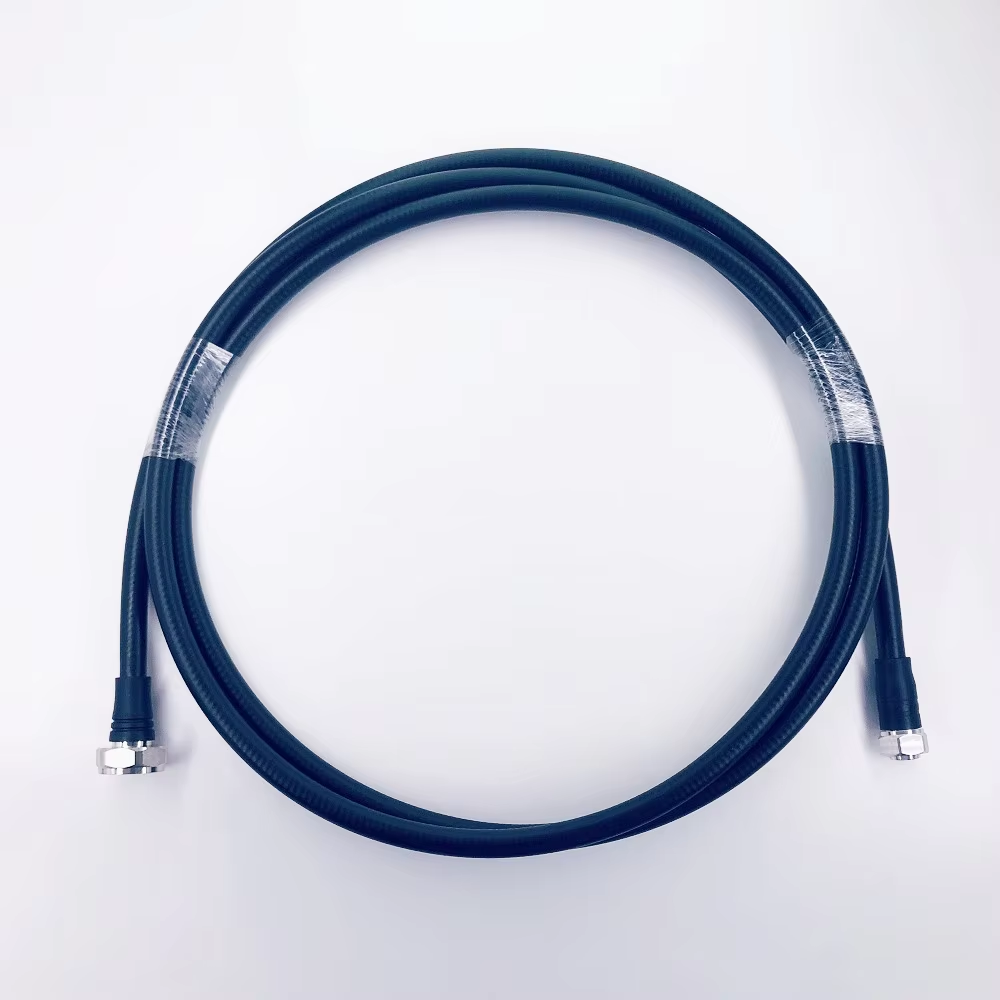
- Feeder and jumpers: avoid sharp bends, mechanical stress, crushed sections, and uncontrolled assembly quality.
- Mounting and routing: keep metal-to-metal contacts, loose hardware, and cable movement from creating unintended nonlinear interfaces.
- Workmanship: clean, inspect, and torque interfaces consistently; many PIM faults are installation-related rather than design-related.
This is why a specification review should name the complete signal path. If the project calls for an indoor MIMO omni solution, the 380–6000MHz Low PIM Indoor MIMO Omni Antenna with N-Female Connector can be evaluated as one confirmed product option, while the surrounding cable assemblies and connection practices are evaluated as part of the same chain.
How to read a low-PIM specification without over-reading it
A PIM number is meaningful only when its conditions are clear. Before comparing two antenna DAS options, ask for the test configuration behind the value. At minimum, review the two test tones, their power, the measured order or result frequency, the connector condition, and the unit. A low dBc figure may look favorable, but comparing it with a dBm result without the reference power is not a valid apples-to-apples decision.
| Review item | Why it matters for an antenna DAS | What to confirm |
|---|---|---|
| Test power and tones | PIM response depends on excitation conditions. | Specified tone frequencies and power per tone. |
| Frequency range | The relevant product must be evaluated near the bands used by the system. | Operating bands and PIM-test band coverage. |
| Unit and reference | dBc and dBm describe results differently. | Reference level and acceptance criterion. |
| Connector interface | Mating surfaces can dominate installed performance. | Connector type, cleaning, torque, and adapter policy. |
| Production consistency | A qualification sample does not prove every delivered unit behaves identically. | Supplier controls, test records, and incoming inspection plan. |

For procurement teams, this changes the conversation from “Which unit has the lowest price?” to “Which supplied RF chain is most likely to maintain the approved performance after installation and over its service life?” That is a more useful decision frame for a high-density antenna DAS.
A practical low-PIM checklist for design and acceptance
- Define the in-building bands, carrier plan, and uplink sensitivity priorities before selecting the antenna.
- Set a project-specific PIM acceptance requirement with its exact test conditions.
- Specify compatible low-PIM connectors, jumpers, adapters, and feeder assemblies rather than treating them as generic accessories.
- Control handling: cap interfaces, keep contact surfaces clean, and use the required torque tools and values.
- Inspect routing and mounting for stress, loose metal, unsupported weight, and movement that can degrade a passive junction.
- Test the assembled branch where the risk warrants it, then document results by branch or zone for future troubleshooting.
- Use incoming checks and supplier traceability for repeat orders, especially where many antenna nodes are deployed.
The checklist is deliberately broader than the antenna itself. A low-PIM design can lose its advantage when an otherwise small field detail is left uncontrolled. Conversely, consistent interfaces and documented workmanship help an antenna DAS retain its intended coverage and uplink margin.
Questions engineers should ask before approving an antenna DAS
These review questions keep an antenna DAS discussion tied to measurable RF performance rather than a single catalogue claim.
- Has the antenna DAS acceptance limit named the test tones, test power, unit, and measurement band for this antenna DAS branch?
- Are all antenna DAS connectors, adapters, jumpers, and feeder interfaces included in the antenna DAS bill of materials?
- Will the antenna DAS installation method control torque, cleanliness, cable strain, and movement at each antenna DAS interface?
- Can the antenna DAS supplier provide traceability and consistent process controls for the antenna DAS components delivered in volume?
- Does the antenna DAS commissioning plan test the assembled antenna DAS branch where site risk and traffic make verification necessary?
- When performance changes under load, will the antenna DAS troubleshooting process examine passive interference before replacing antenna DAS active equipment?
- Has the antenna DAS design team aligned the antenna DAS PIM criterion with the carrier plan and expected uplink margin?
- For future moves or additions, can the antenna DAS maintenance team preserve the antenna DAS interface controls used during initial installation?
Choosing the right priority for your project
Low PIM should carry the most weight when the system uses multiple carriers, serves a dense indoor environment, has limited uplink margin, or would be costly to access for rework. It does not replace other antenna criteria: radiation pattern, MIMO configuration, band coverage, environmental fit, installation geometry, and maintainability still need to match the design. The correct approach is to balance them in one system-level review.
For an awareness-stage project, start by recognizing that coverage problems are not necessarily coverage-design problems. When a DAS node layout looks right but performance deteriorates under load, the passive RF path deserves scrutiny. Build the requirement around the full chain, validate the measurement conditions, and make installation quality part of the specification. That is how low PIM becomes a practical safeguard rather than a line item on an antenna DAS datasheet.